


Listen to the article
Afghan Radio: From Golden Era to Taliban Propaganda Tool
Radio broadcasting in Afghanistan has undergone a dramatic transformation, shifting from a period of unprecedented growth during the republic years to becoming a primary propaganda instrument under Taliban rule, according to a statement released by Nai in Exile on World Radio Day.
The media advocacy organization’s assessment, published Friday, February 13, paints a stark contrast between Afghanistan’s radio landscape before and after the Taliban’s return to power following the 2021 withdrawal of international forces.
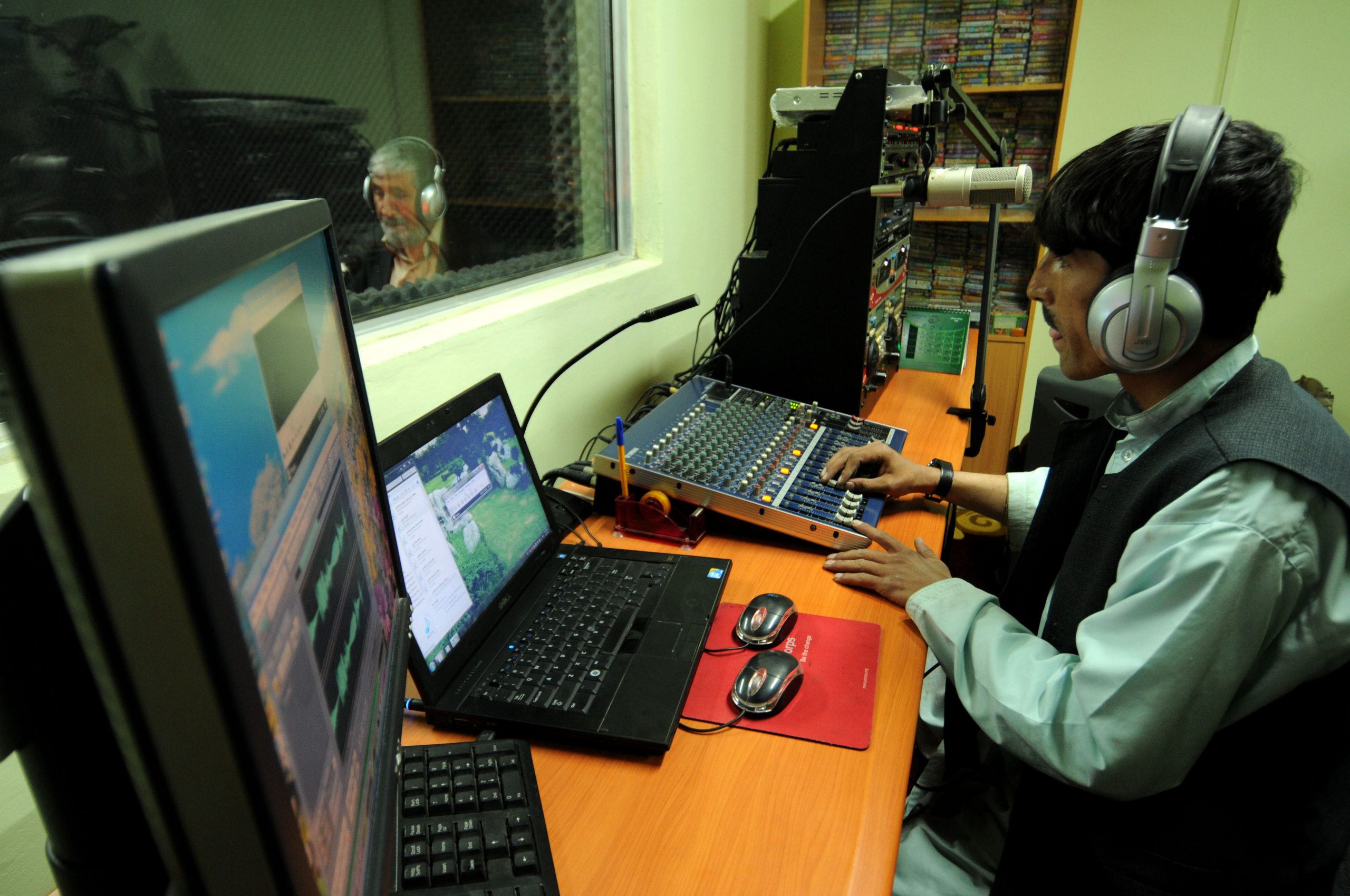
During what Nai describes as the “golden era” of Afghan radio—the two decades under the republican system that followed the Taliban’s first defeat in 2001—the country experienced an explosion of broadcast diversity. More than 350 national and local radio stations emerged across the country, up from just a single government-controlled broadcaster during the Taliban’s first regime.
“Radio reached even the most remote villages during this period, broadcasting programs in Dari, Pashto, and numerous local languages,” the statement noted, highlighting the medium’s crucial role in a country where literacy rates remain low and many communities lack reliable internet access.
This expansion reflected Afghanistan’s broader media development during those years, when the country built one of the most vibrant and diverse media ecosystems in the region. Radio stations served vital functions beyond entertainment, providing educational programming, health information, and platforms for public discourse that reached across Afghanistan’s challenging geography.
However, the Taliban’s return to power following the Doha Agreement has dramatically reversed these gains. The current regime has implemented severe restrictions on media freedom that have fundamentally altered radio’s function and content across the country.
Among the most visible changes has been the Taliban’s ban on music broadcasts—a significant restriction in a culture where musical traditions hold deep importance. The regime has also severely limited or completely eliminated women’s presence in radio stations, silencing female voices that had become integral to the country’s media landscape.
Media experts point out that these restrictions reflect the Taliban’s broader approach to governance, which has systematically reduced women’s participation across Afghan society despite initial promises of more moderate policies.
Perhaps most concerning is the conversion of many radio outlets into direct propaganda instruments for the Taliban. Stations that once offered diverse viewpoints and independent reporting now primarily disseminate government messaging aligned with the regime’s interpretation of Islamic law and governance.
The technical infrastructure supporting radio diversity has also been targeted. Nai in Exile reports that transmission equipment and signal boosters for regional and international radio stations have been deactivated, further isolating Afghan audiences from alternative information sources.
“Radio in Afghanistan today is no longer aligned with contemporary global realities,” the Nai statement emphasized. “It continues to disseminate the Taliban’s narrow and propagandistic views.”
Media freedom organizations have documented the broader decline in Afghanistan’s press environment since the Taliban takeover. According to Reporters Without Borders, more than 40% of the country’s media outlets have closed, and thousands of journalists have either fled the country or abandoned the profession due to safety concerns.
World Radio Day, established by UNESCO in 2011, celebrates radio’s unique role in reaching diverse audiences and shaping public conversation. For Afghanistan, this year’s observance serves as a sobering reminder of radio’s vulnerability to political control despite its technical resilience.
As one of the most accessible forms of mass communication in Afghanistan, radio’s transformation under Taliban rule represents not just a loss of media diversity but a fundamental shift in the information environment for millions of Afghans, particularly those in rural areas where radio often serves as the primary news source.
Fact Checker
Verify the accuracy of this article using The Disinformation Commission analysis and real-time sources.

10 Comments
It’s disheartening to see Afghanistan’s radio networks, once a beacon of diversity, now serving as Taliban propaganda tools. Radio has long been a vital medium for information-sharing, community engagement and local expression across the country. This transition threatens to further marginalize rural populations and undermine democratic progress. Protecting independent media must be a priority moving forward.
You raise an important point. The Taliban’s co-option of radio networks is deeply concerning, as it strips Afghans of access to pluralistic, community-oriented media. Restoring independent, locally-relevant radio programming will be crucial to counter the spread of propaganda and ensure all Afghans can access reliable information.
This is a concerning development. Radio has long been a vital communication tool in Afghanistan, especially for rural communities. The shift to Taliban propaganda threatens to undermine the hard-won progress made in media diversity and local language programming. It will be important to monitor this situation closely and explore ways to support independent, community-focused radio stations.
You’re right, the loss of independent, pluralistic media in Afghanistan is deeply troubling. Radio has been a crucial platform for giving voice to diverse perspectives and local communities. Ensuring access to reliable, unbiased information will be crucial going forward.
This is a disturbing development. Radio has long been a lifeline for information and community-building in Afghanistan, especially in remote areas. The Taliban’s transformation of these networks into propaganda tools is a major setback for media freedom and civil society. Safeguarding independent, community-focused radio stations must be a priority to support Afghan citizens.
I agree, the Taliban’s takeover of radio networks is a serious blow to press freedom and access to reliable information in Afghanistan. Restoring independent, locally-relevant radio programming will be crucial to counter the spread of propaganda and empower diverse voices and perspectives across the country.
The Taliban’s co-option of Afghanistan’s radio networks is deeply troubling. Radio has historically played a vital role in information-sharing, community engagement and democratic expression across the country. This shift to propaganda tools threatens to further marginalize rural populations and undermine hard-won progress. Protecting independent media must be a key priority moving forward.
You’re absolutely right. The loss of independent, pluralistic radio in Afghanistan is a major setback. Radio has long been a crucial platform for local communities to access information and have their voices heard. Restoring this vital medium as a source of reliable, unbiased news will be crucial to counter the spread of Taliban propaganda.
The transformation of Afghanistan’s radio networks into Taliban propaganda tools is a worrying sign. Radio has historically played a vital role in information-sharing and community-building across the country. This shift undermines hard-won democratic gains and risks cutting off rural populations from independent news sources. Maintaining media freedom and plurality must be a priority.
Absolutely, the Taliban’s takeover of radio networks is a major setback for press freedom and civil society in Afghanistan. Restoring independent, locally-focused radio will be crucial to counter the spread of propaganda and ensure access to reliable information, especially in remote areas.