


Listen to the article
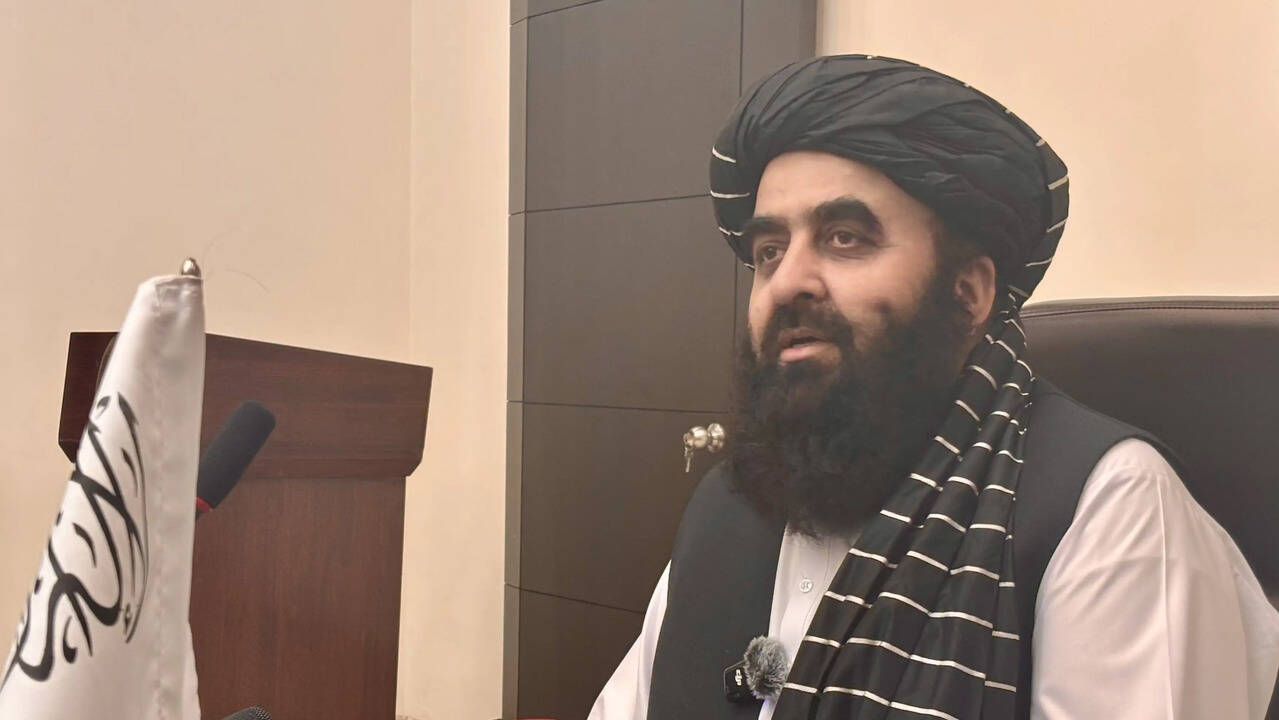
In a striking defense of the Taliban regime’s record on human rights, Afghanistan’s Foreign Minister Amir Khan Muttaqi rejected international criticism over the treatment of women during his visit to New Delhi on Friday. Speaking from the Afghanistan Embassy, Muttaqi described widespread concerns about women’s rights as “propaganda” and claimed conditions have improved since the Taliban returned to power in August 2021.
When questioned by Times Now about alleged human rights violations, Muttaqi painted a stark contrast between Afghanistan’s current state and its recent past. “If you see Afghanistan before August 15, 2021, you would find at least 300-400 people dying every day. That has stopped in Afghanistan. The situation is actually better under the Taliban regime,” he asserted.
The foreign minister argued that the Taliban’s governance has brought stability to a country devastated by decades of conflict and foreign military presence. He claimed that Afghan women are not experiencing the level of dissatisfaction portrayed in international media reports.
“Women are happy. There are different traditions and cultures in different regions, and you should be considerate about that,” Muttaqi stated, suggesting that Western perspectives on women’s rights fail to account for Afghanistan’s cultural context. He further claimed that the lack of visible protests indicates acceptance of current policies, saying, “If women were not happy under the Taliban regime, they would not have supported us and would have started protesting on the streets.”
These statements come amid continuing international concern over the Taliban’s severe restrictions on women’s freedoms since seizing control of Afghanistan following the U.S. military withdrawal. Under Taliban rule, girls have been barred from secondary and higher education, women’s employment opportunities have been drastically curtailed, and strict dress codes have been imposed. The United Nations and numerous human rights organizations have characterized these policies as a form of gender apartheid.
The Taliban’s restrictions have progressively tightened since their return to power. Initial promises of a more moderate approach have given way to increasingly severe limitations on women’s participation in public life. Women are now prohibited from working in most sectors, attending universities, visiting public parks, and traveling long distances without a male guardian.
International aid organizations have warned that these policies are exacerbating Afghanistan’s humanitarian crisis. The World Bank estimates that restrictions on female education and employment could cost the Afghan economy up to $1 billion annually, representing about 5% of the country’s GDP.
Despite Muttaqi’s claims of public acceptance, reports from within Afghanistan suggest significant underground resistance to these policies. Clandestine schools for girls continue to operate in private homes, and some women have engaged in small, high-risk protests despite the threat of detention.
The foreign minister’s visit to India represents part of the Taliban’s ongoing efforts to gain international legitimacy. While no country has formally recognized the Taliban government, various nations, including neighboring countries and regional powers, have maintained diplomatic contacts.
Muttaqi’s defense of Taliban policies reflects the regime’s consistent position that its governance aligns with Afghan cultural and religious values. However, many Afghan women in exile and human rights experts counter that these restrictions represent an extreme interpretation not reflective of the country’s diverse traditions or Islamic principles.
As Afghanistan faces multiple crises, including economic collapse, food insecurity, and continued security challenges, the international community remains divided on how to engage with the Taliban while pressing for human rights improvements, particularly for women and girls whose lives have been dramatically restricted over the past three years.
Fact Checker
Verify the accuracy of this article using The Disinformation Commission analysis and real-time sources.
