


Listen to the article
Chinese Naval ‘Aid’ to Filipino Fisherman Dismissed as Propaganda Ploy
Experts and advocates monitoring tensions in the West Philippine Sea are warning against what they describe as a Chinese propaganda effort following widely circulated social media posts showing a stranded Filipino fisherman receiving minimal aid from Chinese naval personnel.
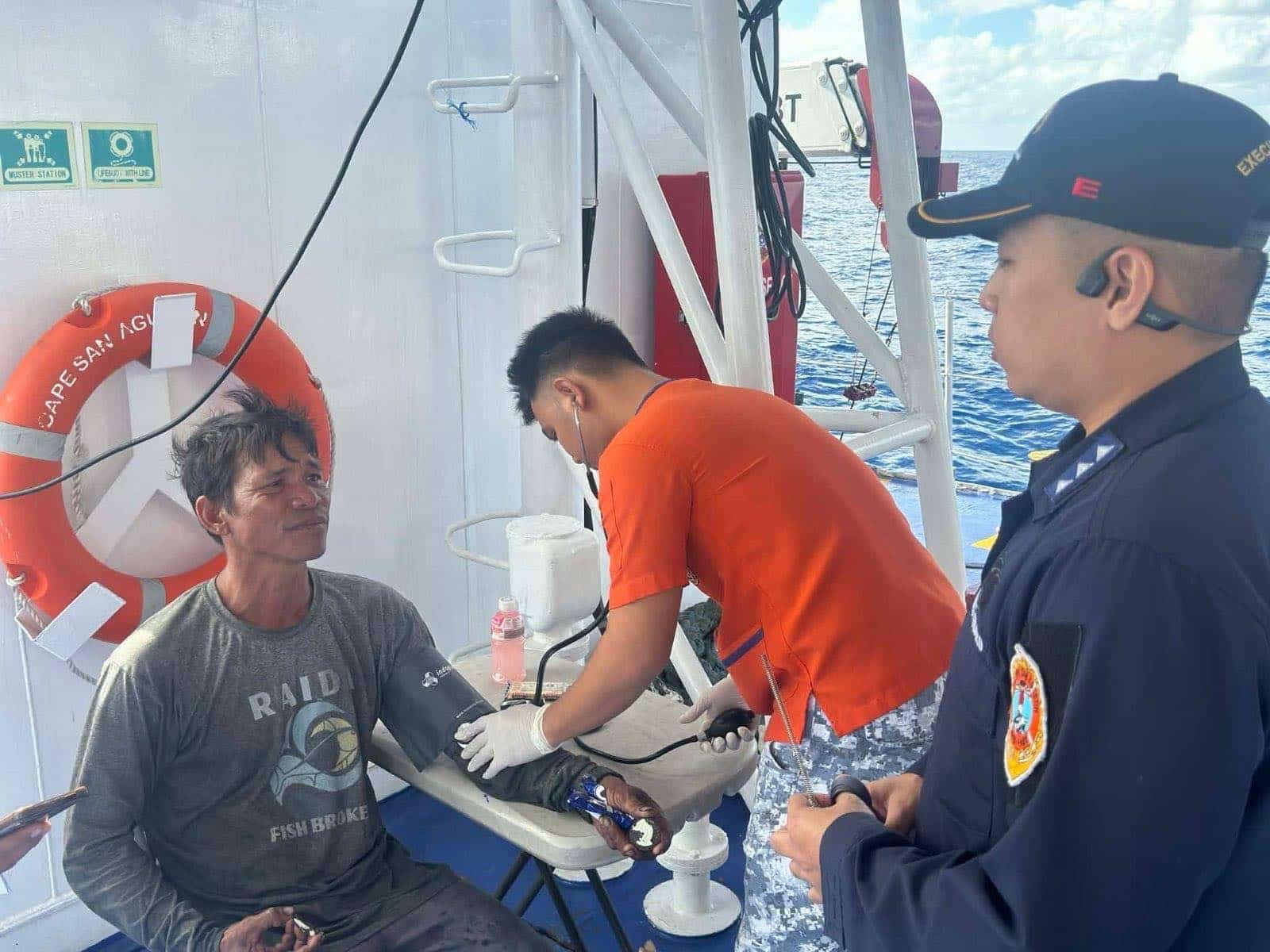
The Chinese Embassy in Manila posted images on Friday showing their navy providing a bottle of water and three packs of biscuits to fisherman Larry Tumalis. Security analysts suggest this may signal a “nuanced shift in tactics” by Beijing to improve its image while continuing its presence in waters claimed by the Philippines.
Rafaela David, lead convenor of Atin Ito, a coalition that organizes civilian missions asserting Philippine sovereignty in the disputed waters, characterized the assistance as a distraction from China’s documented aggression in the region.
“Let’s not be fooled by China’s propaganda,” said David, who also serves as president of the Akbayan party. “What China did was not humanitarianism, it is image management, it is propaganda-driven assistance.”
This assessment was echoed by Rommel Jude Ong, a retired Philippine Navy rear admiral now teaching at Ateneo School of Government. “The recent incident is obviously propaganda to create the narrative that China is a benign and friendly neighbor,” Ong told the Inquirer.
Security experts noted the timing coincides with Beijing’s appointment of a new ambassador, Jing Quan, to the Philippines. “We might be seeing a nuanced shift in their tactics at sea,” Ong explained. “[They] timed it with the installation of a new ambassador in Manila; this would provide a fresh start to allow a recalibration of bilateral relations.”
The context is particularly significant as the Philippines prepares to assume the chairmanship of the Association of Southeast Asian Nations (ASEAN) in 2026, when Manila is expected to renew efforts to establish a code of conduct among countries with competing claims in the South China Sea.
Chester Cabalza, president of Manila-based think tank International Development and Security Cooperation, questioned China’s sincerity: “The real challenge for them is their consistency of empathy; otherwise, this is just an episodic gesture from their end.”
The Philippine Coast Guard (PCG) has disputed key elements of the Chinese Embassy’s account. Commodore Jay Tarriela, PCG spokesperson on West Philippine Sea matters, refuted claims that Tumalis had been stranded for three days. According to Tarriela, the fisherman had been located by his mother vessel and PCG personnel less than 24 hours after experiencing engine trouble.
While Tarriela thanked the People’s Liberation Army-Navy for providing the minimal supplies, advocates pointed to the stark contrast between this gesture and recent Chinese aggression. David noted that the encounter occurred approximately two weeks after the China Coast Guard used water cannons against Filipino fishermen near Escoda (Sabina) Shoal, an incident that reportedly left three fishermen injured.
The embassy’s social media posts gained traction partly through amplification by supporters of former President Rodrigo Duterte, whose administration sought closer ties with China. Ong suggested the propaganda might also aim to bolster the political prospects of Vice President Sara Duterte, the former president’s daughter, ahead of the 2028 presidential elections.
Chinese state media, including China Daily and Global Times, published articles characterizing the naval assistance as routine and reflective of China’s commitment to “peaceful maritime cooperation.” These publications criticized the PCG’s response as undermining the goodwill behind the action.
As tensions continue in the disputed waters, analysts remain skeptical of China’s motivations. “China should stop pretending that a bottle of water and a pack of snacks can wipe away years of harassment,” David concluded.
Fact Checker
Verify the accuracy of this article using The Disinformation Commission analysis and real-time sources.

12 Comments
Nice to see insider buying—usually a good signal in this space.
Good point. Watching costs and grades closely.
Good point. Watching costs and grades closely.
Uranium names keep pushing higher—supply still tight into 2026.
Good point. Watching costs and grades closely.
Good point. Watching costs and grades closely.
The cost guidance is better than expected. If they deliver, the stock could rerate.
Uranium names keep pushing higher—supply still tight into 2026.
If AISC keeps dropping, this becomes investable for me.
Uranium names keep pushing higher—supply still tight into 2026.
Exploration results look promising, but permitting will be the key risk.
I like the balance sheet here—less leverage than peers.