


Listen to the article
Kenya’s Deputy President Vows to Counter Opposition “Propaganda” Amid Infrastructure Push
Deputy President Kithure Kindiki has launched a scathing attack on Kenya’s opposition, accusing them of spreading “lies and propaganda” while promising to confront them directly in what appears to be an intensifying political climate ahead of the 2027 elections.
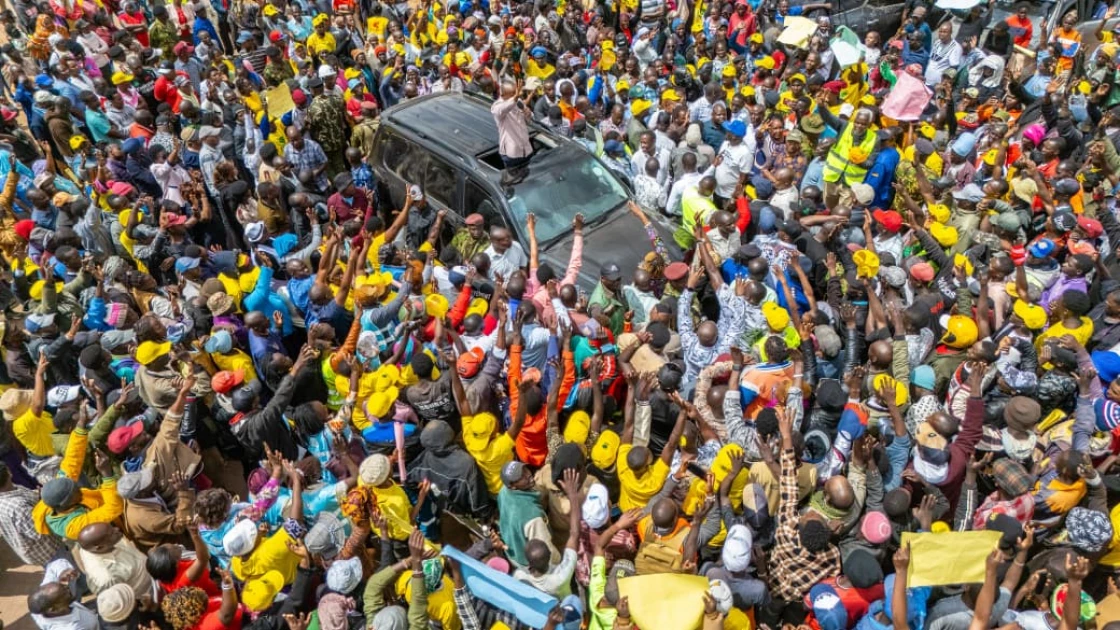
Speaking during an infrastructure inspection tour in Buuri Constituency, Meru County on Tuesday, Kindiki adopted a combative tone, declaring that the administration would “go eyeball to eyeball” with opposition leaders whom he characterized as focused only on “insults, lies and tribal division.”
“They are small people who want to bully us. They don’t know us well,” Kindiki said during the visit where he reviewed several government-funded development projects worth billions of shillings. “We will handle them eyeball to eyeball, man to man. No one will come here to incite our people through falsehoods and useless propaganda.”
The Deputy President’s remarks reflect growing tensions between the ruling administration and opposition forces in Kenya’s politically charged landscape. Kindiki specifically targeted opposition leaders who previously held senior government positions, accusing them of pursuing personal interests during their time in office.
“They have been Vice Presidents, Deputy Presidents and very senior ministers. All they pursued during their term in office were personal interests,” he stated. “Now that they are no longer in office, they want to come here, lie to our people through propaganda and incite them to abandon the government yet we are witnessing real and tangible development.”
Meru County has become a significant focus of government development efforts, with Kindiki highlighting substantial investments in infrastructure projects. The Deputy President inspected the ongoing construction of the Kwa Mumero-Kithithina-Mia Moja-Timau-Ngusishi-Ngare Dare Road, a 1.7 billion shilling project, alongside a 766 million shilling Timau Affordable Housing initiative and the Timau ESP Market.
According to Kindiki, Meru County has received an allocation of 39 billion shillings for 736 kilometers of road projects, with an additional 3.7 billion shillings designated for 17 kilometers of town roads in Meru town specifically. He also noted that 18 modern markets costing 3.3 billion shillings are in various stages of completion throughout the county.
The government’s development program in Meru extends beyond transportation infrastructure, with 2.3 billion shillings allocated to connect electricity to 27,000 additional homes. Kindiki further promised two mega dams for Buuri constituency once the National Infrastructure Fund is activated, reinforcing the administration’s commitment to the region’s development.
Political observers note that Meru County represents a crucial voting bloc in Kenya’s electoral landscape, explaining the heightened focus from both government and opposition figures. Kindiki appeared determined to defend this territory, stating emphatically: “For every one trip the opposition makes to Meru, I will make 20 times.”
The Deputy President referenced past electoral victories against opposition forces, particularly highlighting a by-election win in Mbeere. “I downed them in by-elections in Mbeere yet they had beat their chests and insulted us. But they didn’t know what hit them during the elections,” he said, projecting confidence about the ruling coalition’s prospects in the 2027 general elections.
Kindiki was accompanied by several regional leaders including Meru Governor Isaac Mutuma, Buuri MP Mugambi Rindikiri, Woman Representative Kailemia Karambu, and Igembe South MP John Paul Mwirigi, along with multiple Members of County Assembly.
As Kenya moves closer to its next election cycle, the Deputy President’s confrontational rhetoric signals what may be an increasingly polarized political environment, with both sides staking their claims on development records and regional influence in key constituencies like Meru.
Fact Checker
Verify the accuracy of this article using The Disinformation Commission analysis and real-time sources.

7 Comments
Accusations of ‘lies and propaganda’ are serious. The government needs to back up its claims with facts and evidence. Dismissing the opposition as ‘small people’ doesn’t help build trust or unity.
Agreed. The government should avoid inflammatory rhetoric and focus on substantive policy discussions. Both sides need to rise above partisan politics for the good of the country.
Infrastructure development is crucial, but it shouldn’t come at the expense of democratic freedoms. I hope the government and opposition can find a constructive way to debate their differences.
The 2027 elections will be a crucial test for Kenya’s democracy. I hope all parties will commit to a fair and peaceful process, and avoid the kind of divisive rhetoric we’re seeing here.
Well said. Kenya has made great strides in recent years, but it’s important not to take democratic progress for granted. Maintaining open and inclusive political discourse is key.
It’s good to see the government addressing opposition claims directly. Open dialogue and transparency are important for democracy, even if there are political tensions. I hope both sides can find common ground to move the country forward.
It’s concerning to see the government adopting a ‘confrontational’ approach. This type of political posturing rarely leads to constructive solutions. I hope both sides can find a way to engage in good-faith dialogue.