


Listen to the article
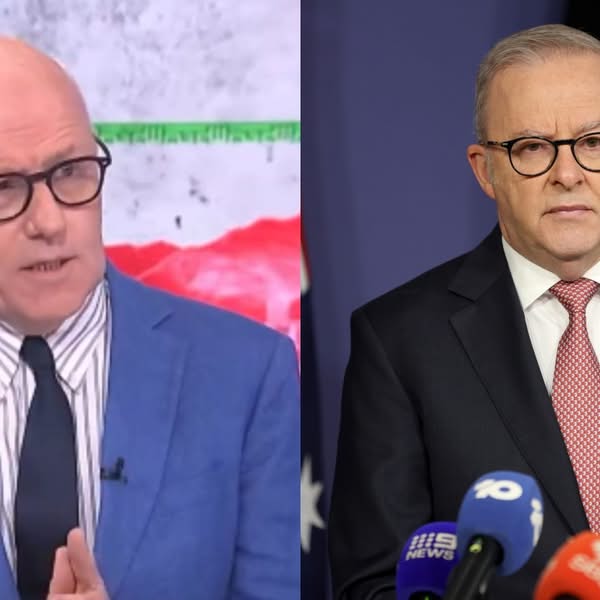
In a growing controversy at Australia’s public broadcaster, pressure is mounting on the ABC’s Managing Director to address what critics call “unsavoury” political commentary from the network’s journalists, following a controversial incident involving one of the broadcaster’s prominent reporters.
The backlash erupted after the reporter characterized the Prime Minister’s statements supporting Iranian protesters as “political propaganda.” The comments came amid ongoing demonstrations in Iran, where citizens have been protesting against the regime’s oppressive policies and human rights violations.
The reporter’s characterization has sparked outrage across the political spectrum, with many viewing the remarks as dismissive of legitimate concerns for human rights and democratic freedoms in Iran. Critics argue that labeling support for Iranian protesters as mere propaganda undermines the serious nature of the struggle against authoritarianism in the country.
“When a journalist from our national broadcaster dismisses solidarity with people fighting for basic freedoms as ‘propaganda,’ it raises serious questions about editorial judgment,” said one media commentator who requested anonymity due to professional connections with the ABC.
Iran has been experiencing waves of protests since 2022, with demonstrators challenging the government’s strict religious laws, economic policies, and suppression of civil liberties. International human rights organizations have documented violent crackdowns on protesters, including arrests, torture, and executions.
The controversy touches on broader concerns about the ABC’s approach to political reporting and perceived bias. Conservative politicians and commentators have long accused the broadcaster of harboring left-leaning sympathies, while the ABC has consistently defended its editorial independence and commitment to balanced coverage.
Media analysts note that the incident highlights the challenging line journalists must walk when covering international conflicts and human rights issues, particularly when domestic political figures become involved.
“There’s a distinction between critically examining political motives and appearing to trivialize human rights concerns,” explained Dr. Eleanor Rhodes, a media ethics professor at the University of Sydney. “Public broadcasters worldwide face scrutiny over how they frame such complex issues.”
The ABC, funded by Australian taxpayers, operates under a charter that requires impartial and balanced reporting. Critics argue that comments appearing to downplay human rights concerns contradict these obligations.
The network’s Managing Director now faces calls to clarify the broadcaster’s position and potentially establish clearer guidelines for staff regarding commentary on human rights issues. Some stakeholders have suggested mandatory training on covering international conflicts without compromising journalistic integrity.
“This isn’t about censorship but about ensuring responsible journalism,” said a former ABC board member speaking on condition of anonymity. “When discussing oppressive regimes, there’s a responsibility to recognize the reality of human suffering beyond political point-scoring.”
The incident occurs at a sensitive time for the ABC, which has faced budget pressures and scrutiny from successive governments. Media industry experts suggest the broadcaster can ill afford controversies that might further erode public trust or political support.
Neither the reporter nor ABC management has issued a formal response to the criticism. However, sources within the organization suggest the matter is being taken seriously, with internal discussions underway about appropriate boundaries for political commentary, particularly on human rights issues.
The controversy also reflects a broader international debate about media coverage of authoritarian regimes and how Western journalists should frame struggles for democracy abroad without appearing to take political sides at home.
As the situation develops, media observers are watching closely to see whether this incident will prompt broader policy changes at the ABC regarding political commentary and international reporting, or whether it will be treated as an isolated incident requiring individual correction.
Fact Checker
Verify the accuracy of this article using The Disinformation Commission analysis and real-time sources.

7 Comments
This is a complex issue with valid concerns on both sides. While I understand the desire to avoid political bias in reporting, labeling support for Iranian protesters as ‘propaganda’ seems overly dismissive of the serious human rights abuses happening there. Hopefully the ABC can find a way to cover these events objectively.
I’m glad to see the ABC managing director addressing this issue. Maintaining public trust is critical for a national broadcaster, especially when covering contentious political topics. A transparent and inclusive process to review editorial practices could go a long way towards resolving this controversy.
While I agree that journalists should avoid overt political commentary, I’m not sure I would characterize the reporter’s remarks as ‘propaganda.’ The situation in Iran is highly complex, and reasonable people can disagree on the appropriate framing. The ABC should strive for objective analysis, not partisan posturing, on these sensitive issues.
The role of the media in reporting on sensitive political issues is always a delicate balance. It’s understandable that the reporter’s comments have sparked outrage, as they risk undermining legitimate concerns about human rights in Iran. The ABC should aim for nuanced, fact-based coverage that avoids partisan rhetoric on all sides.
I’m curious to hear more about the specific context around the reporter’s comments. Was there a broader pattern of biased coverage, or was this an isolated incident? Regardless, the ABC managing director should carefully review editorial practices to ensure balanced reporting, without compromising the network’s independence or credibility.
This seems like a difficult situation for the ABC. On one hand, they have a responsibility to maintain journalistic integrity and avoid accusations of political bias. On the other, heavy-handed attempts to control editorial content could undermine the network’s credibility. I hope they can find a measured approach that satisfies both concerns.
Reporting on geopolitical conflicts is always a minefield. The ABC needs to walk a fine line between impartial coverage and avoiding the perception of propaganda. Perhaps a thorough review of editorial guidelines, with input from diverse stakeholders, could help clarify the network’s approach going forward.