


Listen to the article
Families Behind Barriers: The Hidden Reality of Child Detention at Border Facility
A month after being separated from their Minnesota home, an Ecuadorian mother and her 7-year-old daughter finally tasted freedom as they stepped off a bus at a Laredo migrant shelter. The pair had endured weeks of confinement at the Dilley Immigration Processing Center in south Texas, where the young girl’s nightly tears revealed the emotional toll of their detention.
“She would tell me, ‘Mom, what crime did I commit to be a prisoner?’ I didn’t know what to tell her,” said the 29-year-old mother, who spoke anonymously fearing repercussions for their immigration case. Her husband had already been deported to Ecuador after the family was taken into custody.
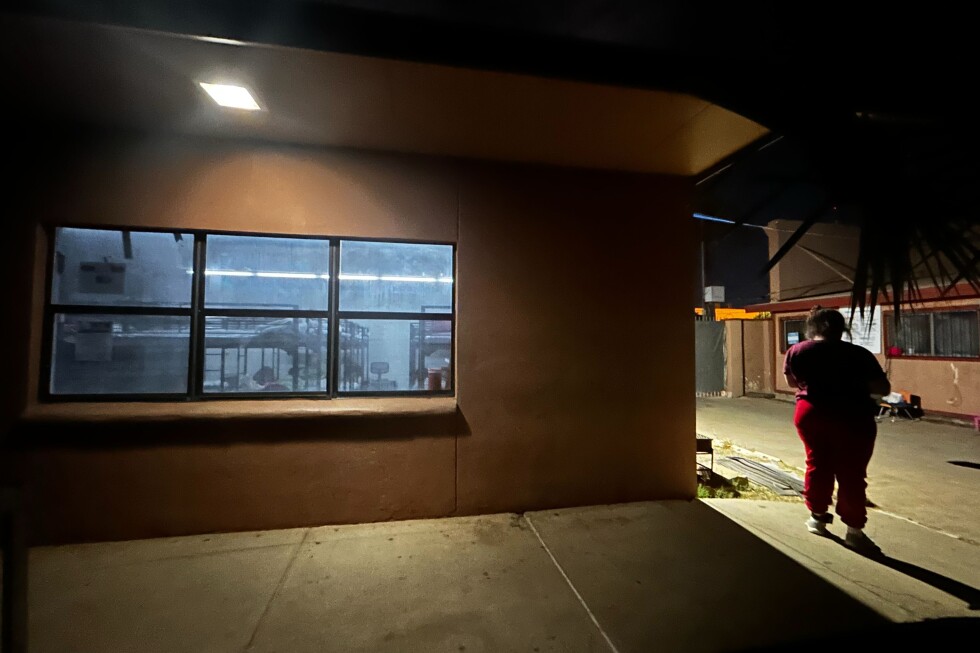
Their story mirrors hundreds of others as the Dilley facility has emerged as the epicenter of family detention under the current administration. The 2,400-capacity facility, once scaled back and temporarily closed, has transformed into what critics describe as a sprawling compound where children are being held far beyond legal time limits.
Immigration officials have detained more than 3,800 children at facilities like Dilley during the first nine months of the current administration, according to analysis of University of California, Berkeley’s Deportation Data Project. On an average day, more than 220 children were in detention, with most long-term cases sent to Dilley. More than half of those detained at the facility were minors.
The consequences of detention are often severe. While public attention focused briefly on 5-year-old Liam Conejo Ramos, whose photos circulated showing him wearing a bunny hat and carrying a Spiderman backpack during his ICE detention, advocates say hundreds of less visible children face similar circumstances.
“We are all Liam,” said Christian Hinojosa, who was detained at Dilley with her 13-year-old son for over four months before their recent release. She noted that Liam and his father were released after just 10 days following intervention from members of Congress and a judge. “My son says, ‘That’s unfair, Mama. What’s the difference between him and us?'”
The current situation at Dilley differs markedly from previous operations. When opened under the Obama administration in 2014, most families there had recently crossed the border from Mexico. Today’s detainees often have established lives in American communities before being detained, and many children are being held well beyond the 20-day limit established by long-standing court orders.
“We’ve started to use 100 days as a benchmark for prioritizing cases because so many children are exceeding 20 days,” said Leecia Welch, chief legal director at Children’s Rights, who regularly inspects the facility. During a recent visit, Welch counted more than 30 children who had been held for over 100 days.
The psychological impact of prolonged detention manifests in various ways. One 13-year-old Colombian girl, housed with her mother and sister in a room shared with three other families, spiraled into depression after finding a worm in her food. Staff reportedly withheld her prescribed anxiety medications at times. After a lockdown was imposed and she was prevented from accessing the bathroom with her family, she attempted self-harm with a plastic knife from the cafeteria.
“She said she didn’t want to live anymore because she preferred to die rather than having to keep living in confinement,” her mother, Andrea Armero, told reporters after the family was deported to Colombia this month.
Health concerns extend to the youngest detainees. Venezuelan migrant Kheilin Valero Marcano, detained with her husband and 1-year-old daughter Amalia for nearly two months, reported repeated attempts to seek medical care when her child developed a high fever. She said Dilley staff initially dismissed it as a virus, but the baby was eventually diagnosed at outside hospitals with COVID, bronchitis, pneumonia and a stomach virus.
ICE disputes these accounts, stating in a press release that Amalia “immediately received proper medical care” and was appropriately treated in the facility’s medical unit after hospital treatment.
CoreCivic, the private prison company that operates Dilley, stands to generate approximately $180 million in annual revenue from the facility once fully operational, according to recent securities filings. Company spokesman Ryan Gustin stated that staff includes a pediatrician, pediatric nurse practitioner and mental health professionals to “meet the needs of children and families in our care.”
However, concerns about oversight have grown since the administration eliminated a Department of Homeland Security office responsible for monitoring conditions at detention facilities. Dr. Pamela McPherson, a child and adolescent psychiatrist contracted by DHS from 2014 until last year to inspect ICE facilities holding children, expressed alarm at this development.
“It’s a particular concern that family detention is being increased,” McPherson said. “Just who’s providing that check-and-balance now?”
Rep. Tony Gonzales, whose congressional district includes Dilley, defended the facility after multiple visits, praising its infrastructure and staff professionalism. “They’re not doing policy. They’re just fulfilling a duty,” said Gonzales, a Republican.
For families finally released, the trauma doesn’t immediately end. At the Laredo migrant shelter, parents anxiously search for flights back to their American homes, calling relatives and friends for financial assistance. The Ecuadorian mother hopes to return to Minneapolis, where her US-born 2-year-old daughter awaits with a friend, and get her 7-year-old back in school.
“Let’s go home, Mom, but don’t go back to work because ICE is going to pick you up again,” the little girl told her. Her mother tried offering reassurance that a special document would protect them from further detention – a promise she hopes she can keep.
Fact Checker
Verify the accuracy of this article using The Disinformation Commission analysis and real-time sources.

10 Comments
The overcrowding, lack of proper medical care, and 24/7 lights sound like inhumane conditions for detaining young children. This raises serious concerns about the government’s treatment of vulnerable individuals seeking asylum.
I agree, the conditions described seem to violate basic human rights. Detaining children in this way is deeply troubling and contradicts the values this country should uphold.
The stories of the Ecuadorian mother and daughter highlight the human cost of these detention centers. Children should not have to endure such emotional trauma and feel like ‘prisoners’ when seeking refuge.
Absolutely. Detaining innocent children in these conditions is inhumane and goes against basic human rights. The government needs to be held accountable for these abuses.
Worms in the food, poor medical care, and constant lighting are unacceptable for any detention facility, let alone one holding families and children. This report reveals a distressing reality behind the government’s policies.
This is a disturbing report on the poor conditions and treatment of migrant families, including children, at the Dilley detention center. It highlights the emotional toll and legal questions surrounding their prolonged confinement.
This is a deeply troubling account of the realities faced by migrant families at the Dilley detention center. The emotional and physical toll on vulnerable children is heartbreaking and demands urgent reform.
The details of this report are truly shocking – worms in the food, inadequate medical care, and constant lighting are the opposite of humane treatment. The government must address these abuses at Dilley and similar facilities.
I agree, the conditions described are unacceptable and violate basic human rights. Detaining children in this manner is unconscionable and the responsible parties must be held accountable.
This report provides a disturbing window into the reality of family detention at the Dilley facility. The extended confinement and poor living conditions are deeply concerning and warrant immediate investigation and reform.