


Listen to the article
Prestigious U.S. colleges are enrolling record numbers of low-income students, a strategic shift that has gained momentum following the Supreme Court’s ban on affirmative action in higher education last year.
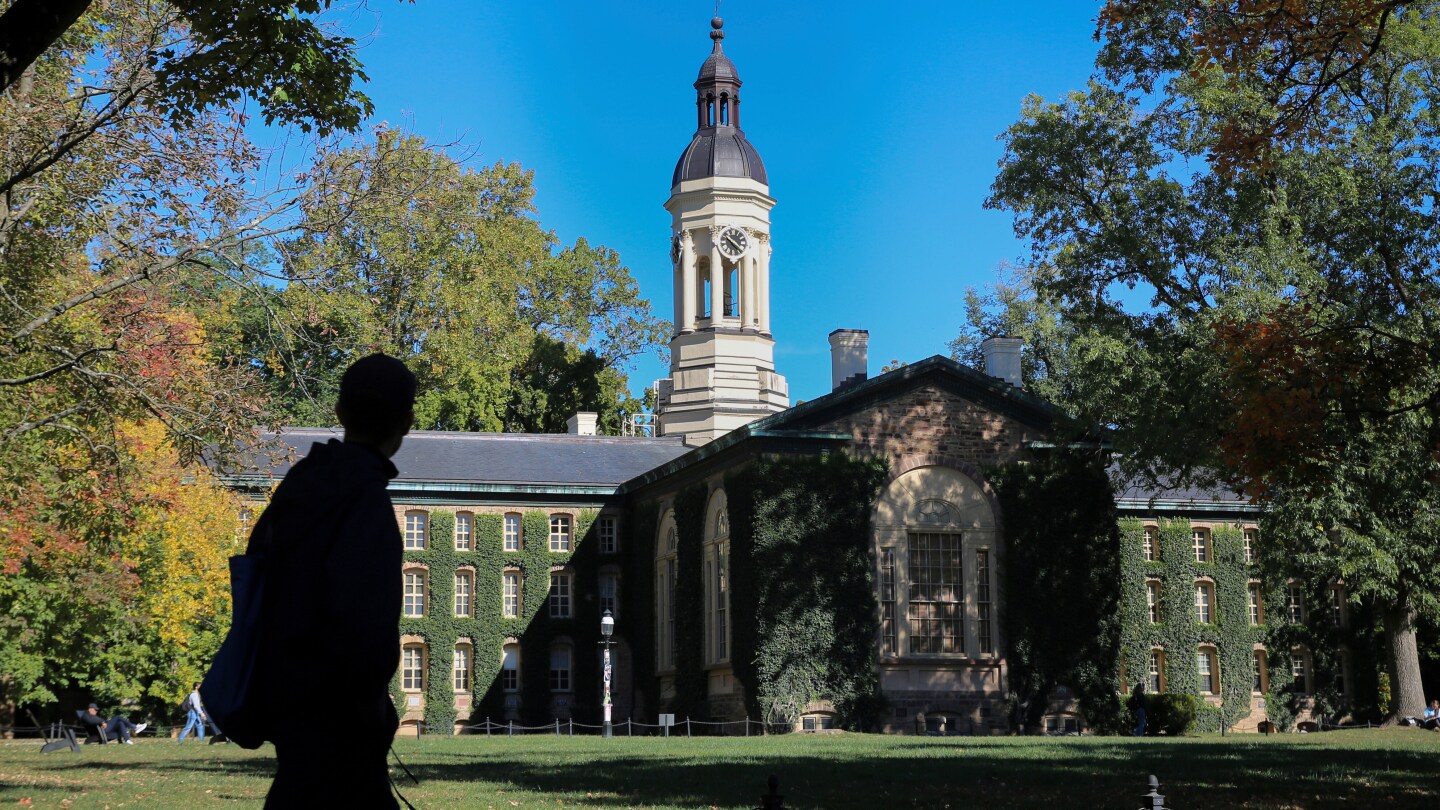
At Princeton University, this year’s freshman class includes more students from financially disadvantaged backgrounds than ever before, with one in four eligible for federal Pell grants—scholarships reserved for students with the most significant financial need. This represents a dramatic increase from two decades ago when fewer than one in ten Princeton students qualified for such assistance.
“The only way to increase socioeconomic diversity is to be intentional about it,” Princeton President Christopher Eisgruber said in a statement. “Socioeconomic diversity will increase if and only if college presidents make it a priority.”
The trend extends beyond Princeton. According to an Associated Press analysis of 17 highly selective institutions that have released new enrollment data, almost all saw increases in Pell-eligible students between 2023 and 2024. Most recorded consecutive years of growth, with none experiencing significant decreases over the two-year period.
Yale, Duke, Johns Hopkins, and the Massachusetts Institute of Technology have all set enrollment records for Pell-eligible students since 2022. At MIT, the number of low-income students in the freshman class has surged by 43% over the past two years, with economically disadvantaged students now comprising more than a quarter of this year’s entering class.
MIT officials attribute this growth to the institution’s policy of providing free tuition for families earning less than $200,000 annually. “MIT has always been an engine of opportunity for low-income students, and we are dedicated to ensuring we can make an MIT education accessible for students from every walk of life,” said Stu Schmill, MIT’s dean of admissions.
Amherst College in Massachusetts has taken similar measures, making tuition free for students from families in the bottom 80% of U.S. earnings. The college also began covering meals and housing for those below the median income and eliminated preferences for children of alumni and donors in admissions decisions. These changes have helped push low-income enrollment to one in four new students this year.
Simultaneously, Amherst has intensified recruiting efforts in underserved areas. “When we go out and talk to students, it’s not in the fanciest ZIP codes,” explained Matthew McGann, dean of admissions. “It’s in places where we know there’s a lot of talent but not a lot of opportunity.”
The most dramatic increase occurred at Swarthmore College, where Pell enrollment jumped from 17% to 30% last year. While many institutions delayed scholarship decisions due to problems with a new federal financial aid form, Swarthmore used alternative data to assess applicants’ financial needs, allowing them to offer scholarships while students were still awaiting decisions from other schools.
This focus on socioeconomic diversity comes as many college leaders seek to maintain campus diversity following the Supreme Court’s ruling against race-conscious admissions policies. Since Black, Hispanic, and Indigenous Americans experience the country’s highest poverty rates, officials hoped that prioritizing economic diversity would help preserve racial diversity.
However, the results have been mixed. Despite increasing economic diversity, many elite campuses have seen decreases in racial diversity. At Swarthmore, Black enrollment fell to 5% of its freshman class this year, down from 8% the previous year.
“In a race neutral environment, those numbers are likely to drop,” acknowledged Jim Bock, Swarthmore’s admissions dean. “Not all minority students are low-income, and not all majority students have significant financial means.”
The emphasis on socioeconomic factors has also drawn scrutiny from the federal government. The Trump administration has suggested that prioritizing students based on income or geography constitutes a “racial proxy” that violates the Supreme Court’s decision against affirmative action.
In a June letter, Trump officials accused UCLA of implementing “race-based admissions in all but name,” criticizing the university for considering factors such as applicants’ family income, ZIP code, and high school profile—information that colleges have traditionally weighed in admissions decisions.
Despite this pressure, college leaders believe their approach is legally sound and necessary for creating opportunity. Richard Kahlenberg, a researcher at the Progressive Policy Institute who advocates for class-based affirmative action, called the latest Pell figures “a significant step in the right direction.”
“Economic diversity is important in its own right,” Kahlenberg said. “It’s important that America’s leadership class—which disproportionately derives from selective colleges—include people who’ve faced economic hardships in life.”
Fact Checker
Verify the accuracy of this article using The Disinformation Commission analysis and real-time sources.

22 Comments
This is a positive development, but I’m curious to see how it impacts campus culture and the student experience. Achieving the right balance between economic diversity and academic excellence will be a delicate challenge.
Well said. The campus culture and student experience will be key metrics to monitor as these efforts unfold.
This is an important and complex issue. While increased economic diversity in elite college admissions is a positive step, the details of implementation will be critical. Maintaining high academic standards while expanding access is a nuanced challenge that will require skilled leadership and a deep commitment to equity and excellence.
Well said. The success of these efforts will hinge on the colleges’ ability to thoughtfully navigate this balance and ensure the initiatives are truly effective in creating more inclusive and equitable educational opportunities.
This is an interesting and complex issue. While I support efforts to increase economic diversity in elite colleges, I’m concerned about the potential impact on academic standards. Careful implementation will be key to ensuring these initiatives are truly effective.
Those are valid concerns. Balancing economic diversity and academic excellence is a delicate challenge that will require a thoughtful, evidence-based approach.
Increased economic diversity in elite college admissions is an important step, but the implementation will be critical. Maintaining high academic standards while expanding access is a complex issue that requires thoughtful, nuanced solutions.
I agree. The details of how this is rolled out will be crucial in determining the ultimate success and impact of these initiatives.
This is an interesting development, though I have some reservations. While economic diversity is important, I worry that it could come at the expense of academic excellence if not implemented thoughtfully. The balance will be crucial.
I share your concern. Maintaining high standards while expanding access is a complex challenge that requires careful planning and execution.
Expanding economic diversity in elite college admissions is a laudable goal, but the execution will be critical. Maintaining high academic standards while providing greater access to talented students from disadvantaged backgrounds is a complex undertaking that will require skilled leadership and robust support systems.
Well said. The success of these efforts will hinge on the college administrations’ ability to navigate this nuanced issue with care and foresight.
This is an encouraging development. Providing more opportunities for talented students from disadvantaged backgrounds can help foster social mobility and strengthen the diversity of these institutions. The key will be ensuring these efforts are implemented thoughtfully.
Well said. Thoughtful implementation is crucial to achieving the right balance and avoiding unintended consequences.
I’m encouraged to see elite colleges prioritizing economic diversity in their admissions, but the implementation will be key. Achieving the right balance between expanding access and upholding academic excellence is a delicate challenge that will require thoughtful, evidence-based policymaking.
Absolutely. The long-term impact of these initiatives will depend heavily on how they are designed and executed. Careful monitoring and adjustment will be essential.
Interesting shift in admissions priorities at elite colleges. Increased economic diversity is a positive step, though more work is needed to ensure true inclusivity. It will be important to monitor how this impacts academic standards and campus culture.
I agree, it’s a nuanced issue that requires careful balancing. Economic diversity is important, but not at the expense of academic excellence.
I’m curious to see how this plays out in terms of student outcomes and campus dynamics. Increased economic diversity is positive, but the devil is in the details. Maintaining high academic standards while expanding access is a delicate challenge.
That’s a good point. Monitoring student success and campus climate will be important to ensure these efforts are truly effective.
Increased economic diversity in elite college admissions is a step in the right direction, but the implementation will be key. Ensuring these students have the support they need to thrive academically and socially will be critical to the success of these efforts.
Absolutely. Providing robust academic and social support systems will be essential to enabling these students to succeed and reach their full potential.