


Listen to the article
Wisconsin Expands Postpartum Medicaid Coverage, Leaving Arkansas as Lone Holdout
The Wisconsin Assembly on Thursday passed legislation extending Medicaid coverage for new mothers from two months to a full year after giving birth, a measure that received overwhelming bipartisan support with a 95-1 vote. Once signed into law by Democratic Governor Tony Evers, expected next week, Wisconsin will join 48 other states in expanding postpartum Medicaid benefits, leaving Arkansas as the only state yet to implement such coverage.
The bill’s passage marks a significant policy shift for Wisconsin Republicans, particularly Assembly Speaker Robin Vos, who had previously blocked the expansion for years citing concerns about welfare program growth. Vos relented late Wednesday, clearing the path for Thursday’s near-unanimous approval.
During the same session, lawmakers unanimously passed another healthcare measure requiring insurance companies to cover additional cancer screenings for women with dense breast tissue. Both bills had already received strong bipartisan support in the state Senate.
The Medicaid expansion will allow low-income mothers who earn more than the poverty level to remain on the state’s Medicaid program for a full year after childbirth, significantly extending the current two-month coverage window. Health experts have long advocated for this extension, noting that many maternal health complications can emerge well beyond the immediate postpartum period.
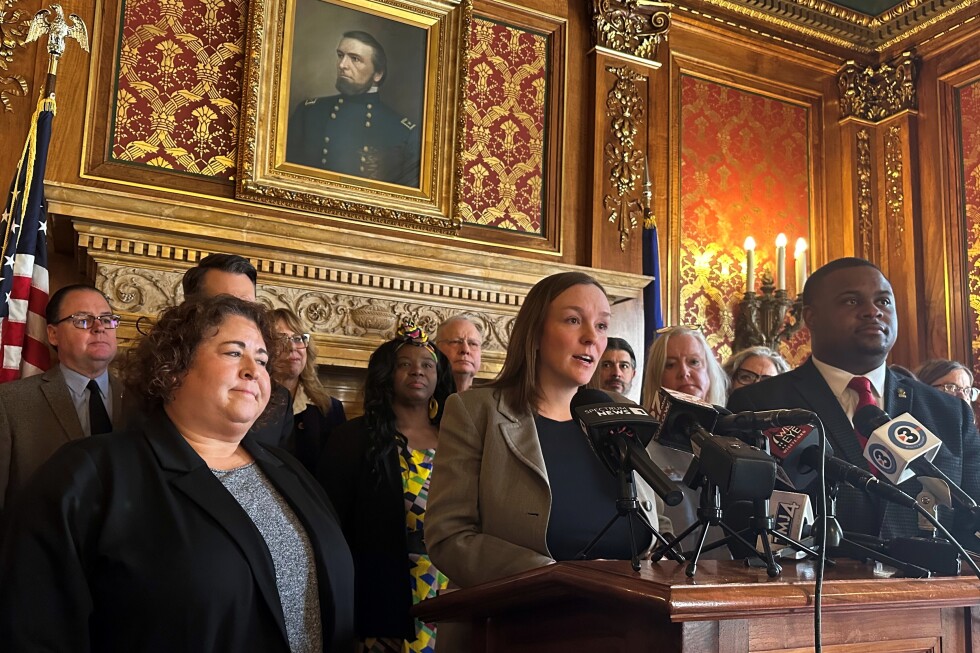
“This is an incredible win for women and the people of Wisconsin,” said Democratic Assembly Minority Leader Greta Neubauer, who recently announced her pregnancy. Neubauer, whose mother battled breast cancer, had pledged that Democrats would “stop at nothing to get a vote on these bills.”
The issue has taken on personal dimensions for many lawmakers. Republican Senate Majority Leader Devin LeMahieu shared stories about loved ones affected by breast cancer while advocating for the screening bill, highlighting the bipartisan nature of the health initiatives.
Arkansas now stands alone in not extending postpartum Medicaid coverage, despite having one of the nation’s highest maternal mortality rates. The state did enact some maternal healthcare improvements last year, including provisions allowing pregnant women to receive temporary Medicaid coverage during eligibility processing and covering doula services and remote vital monitoring.
However, Arkansas Republican Governor Sarah Huckabee Sanders has opposed the postpartum extension, arguing that alternative coverage options exist. The state’s reluctance puts it at odds with a nationwide trend of expanding maternal health services across political lines.
Wisconsin’s legislative action comes amid last-minute negotiations near the end of the state’s two-year legislative session. Lawmakers and Governor Evers are also working to negotiate packages addressing tax cuts, school spending, and other priorities, with access to an estimated $2.5 billion budget surplus.
Despite these healthcare victories, several other high-profile initiatives face uncertain futures. Funding for WisconsinEye, the state’s nonprofit equivalent of C-SPAN, remains unresolved. Additionally, Wisconsin’s nearly 40-year-old land conservation program faces potential extinction as lawmakers have yet to agree on continued funding beyond June 30.
Republicans have criticized the conservation program as too expensive, arguing it removes too much land from property tax rolls and hurts municipalities. Proposed bills to maintain the program with significantly reduced funding haven’t yet passed.
The Medicaid expansion represents a crucial policy shift in Wisconsin’s approach to maternal healthcare, aligning the state with national standards during a period when maternal health outcomes have received increased scrutiny. Health advocates have consistently pointed to extended postpartum care as a critical component in reducing maternal mortality and improving outcomes for both mothers and infants.
As Governor Evers prepares to sign these measures, Wisconsin joins a broad nationwide consensus on expanding maternal health coverage, leaving Arkansas increasingly isolated in its policy approach to postpartum care.
Fact Checker
Verify the accuracy of this article using The Disinformation Commission analysis and real-time sources.

10 Comments
Interesting to see Wisconsin expand postpartum Medicaid coverage. Providing more healthcare support for new mothers is an important step. Curious to see if other states follow suit and if this leads to better health outcomes.
Yes, it’s a positive development. Ensuring access to healthcare during the critical postpartum period can make a real difference for mothers and infants.
Leaving Arkansas as the only holdout on this policy is surprising. I wonder what the specific concerns and arguments are there. Broader Medicaid coverage for new moms seems like a common-sense approach.
Good point. It would be interesting to understand Arkansas’ reasoning for not expanding postpartum Medicaid so far. Hopefully they’ll reconsider given the potential benefits.
Requiring insurance companies to cover additional cancer screenings for women with dense breast tissue is another positive healthcare policy. Early detection is key, so expanding access to these important tests makes sense.
Agreed. Improving access to preventative care can lead to better health outcomes. This type of coverage expansion seems like a smart move.
While the postpartum Medicaid expansion is a welcome development, it’s concerning that Arkansas remains the lone holdout. Ensuring access to healthcare for new mothers should be a priority across the country.
It’s encouraging to see bipartisan cooperation on these healthcare initiatives in Wisconsin. Providing support for new mothers and expanding cancer screening coverage are both important steps. Hopefully other states follow their lead.
Absolutely. Pragmatic, evidence-based policymaking on healthcare issues like this is crucial. Glad to see Wisconsin taking positive action.
The near-unanimous bipartisan support in Wisconsin is encouraging. Healthcare shouldn’t be a partisan issue, especially when it comes to supporting vulnerable populations like new mothers. Curious to see if this momentum spreads to other states.