


Listen to the article
Iranian Supreme Leader Ali Khamenei issued stark warnings of potential regional escalation following Israel’s military operations in Lebanon, prompting a dismissive response from former President Donald Trump during his campaign activities in Pennsylvania on Thursday.
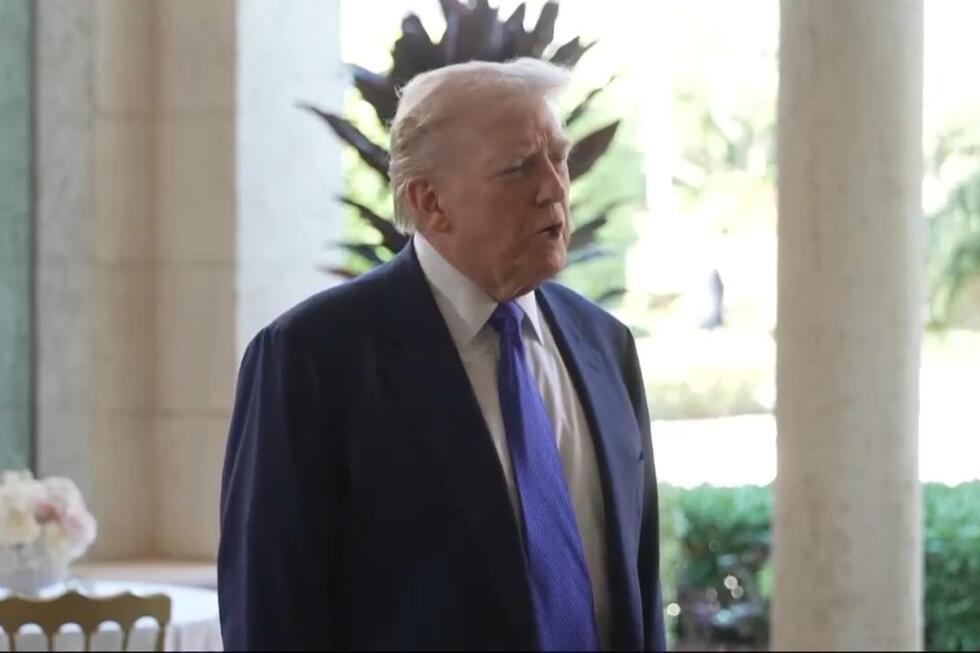
“Why wouldn’t he say that?” Trump remarked when asked about Khamenei’s comments. “He probably thinks we’re stupid people being led by stupid leadership.” The Republican presidential nominee continued his criticism of the Biden administration’s handling of Middle East affairs, suggesting Iran perceives weakness in current American foreign policy.
Khamenei’s statements came as tensions reached new heights across the region. “The Zionist regime’s crimes have crossed the red lines, which may force everyone to take action,” the Iranian leader declared in a televised address. His comments signal growing concern about potential wider conflict as Israel conducts military operations against Hezbollah in Lebanon following exchanges of fire that began after the October 7 Hamas attack on Israel last year.
The escalating rhetoric coincides with intensified Israeli military actions. In recent weeks, Israel has targeted senior Hezbollah leadership, killed the group’s leader Hassan Nasrallah in an airstrike in Beirut, and launched a ground operation in southern Lebanon. These developments have raised alarm among regional observers about the potential for a more extensive confrontation that could draw in Iran, Hezbollah’s primary backer.
Trump used the moment to continue his campaign narrative that the Biden administration’s approach to Iran has emboldened the country. “Iran was broke when I left office. They had no money for Hamas, Hezbollah or any of their proxies,” Trump claimed, referencing the economic sanctions his administration imposed on Iran after withdrawing from the nuclear deal in 2018.
Middle East security experts note that the situation presents significant challenges for U.S. foreign policy regardless of who wins the upcoming presidential election. “The region is at a dangerous inflection point,” said Robert Malley, former U.S. special envoy for Iran under the Biden administration. “Any new administration will face the difficult task of preventing further escalation while supporting allies.”
The Biden administration has maintained that its diplomatic approach aims to reduce tensions while supporting Israel’s security. Secretary of State Antony Blinken has been engaged in shuttle diplomacy across the region in recent weeks, seeking to prevent the conflict from expanding further.
Iran’s role in the current tensions cannot be overstated. The country provides financial and military support to Hezbollah in Lebanon, Hamas in Gaza, and other proxy groups across the region. Analysts estimate Iran spends hundreds of millions of dollars annually supporting these organizations, though precise figures are difficult to confirm due to the opaque nature of these relationships.
For Israel, the threat posed by Hezbollah’s estimated arsenal of over 150,000 rockets and missiles represents a significant security concern. The group’s capabilities have grown substantially since the last major conflict with Israel in 2006, with Iranian technical and financial support playing a crucial role in this expansion.
Market analysts are closely monitoring these developments, with oil prices showing volatility amid concerns about potential disruptions to global supply chains should the conflict expand. The Strait of Hormuz, through which approximately 20% of the world’s oil supply passes, becomes a particular point of vulnerability during periods of heightened Iran-West tensions.
Regional observers also note that the timing of these tensions coincides with the U.S. presidential election campaign, potentially complicating diplomatic efforts. “Election seasons typically aren’t conducive to nuanced foreign policy,” noted Daniel Kurtzer, former U.S. ambassador to Israel. “There’s a tendency toward simplified messaging that doesn’t always reflect the complexity of Middle East dynamics.”
As Israel continues its operations in Lebanon and Gaza, and Iran considers its response options, the international community remains concerned about the potential for miscalculation that could lead to a wider regional war. The diplomatic challenge facing current and future U.S. administrations will be navigating these tensions while working toward longer-term stability in this persistently volatile region.
Fact Checker
Verify the accuracy of this article using The Disinformation Commission analysis and real-time sources.

10 Comments
As someone invested in the uranium and lithium sectors, I’m closely monitoring this geopolitical situation. Any disruptions to mining and energy operations in the Middle East could have significant impacts on global supply and pricing. Hopefully the parties involved can find a peaceful resolution.
That’s a good point. The mining and energy sectors are particularly vulnerable to geopolitical instability in this region. Maintaining stable supply chains is crucial, so a diplomatic solution is in everyone’s best interest, both politically and economically.
As someone invested in the mining and energy sectors, I’m closely watching this situation. Geopolitical instability in the Middle East could have significant impacts on commodity prices and supply chains. Hopefully cooler heads can prevail to avoid further conflict.
That’s a good point. Any disruptions to energy and mining operations in the region could ripple through global markets. Maintaining stability is crucial, both for the people on the ground and the economic implications.
The geopolitical tensions in the Middle East are deeply concerning. Both sides need to exercise caution and restraint to prevent a dangerous escalation. Civilian lives are at risk, so a peaceful resolution should be the top priority.
Absolutely. Cooler heads must prevail here. Inflammatory rhetoric from leaders on both sides is only going to make the situation worse. Dialogue and diplomacy are the only path forward.
Trump’s dismissive tone towards Khamenei’s warnings is concerning. While the rhetoric may be inflammatory, we can’t ignore the potential for real escalation and conflict. All parties need to exercise restraint and focus on diplomatic solutions to de-escalate the situation.
I agree, this is a delicate situation that requires nuanced leadership. Inflammatory statements from either side will only make things worse. Pursuing diplomatic resolutions should be the top priority to avoid further destabilization in the region.
Interesting to see Trump’s dismissive take on Khamenei’s warnings. While the rhetoric is escalating, it’s important to maintain diplomatic channels and avoid further regional conflict. Prudent leadership is needed to de-escalate tensions.
I agree, a measured response is critical here. Inflammatory rhetoric from either side will only inflame the situation further. Diplomatic solutions should be the priority.