


Listen to the article
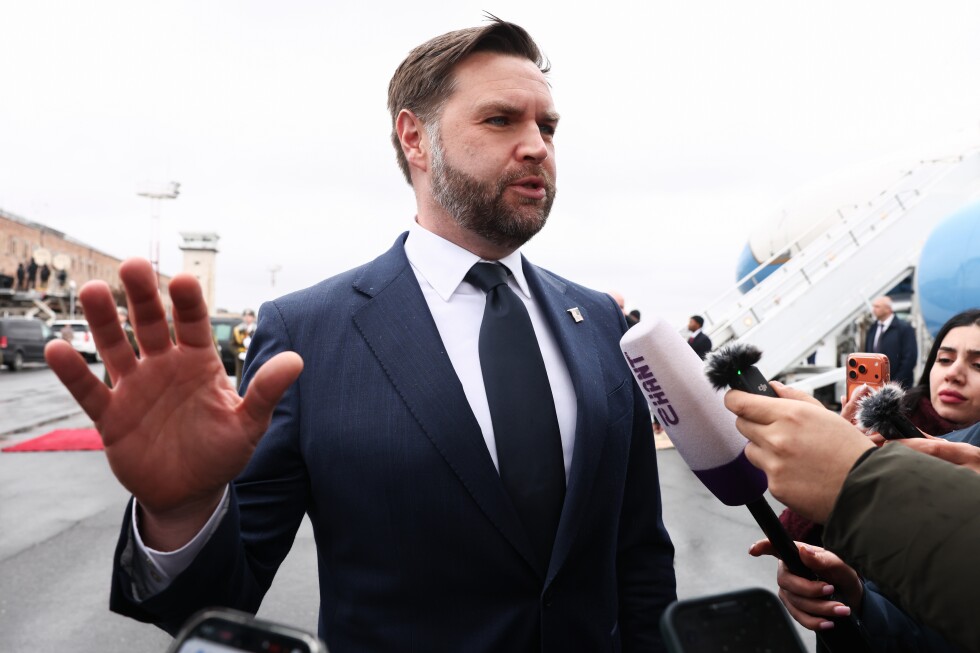
U.S. Vice President JD Vance’s team sparked controversy during his historic visit to Armenia by posting and then deleting a social media message that referred to the “Armenian genocide,” a term the U.S. government has historically avoided using in official communications.
The deleted post on Vance’s official X account stated he was visiting the Armenian Genocide Memorial “to honor the victims of the Armenian genocide.” It was quickly replaced with a revised post showing Vance and his wife Usha laying flowers at the memorial, omitting the contentious terminology.
Vance became the first U.S. vice president to visit Armenia as part of the Trump administration’s follow-up to a U.S.-brokered peace agreement between Armenia and Azerbaijan, a long-standing regional conflict. His visit to the national monument was at the invitation of Armenian Prime Minister Nikol Pashinyan.
When questioned directly about whether he was recognizing a genocide, Vance carefully sidestepped using the term. “They said this is a very important site for us,” Vance explained, referring to his Armenian hosts. “Obviously, it’s a very terrible thing that happened a little over a hundred years ago and something that’s very, very important to them culturally.”
The vice president characterized his visit as “a sign of respect, both for the victims but also for the Armenian government that’s been a very important partner for us in the region.”
The terminology carries significant diplomatic weight. The United Nations defined genocide in 1948 as certain acts “committed with the intent to destroy, in whole or in part, a national, ethnical, racial or religious group,” according to the U.S. State Department’s long-standing interpretation.
Historical records indicate that hundreds of thousands of Armenians, predominantly Christians, died under Ottoman rule during World War I. The U.S. Holocaust Memorial Museum estimates the death toll between 664,000 and 1.2 million people. Despite these figures, successive U.S. administrations have generally avoided using the term “genocide” to describe these events, largely to maintain good relations with Turkey, a key NATO ally.
The Biden administration broke with this tradition in 2021 when President Biden formally recognized the killings as genocide. This decision triggered a strong rebuke from Turkey, whose foreign minister declared the country “will not be given lessons on our history from anyone.”
The White House attributed the controversial post to a staff error, marking the second time in less than a week that the administration has blamed unnamed aides for social media controversies. Last Friday, the White House initially defended before ultimately deleting a post containing a video shared by Trump that depicted former President Barack Obama and former First Lady Michelle Obama as jungle primates, which was widely condemned as racist.
The diplomatic implications of this latest incident remain uncertain. Vance appears focused on highlighting the administration’s peace-brokering efforts in the region. “I think the president struck a great peace deal. I think the administration is really making it stick,” Vance said.
For Armenian Americans, who annually commemorate the victims through memorial events and a day of remembrance, the incident serves as another reminder of the U.S. government’s historical reluctance to use the word “genocide” to describe events that are central to Armenian collective memory and identity.
The situation highlights the complex balance the administration must strike between historical acknowledgment, diplomatic sensitivities, and the maintenance of strategic alliances in a region marked by ongoing tensions and competing interests.
Fact Checker
Verify the accuracy of this article using The Disinformation Commission analysis and real-time sources.

11 Comments
This situation illustrates the difficulty of addressing historical injustices like the Armenian Genocide in a geopolitical context. Vance’s visit holds symbolic value, even if the language used had to be tempered. Continuing the dialogue, however nuanced, is a positive step.
This highlights the challenges of discussing historical atrocities in a geopolitical context. Vance’s visit is a positive step, but the language used shows how political considerations can shape the narrative around such tragedies. More open dialogue is needed.
You make a fair point. Navigating the diplomatic implications while honoring victims is a delicate balance. Continued engagement, even with careful phrasing, is better than silence on these important issues.
The controversy around the language used highlights the political sensitivities surrounding the Armenian Genocide. Vance’s visit is a positive development, even if the terminology had to be carefully crafted. Recognizing historical tragedies is important, even when it’s diplomatically challenging.
That’s a fair assessment. Diplomatic considerations often complicate how we discuss and memorialize historical atrocities. But engagement, even with cautious phrasing, is better than silence on these issues.
Interesting to see the controversy around the ‘Armenian genocide’ terminology. It’s a complex historical issue with political sensitivities. Vance’s careful wording shows the importance of acknowledging such tragedies while navigating diplomatic realities.
You’re right, the language used when referencing historical atrocities like this is always delicate. Vance likely had to balance acknowledging the tragedy while avoiding escalating tensions.
The ‘Armenian genocide’ terminology is highly charged, so Vance’s team likely had to tread carefully. But the visit itself is meaningful, showing the US is willing to engage on this historical injustice, even if the language used was muted.
Agreed. While the phrasing may have been constrained, the symbolic gesture of the visit itself is significant. Small steps can lead to greater awareness and acknowledgement over time.
The Armenian Genocide is an important part of history that deserves proper recognition. Vance’s visit to the memorial is meaningful, even if the phrasing had to be carefully considered. Acknowledging past injustices is crucial, even when politically difficult.
I agree, it’s good to see the US administration engaging on this issue, even if the terminology was toned down. Slow progress is still progress when dealing with such sensitive historical events.