


Listen to the article
White House and Minnesota Governor Clash Over Immigration Enforcement
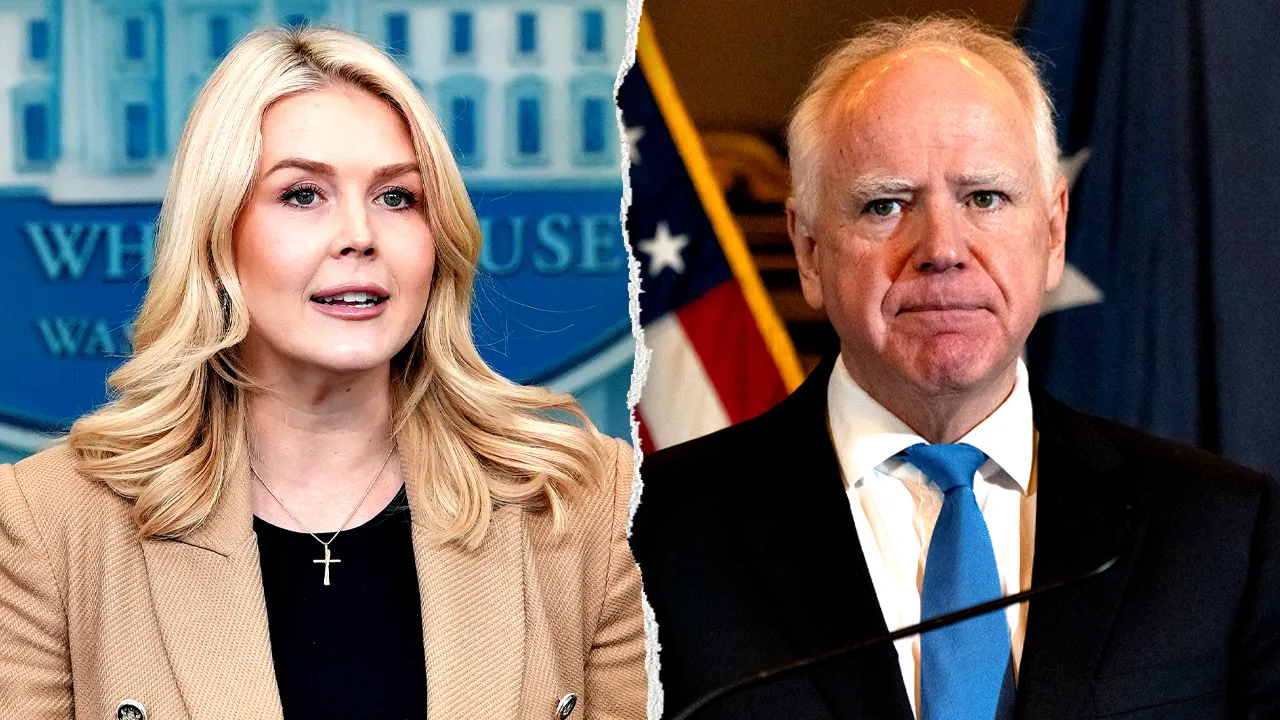
The Trump administration has launched a pointed critique of Minnesota Governor Tim Walz, accusing him of undermining law enforcement and obstructing cooperation with federal immigration agencies. The dispute highlights growing tensions between federal and state authorities over immigration enforcement operations.
White House Press Secretary Karoline Leavitt took to social media to criticize Walz, claiming he has failed to collaborate with federal agencies, particularly Immigration and Customs Enforcement (ICE), during major enforcement operations.
“Tim Walz does NOT believe in law and order,” Leavitt wrote. “No amount of propaganda from his allies in the liberal media will convince the American people otherwise.”
The criticism comes amid heightened tensions following several controversial shootings involving immigration agents in Minnesota, including the January death of Minneapolis resident Renée Good and the fatal shooting of 37-year-old Alex Pretti just days ago.
Governor Walz has responded forcefully to these incidents, calling for the withdrawal of federal agents from his state. “Minnesota believes in law and order. We believe in peace. And we believe that Trump needs to pull his 3,000 untrained agents out of Minnesota before they kill another American in the street,” Walz stated on social media.
Leavitt’s criticism extended beyond cooperation issues, as she accused the governor of releasing “nearly 500 criminal illegal aliens back onto Minnesota’s streets” rather than transferring them to federal custody. She further claimed that Walz has encouraged “left-wing agitators to stalk and record federal officers,” resulting in agents being “doxxed, targeted, impeded, and placed in extremely dangerous situations.”
The White House press secretary also referenced Walz’s handling of civil unrest following George Floyd’s murder in 2020, stating that he “allowed rioters to burn Minneapolis,” and accused his administration of overseeing “massive fraud schemes” that allegedly cost taxpayers billions of dollars.
The dispute highlights the complex dynamics between state and federal authorities on immigration enforcement, particularly in states where local leaders have adopted policies that limit cooperation with federal immigration authorities. The Trump administration has made immigration enforcement a cornerstone of its domestic policy, prioritizing the deportation of individuals with criminal records who are in the country illegally.
Immigration policy experts note that such conflicts between state and federal authorities have intensified in recent years as states and municipalities adopt varying approaches to working with federal immigration agencies. Some jurisdictions have enacted sanctuary policies limiting cooperation, while others have embraced partnerships with federal authorities.
The White House position was summed up in Leavitt’s statement that President Trump “will never back down” from his pledge to deport those she described as “violent criminal illegal aliens,” a commitment she said was supported by the American voters who elected him.
Leavitt urged Walz to change his approach, saying: “Governor Walz should do the right thing by Minnesotans and work WITH, rather than AGAINST, federal law enforcement.” She pointed to states like Florida and Texas, and cities such as Washington, D.C., as examples where cooperation has allegedly led to “peace and safety.”
The governor’s office has maintained that their primary concern is the safety of Minnesota residents, particularly following the recent fatal shootings involving federal agents. This standoff reflects broader national divisions over immigration policy, law enforcement tactics, and the balance of power between state and federal authorities.
Fact Checker
Verify the accuracy of this article using The Disinformation Commission analysis and real-time sources.

10 Comments
This clash over immigration enforcement underscores the broader debate around the appropriate role and limits of federal versus state authority. Interesting political dynamics at play.
Agreed, the fundamental federalism issues underlying this dispute add another layer of complexity. Careful balancing of different jurisdictional interests will be key.
The White House’s strong criticism of Governor Walz suggests this dispute could escalate further. I’ll be following developments closely to see how it unfolds.
Given the high-profile nature of the clash, political pressure is likely to mount on both sides. Compromise may be challenging but could be necessary to de-escalate tensions.
Concerning to see the White House take such a confrontational stance against a state governor. Hopefully cooler heads can prevail and a constructive resolution can be found.
Agree, the harsh rhetoric from the White House is worrying. De-escalating the rhetoric and finding common ground will be crucial to make progress on this sensitive issue.
Interesting political clash over immigration enforcement in Minnesota. Curious to see how this dispute between state and federal authorities plays out going forward.
Tensions seem high after a few controversial incidents involving federal immigration agents in the state. Governor Walz appears to be taking a firm stance.
This is a complex issue without easy answers. Both sides have valid concerns about law enforcement, immigration policy, and public safety. Nuanced discussions will be important.
Agree, it’s a sensitive topic. Hopefully constructive dialogue can help find solutions that balance the different priorities and perspectives involved.