


Listen to the article
Confusion Mounts as Iran-U.S. Ceasefire Reveals Conflicting Narratives
A fragile ceasefire between the United States and Iran has temporarily paused hostilities for two weeks, with potential peace negotiations expected to begin as early as Friday. However, the two nations appear unable to agree on even the fundamental aspects of what has been discussed, creating significant uncertainty about the path forward.
The ceasefire, announced by President Donald Trump on Tuesday night just 90 minutes before his deadline for wide-scale U.S. attacks on Iranian infrastructure, has created more questions than answers as both sides present contradictory interpretations of the agreement.
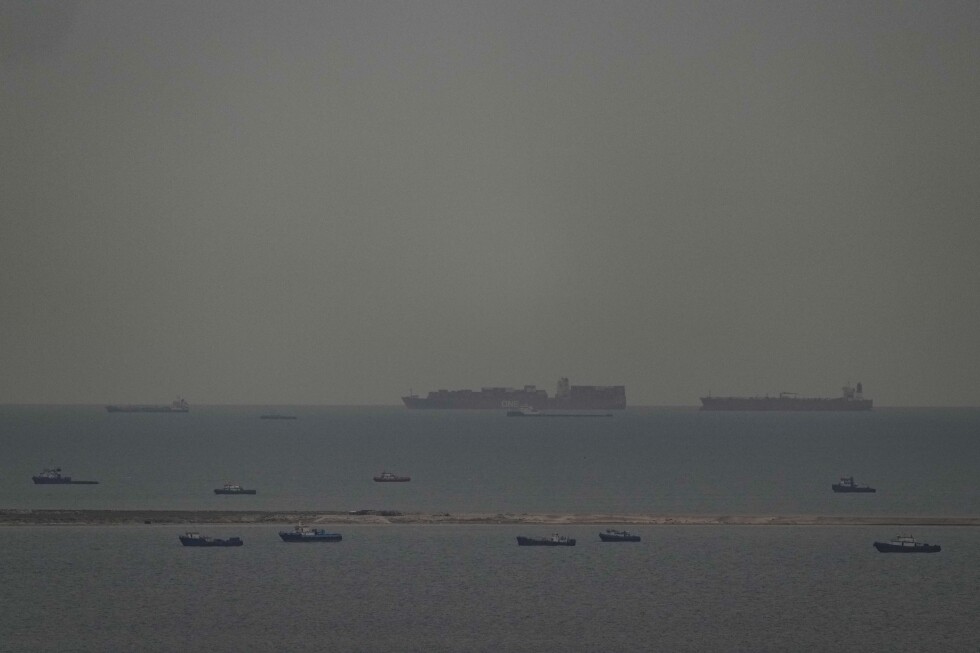
Central to the disagreements is the status of the Strait of Hormuz, through which approximately one-fifth of the world’s oil typically flows. Trump stated the ceasefire was contingent on Iran agreeing to the “COMPLETE, IMMEDIATE, and SAFE OPENING” of this crucial waterway. Defense Secretary Pete Hegseth confirmed Wednesday that the strait was open, only for Iran to announce hours later that it was closing the passage again in response to Israeli strikes in Lebanon.
Further complicating matters, Iran maintains that shipping can resume only under its military management, suggesting Tehran would retain control of the strategically vital strait. This arrangement would allow Iran to maintain significant global economic leverage and potentially generate billions in revenue by imposing fees on passing vessels.
The nations also remain at odds over Iran’s nuclear program. Tehran’s peace plan includes Washington’s “acceptance of enrichment” of uranium, directly conflicting with Trump’s longstanding position that Iran must never be allowed to develop nuclear weapons.
Trump claims a peace agreement would involve the U.S. working with Iran to “dig up” enriched uranium that was reportedly buried following joint U.S.-Israeli strikes on Iranian nuclear facilities in June. However, Hegseth presented a different stance, stating Tehran will either “give it to us voluntarily” or face potential military action similar to last summer’s operations.
The geographic scope of the ceasefire presents another point of contention. Iran insists that ceasing hostilities in Lebanon, where Israel has intensified its military campaign in recent weeks, will be part of broader peace negotiations. This position was echoed by Pakistani Prime Minister Shehbaz Sharif, a key mediator in the process.
Trump, however, explicitly told PBS NewsHour that the ceasefire would not extend to Lebanon, aligning with Israeli Prime Minister Benjamin Netanyahu’s statement that the two-week suspension of strikes against Iran does not include Israel’s operations against Hezbollah in Lebanon.
The White House has provided little clarity on what changed between Monday, when Trump called Iran’s initial 10-point peace plan “not good enough,” and Tuesday night, when he suddenly described it as “a workable basis on which to negotiate.”
Adding to the confusion, Iran has released multiple versions of its 10-point plan, with variations appearing in English and Farsi translations. Iran’s Supreme National Security Council claims the U.S. has “in principle” committed to several major concessions that would represent dramatic shifts in long-standing American policy.
These alleged commitments include guaranteeing lasting peace, accepting Iran’s control over the Strait of Hormuz, allowing uranium enrichment, removing all economic sanctions, ending international oversight of Iran’s nuclear program, compensating Iran for war damages, and withdrawing all U.S. combat forces from the region—a particularly extraordinary claim given America’s decades-long military presence in the Persian Gulf since the 1991 Gulf War.
When questioned about these proposals, White House Press Secretary Karoline Leavitt offered only that “negotiations will continue,” while emphasizing that “President Trump and our powerful military got Iran to agree to reopening the Strait of Hormuz.”
Trump has dismissed Iran’s characterization of the agreement as “a FRAUD” and a “false Statement… linked to a Fake News site (from Nigeria).” The U.S. has reportedly prepared its own 15-point peace plan, though officials have confirmed only broad outlines.
“There is only one group of meaningful ‘POINTS’ that are acceptable to the United States, and we will be discussing them behind closed doors during these Negotiations,” Trump posted Wednesday, leaving the specifics of the U.S. position largely unknown to the public.
As the two-week window proceeds, the international community watches closely to see whether substantive negotiations can bridge the vast differences in interpretation or if this temporary pause merely postpones an escalation of conflict.
Fact Checker
Verify the accuracy of this article using The Disinformation Commission analysis and real-time sources.

6 Comments
The closure of the Strait of Hormuz is certainly a concerning development. Maintaining the free flow of oil through this critical waterway is crucial for the global economy. I hope the negotiators can find a way to address Iran’s security concerns without resorting to such drastic measures.
It’s troubling to see the ceasefire unraveling so quickly. This underscores the deep-seated mistrust and conflicting agendas that have plagued US-Iran relations for decades. I hope the negotiators can find a path forward, but it will require immense patience and compromise.
The situation seems to be deteriorating rapidly, with both sides hardening their positions. I worry that the window for a diplomatic solution may be closing. At the same time, I’m hopeful that cooler heads will prevail and that the ceasefire can be salvaged, even if it’s just a temporary reprieve.
Interesting to see the conflicting narratives around this ceasefire deal. It highlights the complexity of the situation and the challenges in reaching a lasting resolution between the US and Iran. I’m curious to see how the negotiations progress and whether they can find common ground.
The status of the Strait of Hormuz seems to be a major sticking point. With such a vital global shipping chokepoint, both sides will be keen to assert control and influence. I wonder if some kind of compromise or shared arrangement could be reached to ease tensions.
This ceasefire feels quite fragile and temporary. With both sides presenting such different interpretations, I worry it may not last long. Diplomatic efforts will need to be very delicate to try and build a more durable peace agreement.