


Listen to the article
Virginia Governor Glenn Youngkin Faces Uncertain Political Future as Term Ends
Almost from the moment Glenn Youngkin took office as Virginia’s governor four years ago, political observers have speculated about his next move. The Republican who skillfully balanced between the MAGA movement and the party’s traditional establishment now finds himself at a crossroads as he prepares to hand over power to Democrat Abigail Spanberger next month.
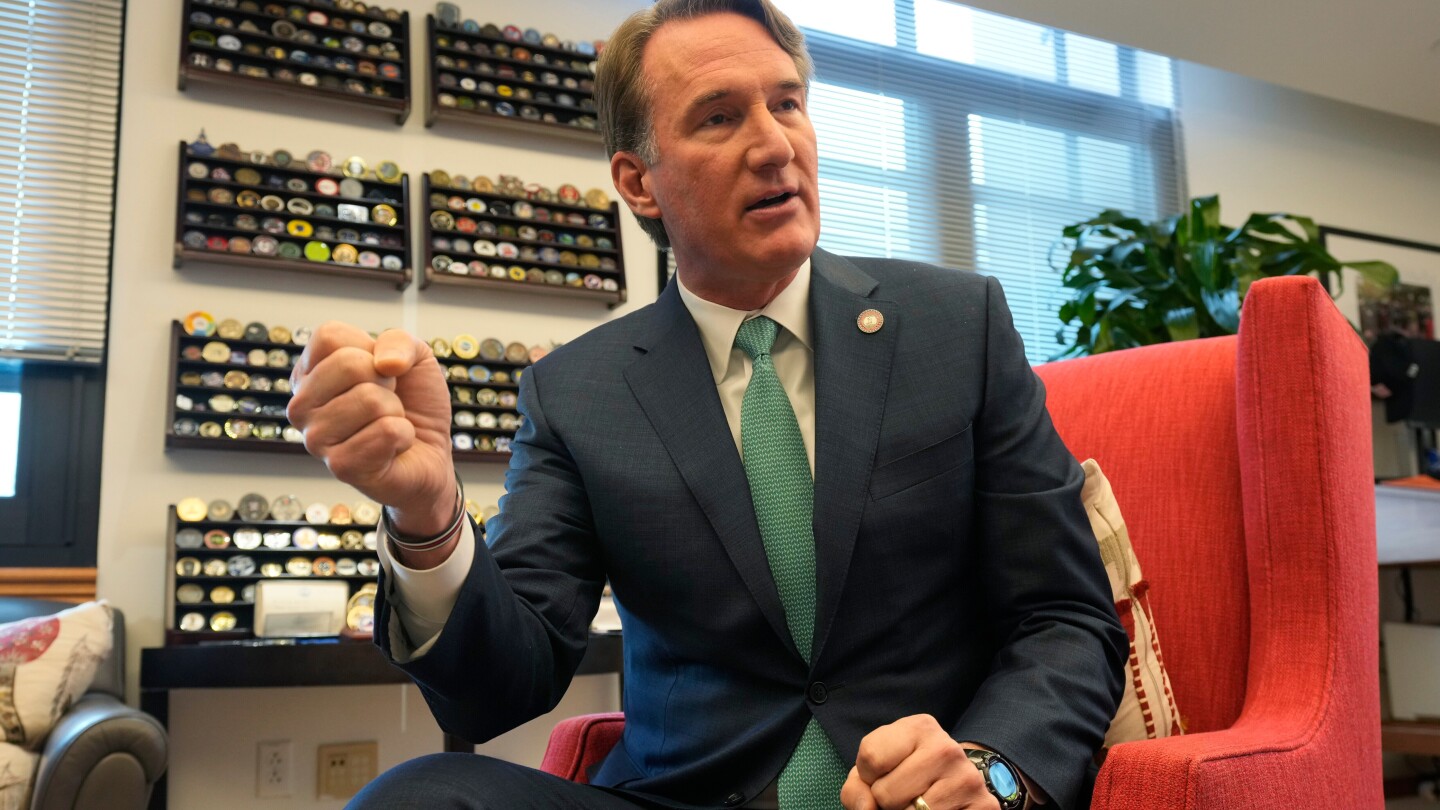
In a recent interview with The Associated Press, Youngkin deflected questions about his political ambitions. When asked if he wants to be president, he responded simply, “I’m focused on Virginia.” Pressed about potential roles in Donald Trump’s administration, including leading the Department of Homeland Security, Youngkin maintained his focus on Virginia’s transformation during his tenure.
Despite his reticence, Youngkin’s actions have suggested national ambitions. Last summer, he headlined Republican party dinners in Iowa and South Carolina—early primary states that typically serve as launching pads for presidential campaigns. As a former Carlyle Group executive, Youngkin possesses the personal fortune that could finance a future candidacy.
“If Glenn Youngkin runs for president, I’m 100% in,” said Republican Delegate Israel O’Quinn, a longtime Virginia lawmaker. “I think he would make a fantastic president—if that’s what he wants to do.”
Others, particularly from across the aisle, believe his political moment has passed. Democratic Virginia Senator Scott Surovell quipped, “You can probably find some red sweater vests on sale down at the thrift store for $1,” referencing Youngkin’s signature attire.
Youngkin’s rise to national prominence came after defeating Democratic stalwart Terry McAuliffe in 2021. At that time, Donald Trump was maintaining a relatively low profile following the January 6 Capitol riot, and some Republican leaders were actively searching for alternative standard-bearers. A politician who could energize Trump’s base while appealing to swing voters in a purple state like Virginia seemed ideally positioned.
However, when the 2024 presidential race materialized, Youngkin opted not to compete. Trump swiftly reclaimed control of the Republican Party, securing the nomination and ultimately winning a second term.
Richmond-based political strategist Bob Holsworth described Youngkin’s evolution as moving from “MAGA lite to full MAGA” during his four years in office. “He’s made this calculation: That’s where the Republican Party is, and that’s where it’s going,” Holsworth noted, while questioning whether Youngkin can genuinely connect with the MAGA base.
Republican strategist Alex Conant offered a more optimistic assessment of Youngkin’s political versatility: “If Trump’s political stock falls, the MAGA movement will still be important. Youngkin has shown an ability to appeal to both Trump supporters and Republicans who are the first to fall away from Trump.”
Virginia’s constitution prohibits governors from serving consecutive terms, giving them just four years to establish their legacy. Youngkin attempted to showcase political dexterity throughout his term, impressing donors with his business background while cultivating an accessible image as governor.
“Virginia is as strong as she’s ever been,” Youngkin asserted in his AP interview. “Financially, she’s stronger than she’s ever been. Economically, there’s more opportunity than we’ve ever had, and we’re growing.”
However, Youngkin’s tenure faced significant obstacles, particularly from the Democratic-controlled state legislature that expanded its majority during his administration. The governor vetoed approximately 400 bills passed by lawmakers, while Democrats blocked many of his initiatives, including a proposal to build a new arena for the Washington Wizards and Capitals in Virginia.
Youngkin’s relationship with Trump also fluctuated. In 2022, Trump mocked the governor’s name on social media, suggesting it “sounds Chinese” and accused him of not appreciating MAGA support. The two later appeared to reconcile, with Trump describing Youngkin as “a great governor, one of the great governors in our country.”
Despite Youngkin’s eventual alignment with Trump, Republicans suffered substantial losses in Virginia’s recent elections. His chosen successor, Lieutenant Governor Winsome Earle-Sears, lost to Spanberger by 15 points in November. Republicans also ceded 13 seats in the House of Delegates, mirroring Democratic victories in New Jersey that suggest potential momentum heading into the midterm elections.
Youngkin rejected the notion that Trump’s agenda or his support of it contributed to these losses, instead pointing to the 43-day federal government shutdown that “became a cacophony around everything” for voters. He also dismissed suggestions that Trump’s limited campaign presence in Virginia played a role in Republican defeats.
“He described her as an excellent candidate,” Youngkin said of Trump’s endorsement of Earle-Sears. “He described her opponent as a bad candidate. He did two tele-town halls, which is one more than he did for me when I was running.”
Some of Trump’s most loyal allies have placed blame squarely on Youngkin. Steve Bannon’s WarRoom posted on X following the November election: “Glenn Youngkin, you just ended your political career last night. You destroyed the Republican Party in Virginia for a GENERATION.”
Meanwhile, Virginia Democrats attribute their November success partly to Youngkin’s rightward shift in a politically moderate state. “I think he’s gonna look in the mirror and regret his embrace of all the MAGA nonsense,” said Surovell, the state Senate majority leader.
As Youngkin prepares to leave office, the question remains whether his political career will continue to evolve or whether his moment on the national stage has passed.
Fact Checker
Verify the accuracy of this article using The Disinformation Commission analysis and real-time sources.

6 Comments
Youngkin’s tenure as Virginia’s governor has certainly been eventful. While he’s been reticent about his national ambitions, his actions suggest he may have his eyes on a bigger stage. It will be fascinating to see where his political path leads next.
Youngkin seems to be taking a cautious, measured approach as he considers his next steps. With his background in business and his ability to balance different factions within the Republican party, he could be a formidable contender for higher office. But for now, he appears focused on finishing strong in Virginia.
Youngkin’s political future remains uncertain, but his background and achievements in Virginia could make him an attractive candidate for higher office. His refusal to address national ambitions is likely a strategic move, but it will be fascinating to see if he decides to throw his hat in the ring for a presidential run or other national position.
As a former business executive, Youngkin brings a unique perspective to the governorship. His refusal to discuss national ambitions is understandable, but his recent appearances in key primary states suggest he may have his sights set on a bigger prize. Only time will tell where his political journey takes him.
Youngkin’s tenure as Virginia’s governor has been marked by his ability to navigate the political landscape and appeal to a range of voters. While he may be reluctant to discuss his national aspirations, his actions suggest he’s keeping his options open. It will be interesting to see how he positions himself in the coming years.
Interesting to see how Youngkin navigates his political future. As a former business leader, he brings a unique perspective to the governorship. I’m curious to see if he decides to run for higher office or focuses on his work in Virginia.