


Listen to the article
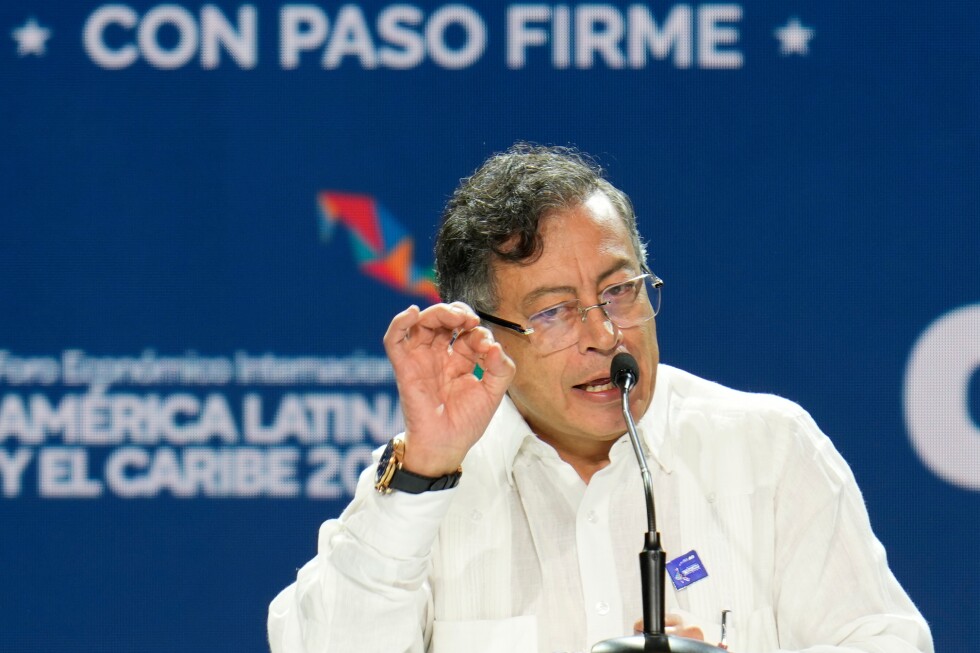
U.S. President Donald Trump is set to host Colombian President Gustavo Petro at the White House Tuesday in what analysts describe as a pivotal meeting that could reshape bilateral relations after months of unprecedented tension between the longtime allies.
The high-stakes summit brings together two leaders who have publicly exchanged harsh criticism. Petro previously called Trump an “accomplice to genocide” in Gaza, while Trump labeled the Colombian leader a “drug lord.” This war of words escalated into concrete actions, including U.S. sanctions against Petro, threats of reciprocal tariffs, withdrawal of financial aid to Colombia, and even suggestions of military action.
Relations began to thaw in early January when Trump accepted a call from Petro. After their conversation, Trump expressed that it was “a great honor to speak with the president of Colombia,” noting that Petro had called to “explain the drug situation and other disagreements.”
The meeting agenda is expected to focus on strategies to combat drug trafficking, enhance bilateral trade, and potentially coordinate operations against Colombian rebel groups financed by the cocaine trade.
“There’s a lot of space here for mutual cooperation and shared success,” said Elizabeth Dickinson, a Colombia expert at the International Crisis Group.
Colombia has historically been a key U.S. ally in Latin America, with decades of security cooperation binding the two nations. However, this relationship has faced extraordinary strain in recent years, largely due to fundamentally different approaches to combating narcotics.
The United States maintains its commitment to aggressive eradication and supply-side control of illegal drugs. In contrast, Petro advocates for interdiction, demand reduction, and providing economic alternatives for small-scale coca farmers—a significant policy departure from his predecessors.
In a notable rebuke, the U.S. added Colombia to its list of nations failing to cooperate in the drug war for the first time in three decades in 2025. This designation reflected Washington’s dissatisfaction with Petro’s anti-drug policies.
Petro has countered criticism by highlighting record drug seizures and claiming his government has halted the growth of coca leaf crops. However, United Nations research tells a different story—coca cultivation in Colombia has reached historic highs as the government has shifted away from eradication efforts. According to UN data, potential cocaine production has surged by at least 65% during Petro’s administration, reaching more than 3,000 tons per year.
The Venezuela situation has further complicated U.S.-Colombia relations. Tensions peaked following the January 3 U.S. raid in Caracas that captured then-President Nicolás Maduro and his wife, Cilia Flores. Petro denounced the operation as an “aggression” and a “kidnapping,” condemning what he called a violation of Latin American sovereignty comparable to Nazi Germany’s 1937 bombing of Guernica, Spain.
Despite his strong initial reaction, Petro’s tone softened significantly during his subsequent hour-long call with Trump, which paved the way for their upcoming summit. More recently, Petro has called for Maduro to face Venezuelan justice, indicating a nuanced position on the matter.
Gimena Sánchez-Garzoli, director for the Andes region at the Washington Office on Latin America, believes Trump accepted Petro’s call partly to quell questions about the Venezuela operation and address growing concerns over warnings issued to countries like Colombia. She expects both presidents will likely agree on actions against drug trafficking and a joint effort against the National Liberation Army (ELN) guerrilla group, which is particularly active along the Venezuela-Colombia border.
In a positive sign of warming relations, the Colombian Foreign Ministry announced last Thursday that repatriation flights for deportees from the U.S. have officially resumed. Images released showed citizens arriving at Bogotá’s El Dorado airport—a marked contrast from the diplomatic crisis a year ago when Petro refused U.S. military deportation flights over “dignity” concerns, relenting only after Trump threatened 50% tariffs and visa cancellations.
“A good outcome [of the meeting] would be that the relationship is cordial, pragmatic, and that the two countries can get back to what they have been doing for years, which is a quiet, effective cooperation on shared security threats,” Dickinson noted. “The less noise there is around the relationship, the better.”
As the two leaders prepare to meet, the diplomatic community watches closely to see if this marks a genuine reset in U.S.-Colombia relations or merely a temporary pause in hostilities between two presidents with fundamentally different worldviews and policy priorities.
Fact Checker
Verify the accuracy of this article using The Disinformation Commission analysis and real-time sources.

8 Comments
This meeting will be a test of whether Trump and Petro can set aside their differences and focus on the substantive issues at hand. Rebuilding trust and aligning their approaches on the drug trade and other shared concerns won’t be easy, but it’s essential for the stability of the region.
The drug trade is a shared challenge that demands a coordinated response. While the personal tensions between Trump and Petro are worrying, I’m hopeful they can find a way to work together and deliver results that improve security and prosperity in the region.
Absolutely. Productive U.S.-Colombia cooperation on counternarcotics has been critical for decades. Finding ways to revive that cooperation should be a priority.
This will be an important meeting to watch. After months of harsh words, it seems like both leaders are trying to find common ground on issues like drug trafficking and trade. It will be interesting to see if they can move past their differences and work together constructively.
Agreed. Restoring cooperation between the U.S. and Colombia is crucial, given their long history of partnership on counternarcotics and regional security.
The Trump-Petro relationship has been very contentious so far, with accusations and threats flying back and forth. This meeting could be a chance to reset things, but it will take real effort from both sides to find compromise solutions on complex issues like the drug trade.
You’re right, there’s a lot of bad blood to overcome. But the stakes are high, so hopefully they can put aside their personal differences and find ways to collaborate effectively.
It’s concerning to see the U.S. and Colombia, such close allies, engage in this kind of public feud. Combating drug trafficking and transnational criminal groups requires strong cooperation between the two countries. I hope this meeting can get the relationship back on a more constructive footing.