


Listen to the article
President Donald Trump’s top economic advisor launched a scathing attack on Federal Reserve economists Wednesday, calling for disciplinary action over research that contradicted the administration’s claims about who bears the cost of tariffs imposed during trade disputes.
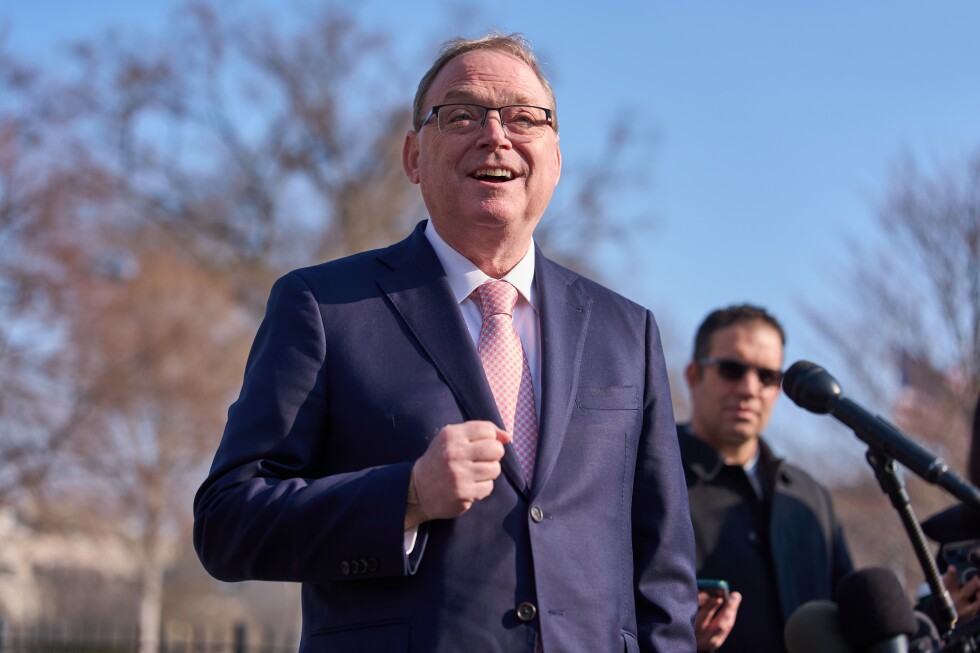
Kevin Hassett, director of the White House’s National Economic Council, described a recent Federal Reserve Bank of New York study as “an embarrassment” and “the worst paper I’ve ever seen in the history of the Federal Reserve system” during an interview on CNBC. He argued that “the people associated with this paper should presumably be disciplined.”
The controversial study, published last week, found that American companies and consumers—not foreign exporters—are shouldering nearly 90% of the costs associated with tariffs implemented by the Trump administration throughout 2023. The research documented how average tariffs on imports jumped from 2.6% at the beginning of last year to 13% by year-end.
This confrontation represents the latest in a series of unusual attacks from the White House on the Federal Reserve, an institution traditionally insulated from political pressure to maintain its independence. The harsh criticism also highlights the administration’s apparent sensitivity to growing public concerns about rising consumer costs as the 2024 election cycle approaches.
The Federal Reserve Bank of New York’s findings align with several other independent studies that reached similar conclusions. Research from economists at Harvard University and the University of Chicago, analysis from Germany’s Kiel Institut think tank, and a report from the nonpartisan Congressional Budget Office all support the conclusion that American businesses and consumers are primarily absorbing tariff costs.
The mechanics of tariffs explain why American importers bear most of the burden. Since U.S. companies pay tariffs directly to the U.S. Treasury when importing goods, foreign exporters would only bear the cost if they significantly lowered their prices to offset the tariffs. According to the New York Fed research, foreign companies have made only minor price adjustments, far less than the tariff increases imposed.
This isn’t the first time the administration has lashed out at economists for challenging its tariff narrative. Last August, when Goldman Sachs’ chief economist projected that Americans would pay an increasing share of tariff costs over time, Trump personally called for the economist’s termination.
While overall inflation hasn’t risen as dramatically as some economists predicted, this is partly because the administration has delayed, reduced, or provided exemptions for many duties. However, price increases have been noticeable in sectors directly affected by the tariffs, particularly furniture, appliances, and tools.
Major American manufacturers have openly acknowledged the financial impact of tariffs on their operations. General Motors has stated it expects to pay between $3.5 billion and $4.5 billion in tariff costs by 2025. Ford reported tariff-related expenses of $800 million in a single quarter last year.
The financial impact of the tariff policy is substantial from a federal revenue perspective. Since October, the government has collected nearly $100 billion in tariff revenue—surpassing the total amount received during the entire 2024 fiscal year.
Hassett’s comments highlight the growing tension between the administration’s public messaging on tariffs and the economic reality documented by multiple independent sources. As American consumers continue to express dissatisfaction with economic conditions in various surveys, the question of who ultimately pays for trade policy decisions remains a politically sensitive issue for the White House.
Fact Checker
Verify the accuracy of this article using The Disinformation Commission analysis and real-time sources.

12 Comments
This clash between the White House and the Fed over the tariff study is certainly noteworthy. It speaks to the high stakes and political sensitivities around trade and economic policy. I’ll be curious to see if the Fed stands firm in the face of these attacks.
Agreed, the White House’s reaction seems disproportionate. The Fed must remain impartial and objective, even in the face of political pressure. This dispute could have significant implications for the credibility of economic policymaking.
It’s interesting to see the White House go after the Fed so aggressively over this tariff study. I wonder if there are valid concerns about the research methodology or if this is more of a political attack on the findings.
Valid concerns about research methodology would be one thing, but calling for disciplinary action seems like an overreaction. The Fed needs to maintain its credibility and independence, which this dispute could undermine.
The White House’s harsh criticism of the Fed study on tariff costs is quite concerning. Calling for disciplinary action against economists over research findings is a troubling sign of political interference. The Fed’s independence must be protected.
I share your concern. The White House’s response seems designed to intimidate and silence the Fed, rather than engage with the substance of the research. This is a dangerous precedent that could undermine trust in economic institutions.
Wow, the White House is really coming out swinging against the Fed over this tariff study. Calling for discipline over research findings seems like an extreme reaction. I wonder what the Fed’s response will be.
This certainly highlights the political tensions around trade and tariff policies. The White House seems intent on defending its positions, even if that means attacking the credibility of the Fed.
The White House’s criticism of the Fed study on tariff costs is quite concerning. Calling for disciplinary action against economists over research findings is a very worrying precedent. This seems like a dangerous politicization of the Fed’s work.
I agree, this is a very troubling development. The Fed’s independence and ability to conduct unbiased economic analysis is crucial. The White House’s response here is highly concerning.
This appears to be a stark clash between the White House and the Fed over the impact of tariffs. It will be interesting to see how this plays out and whether the Fed economists face any real consequences for their research findings.
The White House’s reaction does seem rather heavy-handed. I hope the Fed is able to maintain its independence and continue conducting rigorous, impartial economic analysis.