


Listen to the article
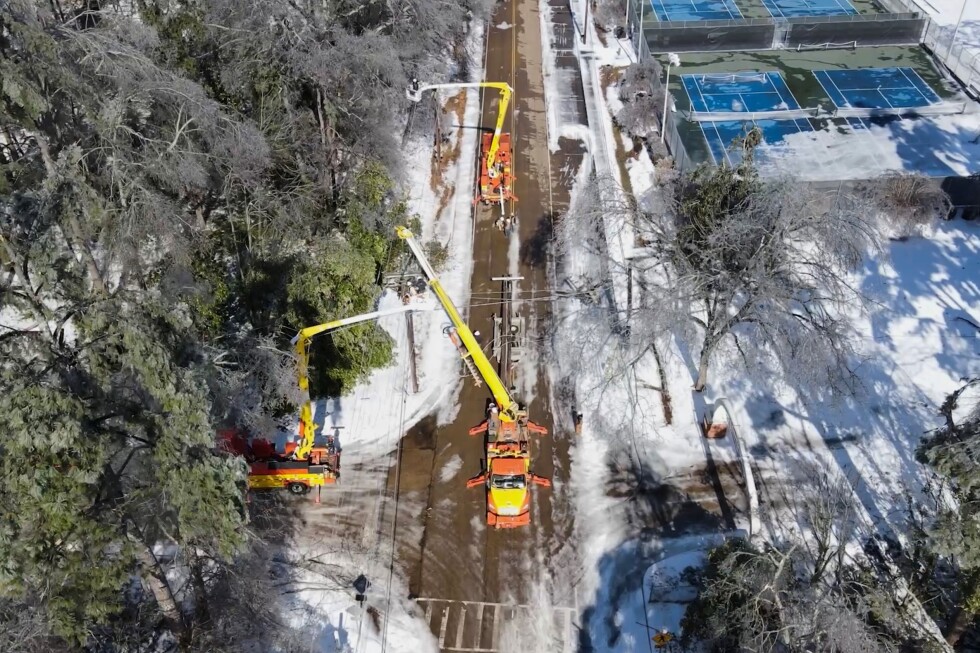
North Mississippi senators made an impassioned plea for improved disaster response Thursday as thousands of residents continue to lack power nearly three weeks after January’s devastating winter storm.
“I hope you remember how my people were cold, and we as a state, we failed them,” said Sen. Rita Potts Parks, a Republican from Corinth, during an emotional address on the Senate floor. Her district, which includes Alcorn and Tippah counties, was among the hardest-hit areas in Mississippi.
Parks described harrowing conditions where hospitals and nursing homes went more than four days without power or water. “Can you imagine what those smells were like, what those cries were like by that second day?” she asked colleagues. “And those people being placed with more and more blankets on them just to keep them warm.”
Both Parks and Sen. Neil Whaley, a Republican from Potts Camp, highlighted specific concerns about response times from state agencies. Parks later told Mississippi Today that resources from the Mississippi Emergency Management Agency took days to arrive.
“I’m not throwing darts, I’m just saying it was a fact we didn’t see supplies coming to us until Tuesday. That’s water, MREs, cots. This event happened on Saturday, Sunday. You’re Tuesday night, Wednesday getting us what we needed,” Parks explained.
She noted that approximately five or six counties experienced unprecedented power outages lasting over two days due to downed Tennessee Valley Authority transmission lines. “That’s historical, that’s never supposed to happen,” Parks emphasized.
The senators’ comments came during discussion of Senate Bill 2632, which passed the chamber and now moves to the House. The legislation would establish a “disaster recovery emergency loan program” to assist counties included in the recent federal disaster declaration.
Sen. Scott DeLano, a Republican from Biloxi who introduced the bill, estimated that damage from Winter Storm Fern will likely reach $400 million across Mississippi. The proposed program would function as a revolving loan fund, providing immediate public assistance to counties and municipalities while they await Federal Emergency Management Agency reimbursements.
Parks noted that FEMA payments to local entities typically take 18 months to two years to process. DeLano said Tennessee implemented a similar approach following Hurricane Helene in 2024.
While the bill doesn’t specify a dollar amount, DeLano indicated plans to request $50 million in appropriations later in the legislative session. Counties would have five years to repay the loans and would need to pledge a revenue source in case FEMA rejected reimbursement. For any projects denied FEMA reimbursement, local entities would face a two-year repayment deadline.
Sen. Sollie Norwood, a Democrat from Jackson, voiced concern that counties could be left financially responsible for recovery spending in such scenarios. DeLano responded that the two-year period would give lawmakers time to address any shortfalls.
Whaley echoed Parks’ criticisms about the state’s response. “I live in an area where the district lines of the Mississippi Department of Transportation meet, and for some reason that plow truck blade just would not stay on the ground when it got to that district line,” he said, adding that “a lot of things have to be answered.”
As of Thursday afternoon, approximately 1,700 Mississippians remained without power nearly three weeks after the storm, according to poweroutage.us. However, this figure doesn’t include all electric utilities in the state. Northern District Public Service Commissioner Chris Brown noted that municipal systems, including the struggling Holly Springs Utility Department with about 500 ongoing outages, aren’t reflected in that count.
The House also passed House Bill 1645 on Thursday, which would create state versions of FEMA programs as Mississippi officials prepare for potentially reduced federal disaster support in the future.
Additional federal assistance is beginning to reach affected communities. The U.S. Small Business Administration announced low-interest loans for certain private nonprofits in sixteen counties and the Mississippi Band of Choctaw Indians. Eligible organizations include food kitchens, homeless shelters, museums, libraries, community centers, and educational institutions.
On Thursday, the U.S. Department of Housing and Urban Development announced several assistance measures, including a 90-day foreclosure pause for mortgages insured by the Federal Housing Administration.
As recovery efforts continue, DeLano emphasized that the legislature will have “a lot of discussion over the next year about how we better prepare for these types of events.”
Fact Checker
Verify the accuracy of this article using The Disinformation Commission analysis and real-time sources.

6 Comments
This episode underscores the vital importance of robust infrastructure and emergency planning, especially in regions prone to extreme weather events. State officials should move swiftly to identify and address any systemic issues that hindered the response this time around.
I’m glad the senators are speaking up about this failure and pushing for improvements. Hospitals and nursing homes should never be left without power and water for days on end during an emergency. Disaster response protocols need to be re-evaluated.
This is a sobering situation that highlights the need for more robust disaster response planning and coordination at the state level. Clearly, the lack of timely aid and resources put vulnerable residents at risk during this winter storm.
The senators’ emotional pleas for accountability and improvement are understandable given the human toll this disaster took. I hope their calls for reform lead to meaningful changes that better safeguard vulnerable populations during emergencies.
It’s distressing to hear the firsthand accounts of the harsh conditions people endured – the smells, the cries, the lack of heating. This was a clear breakdown in the state’s duty to protect its citizens. Concrete policy changes are needed to prevent such failures in the future.
The senators make a compelling case that the state’s emergency management agency was slow to respond and provide critical supplies. This is unacceptable and puts lives at risk. Taxpayers deserve better preparedness and execution from their government.