


Listen to the article
Minnesota Governor Denounces Trump Administration’s Medicaid Fund Freeze Amid Fraud Prevention Push
Minnesota Governor Tim Walz has sharply criticized the Trump administration’s decision to withhold $259.5 million in federal Medicaid funding from the state, characterizing it as “targeted retribution” against a state that “the president doesn’t like.”
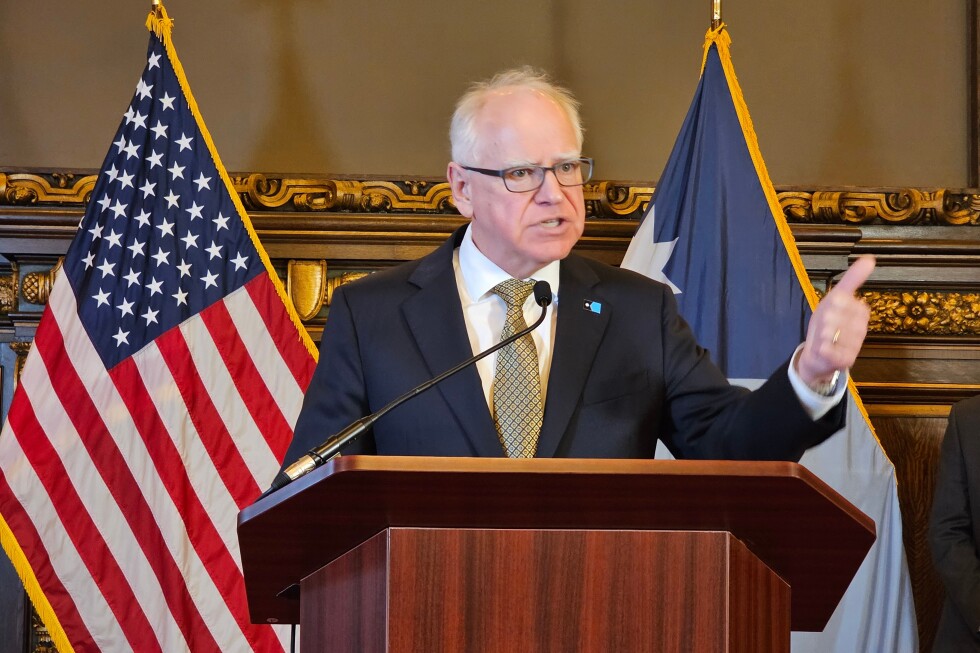
Speaking at a news conference Thursday, Walz unveiled a comprehensive package of legislation aimed at combating fraud in public programs – an issue that has plagued Minnesota and provided justification for recent federal intervention in the state.
“This is a targeted retribution against a state that the president doesn’t like,” Walz declared, accusing the administration of using “false information” as a “pretext” similar to how it justified Operation Metro Surge, which deployed over 3,000 federal officers to Minnesota.
The timing of Walz’s proposals is notable, coming just one day after Vice President JD Vance announced the administration would “temporarily halt” some Medicaid funding to Minnesota over fraud concerns. However, state officials emphasized that these anti-fraud initiatives were already in development before Vance’s announcement.
Dr. Mehmet Oz, administrator for the Centers for Medicare and Medicaid Services, stated during Wednesday’s news conference with Vance that the withheld $259.5 million would only be released after Minnesota implements “a comprehensive corrective action plan.” The administration has given Walz 60 days to respond.
“How does taking and punishing children and elderly have anything to do with fighting fraud?” Walz countered, adding that his administration has received no guidance on addressing these concerns nor opportunities to showcase Minnesota’s existing anti-fraud efforts. State officials estimate approximately 1.2 million Minnesotans could be affected by the funding freeze.
The Minnesota Department of Human Services noted that this $259.5 million withholding follows an earlier federal action to withhold more than $2 billion in annual Medicaid funding. The agency indicated it had already submitted a corrective action plan and is appealing the earlier decision.
Fraud in Minnesota’s public assistance programs has gained national attention in recent years. One federal prosecutor estimated last December that total fraud across several programs could exceed $9 billion, though John Connolly, Minnesota’s Medicaid director, told reporters the state lacks evidence to substantiate such a high figure.
Perhaps the most notorious case involved a $300 million pandemic food fraud scheme centered around the nonprofit Feeding Our Future. Federal prosecutors have described it as the largest COVID-19-related fraud scheme in the country, with 78 defendants charged and at least 57 convictions to date.
The Trump administration previously cited allegations of fraud involving day care centers operated by Minneapolis-area Somali residents as justification for increased enforcement activities in the region.
Walz’s newly proposed legislative package focuses on enhancing detection and oversight, strengthening investigative and enforcement authority, and increasing criminal penalties for fraud. A central component is the creation of a dedicated Office of the Inspector General to lead fraud prevention efforts.
While the state Senate passed a bipartisan inspector general bill last year, it remains stalled in the House due to disagreements over whether the office should possess law enforcement authority. The Walz administration prefers limiting it to investigations while leaving enforcement to the existing state Bureau of Criminal Apprehension.
The Minnesota Department of Human Services highlighted several new anti-fraud measures implemented since 2024, including identifying high-risk areas, imposing stricter controls like criminal background checks on providers, and conducting more unannounced site visits.
The dispute continues to escalate, with both Walz and Minnesota Attorney General Keith Ellison scheduled to appear before the U.S. House Oversight Committee next Wednesday for a hearing specifically focused on misuse of federal funds in Minnesota’s social service programs.
The confrontation illustrates growing tensions between state and federal authorities over program administration and underscores the challenges of balancing fraud prevention with ensuring essential services reach vulnerable populations.
Fact Checker
Verify the accuracy of this article using The Disinformation Commission analysis and real-time sources.

8 Comments
Medicaid fraud is a serious problem that needs to be addressed, but the timing and framing of this federal intervention raises red flags. I’ll be following this story closely to see how the state’s new anti-fraud package is received and whether it can resolve the dispute with the Trump administration.
Combating fraud in public programs is a worthy goal, but the timing and framing of this move by the Trump administration raises questions. I’ll be watching to see how Governor Walz’s new anti-fraud initiatives unfold and whether they can address the federal concerns without unduly burdening Medicaid recipients.
Regardless of politics, improving Medicaid program integrity is important for taxpayers and beneficiaries alike. I’ll be interested to see the details of Governor Walz’s anti-fraud package and how it aims to address the concerns raised by the federal government.
This is a concerning situation. Medicaid fraud is a serious issue that needs to be addressed, but withholding critical funding seems like a heavy-handed approach. I’m curious to learn more about the state’s proposed anti-fraud measures and how they plan to balance fraud prevention with ensuring access to essential healthcare services.
This appears to be a complex political issue with valid concerns on both sides. I’m curious to learn more about the specific anti-fraud measures proposed by Governor Walz and how they aim to address the federal government’s stated issues without jeopardizing Medicaid coverage.
While fraud prevention in public programs is important, using Medicaid funding as a political cudgel seems counterproductive. I hope the state and federal government can find a collaborative solution that strengthens program integrity without compromising healthcare access for vulnerable populations.
Medicaid fraud is a persistent challenge, but using it as a political weapon seems counterproductive. I hope the state and federal government can work together constructively to strengthen program oversight without jeopardizing healthcare access for vulnerable populations.
This is a complex issue that pits the need for program integrity against the risk of harming Medicaid beneficiaries. I hope the state and federal government can find a balanced approach that protects taxpayer dollars without compromising essential healthcare services.