


Listen to the article
Missouri Redistricting Battle Heads to Court as Referendum Petition Challenges New Map
A legal dispute over Missouri’s newly redrawn congressional districts has escalated to the courts, with significant implications for the 2026 elections and the balance of power in the U.S. House of Representatives.
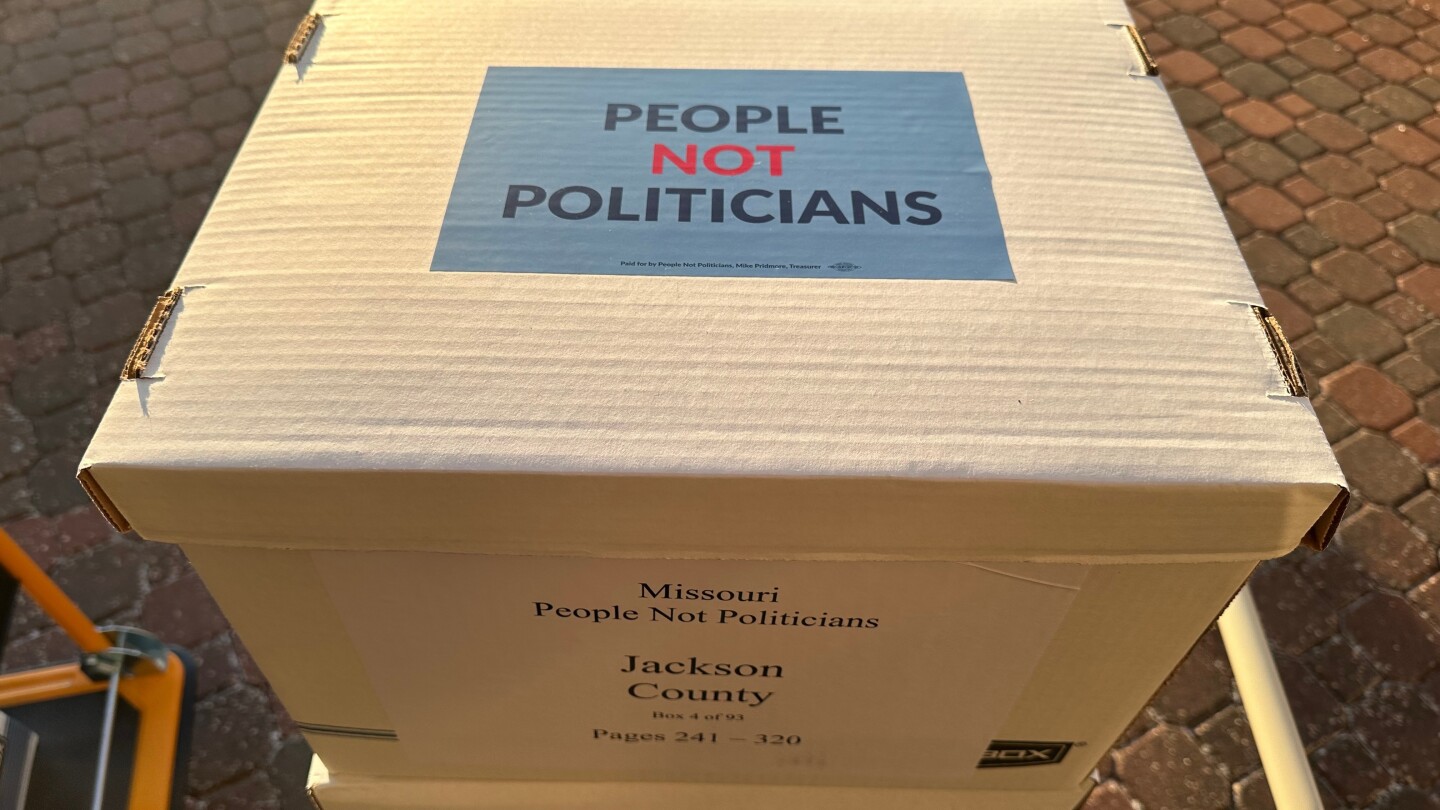
On Tuesday, voters backed by the American Civil Liberties Union filed a lawsuit challenging Republican Attorney General Catherine Hanaway’s position that the controversial redistricting map remains in effect despite opponents submitting more than 300,000 petition signatures seeking to force a statewide referendum on the issue.
The lawsuit contends that Missouri’s constitution should have automatically suspended the new map when opponents submitted their petition signatures earlier this month. Historically, the state has treated laws as suspended when referendum petitions are submitted.
“This is a transparent ploy to force the use of HB1’s new congressional map by delaying certification of the referendum’s signatures… until it is too late to change the congressional map for the 2026 midterms,” argues the lawsuit, filed on behalf of two Kansas City-area voters who signed the referendum petition.
Hanaway maintains that the new districts remain valid until Republican Secretary of State Denny Hoskins verifies that the petition contains sufficient valid signatures and meets constitutional requirements. Her office stated that allowing immediate suspension “would allow anyone to freeze duly-enacted state laws by dropping off boxes of unverified signatures.”
The timing of this dispute is critical. Missouri’s candidate filing period for the 2026 elections runs from February 24 through March 31, while local election officials have until July 28 to verify petition signatures. Hoskins could make his final determination after that date—well after Missouri’s August 4 primary elections.
Missouri’s redistricting battle represents a key piece in a broader, unusual mid-decade redistricting effort playing out across multiple states. The new Missouri map, backed by former President Donald Trump, is designed to help Republicans gain an additional seat by splitting portions of a Democrat-held district in Kansas City and stretching the remainder into predominantly Republican rural areas.
The nationwide redistricting effort has yielded maps that Republicans believe could give them nine additional winnable seats across Texas, Missouri, North Carolina, and Ohio. Democrats, meanwhile, expect to gain six more seats in California and Utah, potentially giving Republicans a net gain of three seats. However, these projections remain uncertain as legal challenges continue in several states, and electoral outcomes are never guaranteed.
For a referendum to succeed in Missouri, petitioners must gather approximately 110,000 valid signatures, meeting minimum thresholds in at least two-thirds of the state’s congressional districts. If certified, the contested law would be placed on hold until voters can decide its fate in the next November election.
This lawsuit is at least the ninth legal challenge related to Missouri’s new congressional map. Other lawsuits argue that mid-decade redistricting violates Missouri’s constitution and that Republican Governor Mike Kehoe lacked legal grounds to call lawmakers into the special session where they passed the new map.
The court’s decision will have significant ramifications for Missouri’s electoral landscape and could influence the delicate balance of power in Washington. Republicans currently control the U.S. House by a narrow margin, making every potential seat adjustment critically important for both parties heading into the 2026 midterm elections.
As the legal battle unfolds, Missouri voters find themselves at the center of a consequential struggle over democratic processes and political representation that exemplifies the intensifying partisan battles over redistricting nationwide.
Fact Checker
Verify the accuracy of this article using The Disinformation Commission analysis and real-time sources.

7 Comments
Interesting legal battle over the new Missouri congressional map. I’m curious to see how the courts will rule on the referendum petition and the suspension of the map. This could have big implications for the 2026 elections.
This case highlights the ongoing debate over gerrymandering and the role of the judiciary in reviewing redistricting plans. It will be interesting to see how the courts navigate this politically-charged issue.
Absolutely, the courts play a critical role in ensuring fair and representative districts. Their decisions here could have far-reaching impacts.
The redistricting process is always controversial, with accusations of gerrymandering from both sides. I hope the courts can provide a fair and impartial resolution that upholds the democratic process.
Agreed, the redistricting process needs to be as transparent and non-partisan as possible. The voters deserve fair representation.
Challenging redistricting maps through the courts and referendums is a common practice, but it can create uncertainty leading up to elections. I’ll be following this case closely to see how it unfolds.
Redistricting is a complex and often contentious issue. I hope the legal process can provide clarity and a resolution that satisfies all stakeholders, regardless of political affiliation.