


Listen to the article
Economic Concerns Drive Democratic Wins in Virginia, New Jersey Races
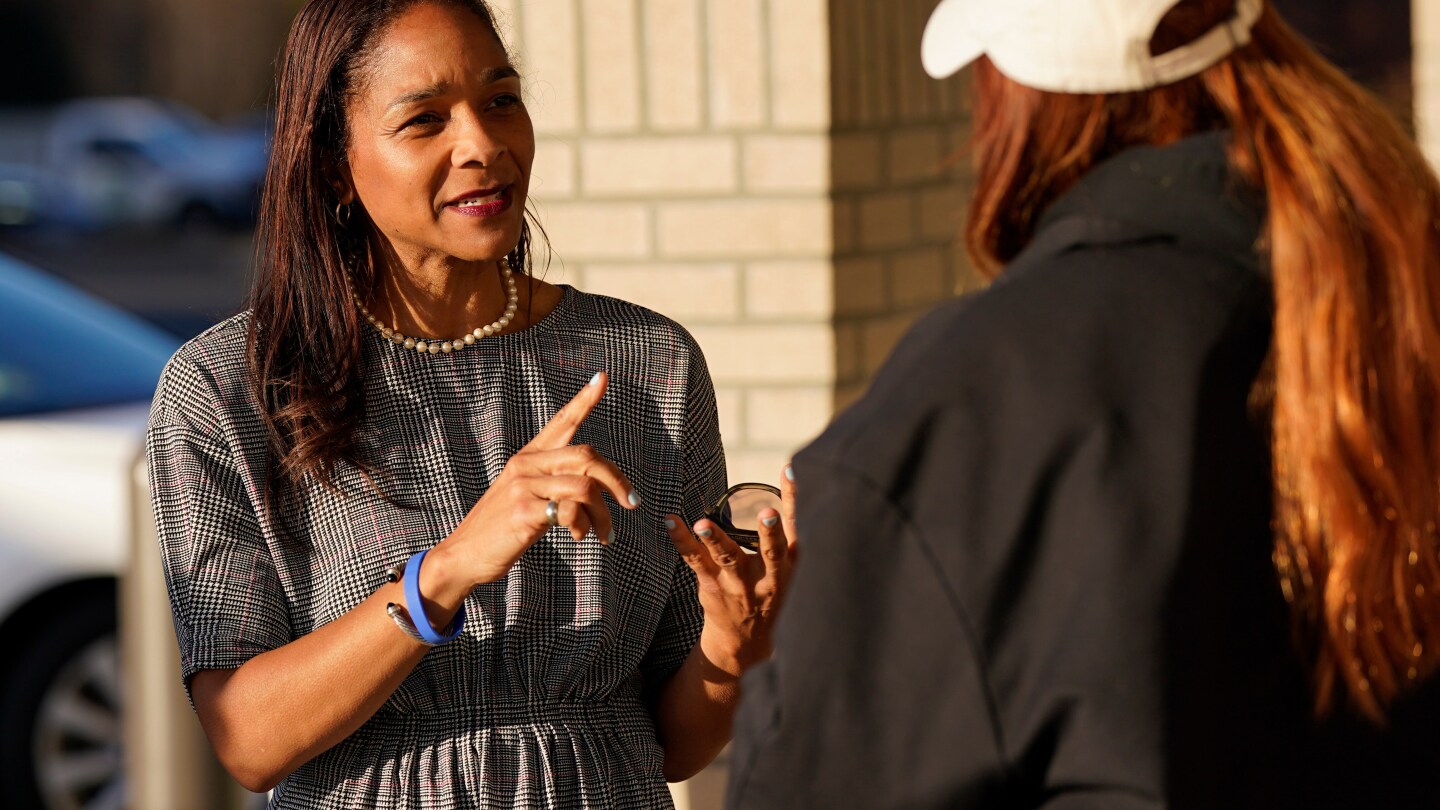
In a striking political shift, Virginia Democrat Nicole Cole and her team campaigned against high grocery prices in Spotsylvania County, greeting voters “at the point of purchase” where economic pain is most evident. Her strategy paid dividends when she defeated a 36-year Republican incumbent for a state House seat, part of a Democratic wave that flipped 13 competitive House seats in Virginia.
The cost of living emerged as a decisive factor in Virginia and New Jersey’s gubernatorial races, the first major elections since Republicans took control of the White House and Congress. Despite Donald Trump’s presidency and his ownership of the current economic landscape, voters in both states swung toward Democrats who campaigned aggressively on pocketbook issues.
“You go into the grocery store, you see what things cost, and it’s just not working,” said Democrat Marisa Sweeney, who ran in a traditionally Republican New Jersey legislative district that became unexpectedly competitive.
Democrats Abigail Spanberger in Virginia and Mikie Sherrill in New Jersey won their gubernatorial races while emphasizing economic issues, leading party sweeps in both states. The victories were particularly notable in suburban and exurban areas that have become electoral battlegrounds in recent years.
Cole, previously elected to the Spotsylvania County School Board in 2021, developed a campaign playbook focused squarely on the cost of living and education. Two weeks before the election, she spoke at a Fredericksburg town hall about tackling high utility bills, recognizing how basic necessities force difficult financial choices for families.
“You know you have to have heat and air, and a utility bill that has to get paid,” Cole said. “So then something else is a sacrifice. The quality of food that you’re able to buy for your kids is a sacrifice.”
The political landscape in places like Spotsylvania County, Virginia, and Morris County, New Jersey, has transformed over the past decade. Located just beyond major metropolitan areas – Spotsylvania south of Fredericksburg and Morris about 30 miles west of New York City – these communities share demographic similarities: roughly two-thirds white populations with above-average incomes and education levels.
Both counties seemed primed for close races. Cole’s district includes parts of Republican-leaning Spotsylvania, which Trump carried in both 2020 and 2024, and which GOP Governor Glenn Youngkin won by more than 20 percentage points. Yet Cole remained convinced she could flip her district by challenging the prevailing narrative.
“Early on in my campaign, when I brought in my staff, one of the main messages I talked to them about was that we need to stop saying this district is red, and that it leans red,” Cole said. “We had to give some encouragement that this is possible to the people who aren’t red.”
In New Jersey, Morris County experienced an equally dramatic swing toward Democrats. The county has shown political volatility in recent years, backing Biden in 2020 before swinging to Republican Jack Ciattarelli in the 2021 governor’s race by more than 11 percentage points. Trump narrowly won Morris County in 2024, but this time Sherrill edged out Ciattarelli.
Sherrill’s victory wasn’t entirely surprising, as she had represented Morris County in Congress and established a record of bipartisan cooperation. “She has a lot of crossover appeal with Republican voters,” explained Darcy Draeger, chairwoman of the Morris County Democrats.
Sweeney, whose district includes part of Morris County, believes voters were paying attention to how federal policies affected their daily lives. “People are watching the news and they’re looking to see what goes on in Trump’s administration, and they are seeing how it affects people locally,” she said, citing concerns about government shutdowns and potential loss of SNAP benefits.
Some Republicans acknowledged that national politics may have overshadowed local messaging. “We need to make sure that our constituents understand that we are here to serve and that we’re listening to their voices,” said Republican state Senator Anthony Bucco of Morris County. “I think the message was drowned out a little bit by Washington.”
The political shift was also evident in Passaic County, New Jersey, which had backed Trump in 2024 after decades of supporting Democrats. This year, it swung back to Democrats by double digits.
John Currie, longtime Democratic chairman in Passaic, attributed the swing to candidates’ hard work and their focus on economic issues. The Republicans’ failure to adequately address affordability concerns cost them dearly, he suggested: “Affordability – it’s that simple.”
Fact Checker
Verify the accuracy of this article using The Disinformation Commission analysis and real-time sources.

8 Comments
It’s a curious dynamic that Trump’s economic policies are now being judged by voters, even as he no longer holds office. The results suggest a pragmatic, pocketbook-focused electorate.
These election results highlight the importance of economic factors in shaping voter sentiment, even in traditional Republican strongholds. It will be intriguing to see how this plays out in future elections.
It’s interesting to see how economic concerns have become such a key factor in these elections. Voters seem focused on the real-world impacts of inflation and cost of living rather than partisan rhetoric.
Absolutely. When people are feeling the pinch at the grocery store and gas pump, kitchen table issues tend to take priority over ideological divides.
The emphasis on cost of living and economic issues in these campaigns is a clear reminder that politics is ultimately about addressing the real-world concerns of citizens.
Absolutely. Voters want leaders who will tackle the bread-and-butter challenges they face in their daily lives, not just partisan talking points.
The shifting political landscape in Virginia and New Jersey underscores how volatile the current economic climate is. Voters are clearly looking for solutions to their economic woes, regardless of party affiliation.
Agreed. It will be fascinating to see if this trend continues in future elections as the economy remains a top concern for many Americans.