


Listen to the article
Neighboring States Diverge Sharply on Gun Policy
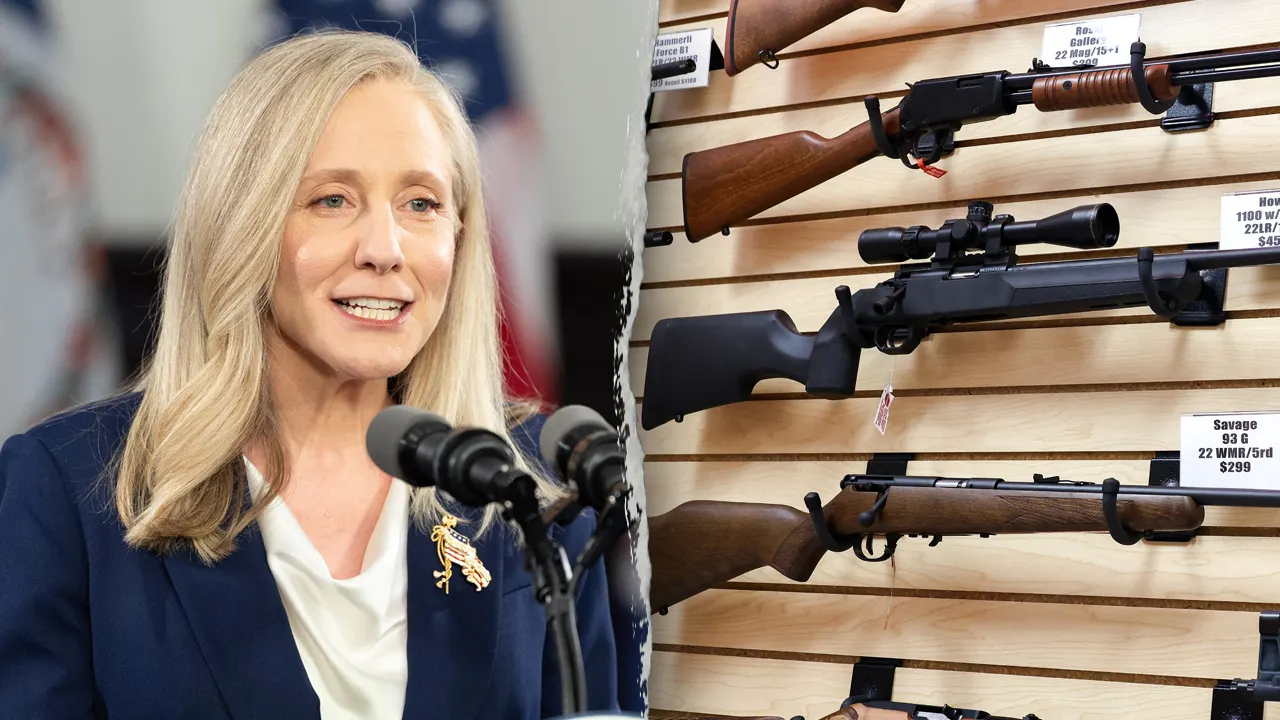
Virginia Democrats have advanced a sweeping gun control package to Governor Abigail Spanberger’s desk, while West Virginia lawmakers have been debating legislation that would allow residents to lawfully obtain machine guns, highlighting the dramatically different approaches to firearm regulation between the neighboring states.
More than 160 years after West Virginia split from Virginia during the Civil War, the two states are once again charting distinct political paths. Democrats in Richmond are pushing new firearm restrictions while Republicans in Charleston are exploring ways to expand Second Amendment rights.
Governor Spanberger has signaled her openness to the legislation, with her office stating, “As the mother of three daughters in Virginia public schools and a former federal law enforcement officer who carried a gun every day, Governor Spanberger knows how important it is to make sure kids and families are safe.” Her office added that she “looks forward to reviewing all legislation that comes to her desk.”
The political landscapes of the two states have increasingly diverged in recent years. Republicans dominate West Virginia’s legislature with overwhelming supermajorities of 31-2 in the Senate and 91-9 in the House, making it one of just two states with no Democrat-majority counties. Meanwhile, Democrats have strengthened their hold on Virginia’s government and captured the governor’s mansion.
The Virginia assault weapons ban, introduced in January at the start of the expanded Democratic majority’s rule, would prohibit a wide range of firearms and features. State Senator Saddam Salim, who introduced the bill, explained that there are “so many assault weapons in circulation” and that his legislation would “gradually” take them off the street without retroactively criminalizing possession of newly-categorized “assault weapons.”
The proposal would ban semi-automatic center-fire pistols with magazines exceeding 15 rounds, rifles with detachable magazines, and weapons with specific characteristics such as collapsible or thumbhole stocks and threaded barrels.
Republican lawmakers have strongly criticized the scope of the restrictions. State Senator Mark Obenshain assembled a video of Virginia Democrats discussing the bill, captioning it: “Clueless Confident Dangerous and still writing the law.” During floor debate, Republican Senator Bill Stanley Jr. argued, “We should stop harming the people who are law-abiding citizens, especially in my region,” noting that “millions of Virginians own firearms.”
Across the state line, West Virginia lawmakers were moving in the opposite direction. State Senators Chris Rose and Zachary Maynard drafted the Public Defense and Provisioning Act, which would permit the transfer of machine guns to residents. The lawmakers cited the Second Amendment’s language and favorable court decisions they believe clarify “unrestricted access” under the militia clause to “resist tyranny.”
“I have long been clear that I am a Second Amendment absolutist, and I believe the Constitution means exactly what it says when it states that the right of the people to keep and bear arms shall not be infringed,” Rose told Fox News Digital, adding that the bill demonstrated how states can assert their role in protecting constitutional rights.
However, the legislation hit a roadblock when Senate President Randy Smith decided the full chamber would not consider it after it advanced through the Judiciary Committee. Smith cited potential legal challenges, stating, “With an issue as critical as the protection of our Second Amendment rights, we must ensure the legislation we pass will survive legal challenge. This would not have.”
The proposal raises questions about its compatibility with the federal 1986 Hughes Amendment, which prohibits civilian transfers of machine guns manufactured after that year. Proponents of the bill, including Gun Owners of America who reportedly worked with Rose on the legislation, have defended its legal basis.
Despite Smith’s decision and the legislative session nearing its end, lawmakers are expected to revisit the proposal next year. “As the lobbyists and Senate advocates are saying, there will be a huge push in the off-season to build this coalition and make this happen,” a West Virginia House Republican source told Fox News Digital.
Smith has indicated he would welcome a new bill next year but advised proponents to pay closer attention to the legislative calendar to avoid last-minute issues.
While the machine gun proposal was shelved, West Virginia did approve a bill on Friday providing license-free concealed carry for 18-20-year-olds, further illustrating the divergent approaches to firearms between the neighboring states.
Fact Checker
Verify the accuracy of this article using The Disinformation Commission analysis and real-time sources.

9 Comments
Interesting to see the stark contrast in gun policy between Virginia and West Virginia. As a voter, I’m curious to understand the reasoning behind each state’s approach and how it might impact public safety.
Absolutely, the divergent paths on this issue highlight the complex and often divisive nature of gun regulation in the US.
While I respect the right of states to set their own policies, I hope lawmakers on both sides will prioritize public safety and work to find common ground solutions that protect citizens without unduly burdening lawful gun owners.
Well said. Finding that balanced approach is crucial, as the issue of gun regulation remains highly contentious and politically charged.
As someone who follows the mining and energy sectors, I’m curious to see how these gun policy changes could potentially impact operations and investment decisions in the two states. Regulatory stability is often a key factor.
That’s a good point. The regulatory environment can definitely influence business decisions, especially for industries like mining that have significant capital investments.
The divergent paths on gun policy between Virginia and West Virginia underscore the broader ideological divisions we’re seeing play out across the US. It will be interesting to see how these debates unfold and what the real-world impacts are.
This reflects the deep political divide we’re seeing across the country on a range of issues. It will be important to follow how these policy decisions play out and impact local communities.
Agreed. These types of policy decisions can have far-reaching consequences, so it’s critical that lawmakers carefully consider the potential impacts.