


Listen to the article
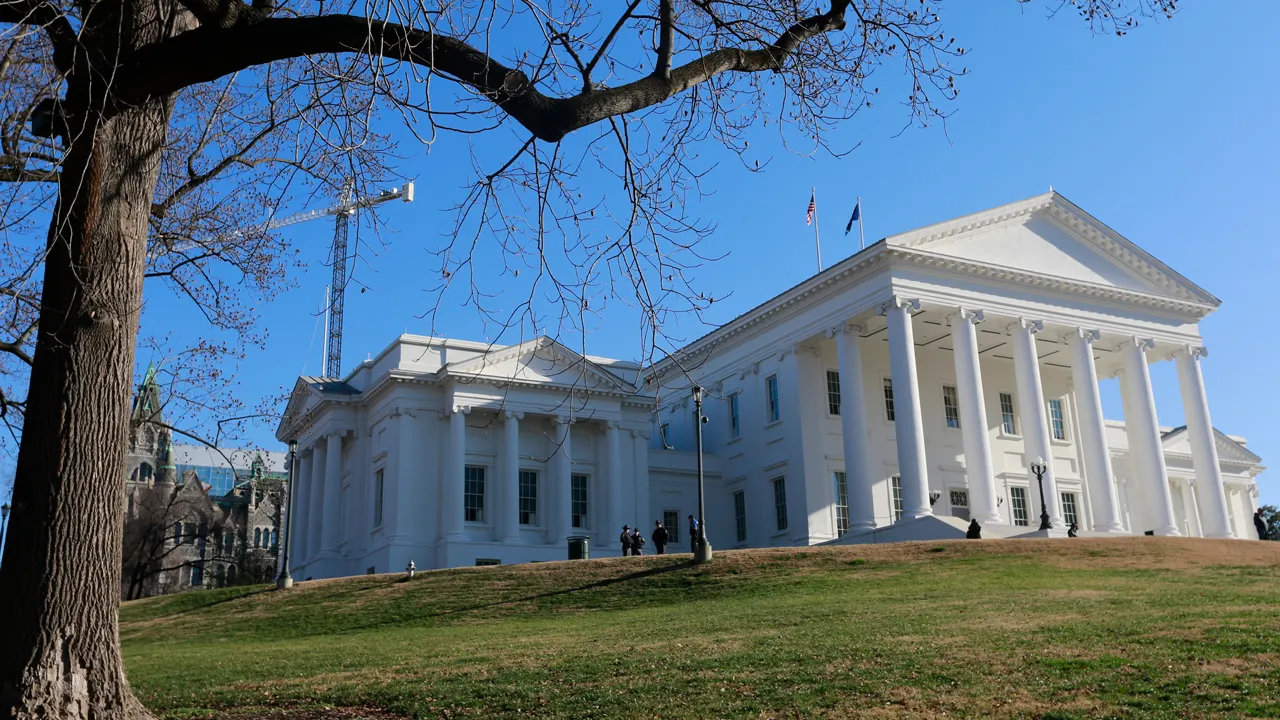
In a significant political development, the Virginia state Senate approved a constitutional amendment on Friday that could allow the Democrat-controlled legislature to redraw the state’s U.S. House maps before this year’s midterm elections. This final legislative approval sends the amendment to Virginia voters, who will decide in a spring ballot measure whether to replace the current non-partisan commission with legislative control over redistricting through 2030.
The move represents the latest battleground in the high-stakes redistricting war between Republicans and Democrats ahead of November’s elections. Virginia Democrats, who currently hold six of the state’s 11 U.S. House districts, aim to create up to four additional Democratic-leaning seats through the proposed redistricting.
The Democratic Congressional Campaign Committee (DCCC) praised Friday’s vote as “a critical step in giving Virginia voters the opportunity to ensure they have fair and equal representation in Congress.” DCCC Chair Rep. Suzan DelBene claimed the measure would “restore fairness, level the playing field, and stand up to extremists seeking to silence their voices,” while accusing “Donald Trump and Republicans of doing everything they can to rig the midterms in their favor through unprecedented mid-decade gerrymandering.”
Republicans swiftly condemned the move. The Virginia Senate Republican Caucus accused Senate Democrats of passing “a partisan gerrymandering amendment to entrench their party in power,” while the Republican National Committee labeled it a “power grab.” RNC national press secretary Kiersten Pels described it as “just the most recent example of Democrats’ multi-decade campaign to gerrymander in every state where they gain power.”
Virginia Democratic lawmakers have indicated they will release a proposed congressional map later this month. Meanwhile, a Democratic-aligned nonprofit called “Virginians for Fair Elections” launched Thursday to advocate for voter approval of the redistricting ballot measure.
The current redistricting battles trace back to last spring when former President Donald Trump first proposed the unusual strategy of mid-decade congressional redistricting. His goal was straightforward: redraw maps in Republican-controlled states to strengthen the GOP’s narrow House majority and prevent a repeat of 2018, when Democrats reclaimed control of the chamber during his first term.
Texas became Trump’s first target, with Republican Governor Greg Abbott calling a special legislative session to pass a new map. Democratic state lawmakers initially resisted by fleeing the state for two weeks to delay the bill, energizing Democrats nationwide in the fight against Trump’s redistricting plans.
The redistricting war quickly expanded beyond Texas, with Democratic Governor Gavin Newsom of California leading opposition efforts. California voters overwhelmingly passed Proposition 50 in November, temporarily bypassing the state’s nonpartisan redistricting commission and returning map-drawing authority to the Democratic-dominated legislature. This move is expected to create five more Democratic-leaning districts in California, intended to counter Texas’s redistricting.
Republican-controlled Missouri and Ohio, along with North Carolina, where Republicans dominate the legislature, have already drawn new maps as part of Trump’s initiative. Florida Republicans, backed by Governor Ron DeSantis, are pushing to gain an additional three to five seats through redistricting during a special legislative session scheduled for April.
However, Republicans have faced setbacks in some states. A Utah district judge rejected a map drawn by the state’s GOP-dominated legislature late last year, instead approving an alternate version that creates a Democratic-leaning district. In a more significant blow, Indiana’s Senate defied Trump in December by voting down a redistricting bill that had passed the state House.
Trump secured a major victory when the conservative Supreme Court majority approved Texas’s new congressional map. Other states potentially entering the redistricting battle include Democratic-controlled Illinois and Maryland, as well as Kentucky and Kansas – Republican states with Democratic governors.
Looming over these redistricting wars is an anticipated Supreme Court ruling in Louisiana v. Callais, a crucial case that could overturn key provisions of the Voting Rights Act. A decision favoring conservatives could lead to the redrawing of numerous majority-minority districts across the country, potentially providing Republicans with significant advantages. However, the timing and substance of the court’s eventual ruling remain uncertain.
Fact Checker
Verify the accuracy of this article using The Disinformation Commission analysis and real-time sources.

10 Comments
The Democratic push for more progressive seats in Virginia could have significant implications for the balance of power in Congress. It will be interesting to see how voters respond to this proposal.
You make a good point. Redistricting is a critical issue that can sway the political landscape. Voters will need to carefully consider the implications before casting their ballots.
Redistricting is a complex and often contentious issue. It’s good to see Virginia taking steps to ensure fair representation, but the process will likely face legal challenges from both sides.
Redistricting is a complex issue with valid concerns on both sides. I hope Virginia can find a solution that promotes fair and equal representation without undue partisan influence.
I agree, it’s important to balance the need for fair districts with the realities of political dynamics. Hopefully the final outcome in Virginia will be a compromise that most citizens can support.
I’m curious to see how this plays out. Gerrymandering has been a problem for both parties, so it’s important that the new process in Virginia is truly impartial and transparent.
This seems like a partisan move by Virginia Democrats to gain an advantage. Redistricting should be a fair, non-partisan process that reflects the will of the voters, not political agendas.
Redistricting is a critical issue that will shape the political landscape for years to come. I hope Virginia can find a balanced solution that serves the interests of all its citizens, not just one party.
This move by Virginia Democrats seems like a power grab, but I’m also wary of Republican gerrymandering efforts. Voters should have a clear, impartial process to decide their representation.
While I can understand the Democratic desire for more progressive seats, I worry that this proposal could lead to further polarization and mistrust in the political system. Nonpartisan redistricting would be ideal.