


Listen to the article
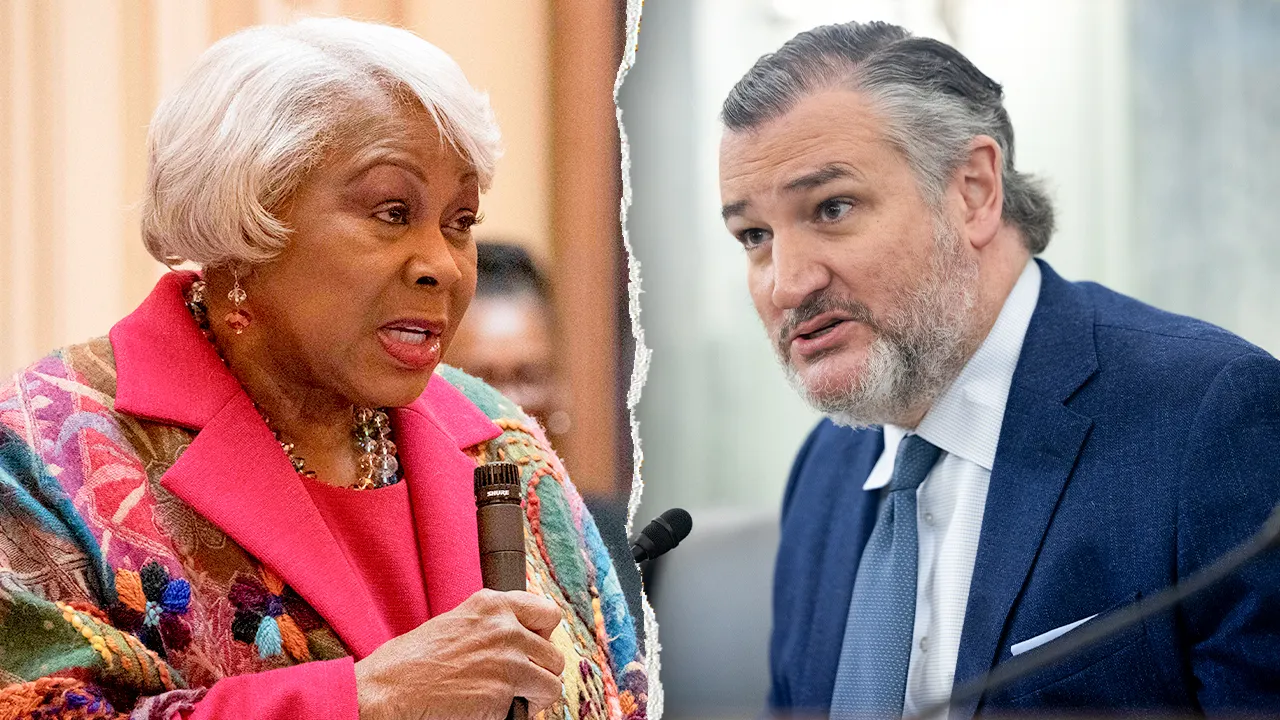
In a heated exchange that highlights the escalating national battle over congressional redistricting, Virginia Senate President Pro Tempore Louise Lucas delivered a profanity-laced response to criticism from Senator Ted Cruz regarding the state’s recent redistricting legislation.
Governor Abigail Spanberger of Virginia signed a bill Friday that would allow voters to consider multiple constitutional amendments, including one that permits a mid-decade redrawing of the state’s congressional districts. The proposed amendments are scheduled to appear on ballots on April 21, 2026, just months before the federal midterm elections.
“Virginia voters deserve the opportunity to respond to the nationwide attacks on our rights, freedoms, and elections,” Spanberger stated, framing the amendments as a way for Virginians to protect marriage equality, reproductive healthcare decisions, voting rights for those who have paid their debt to society, and to respond to “extreme measures” taken by other states.
Senator Cruz quickly condemned the Virginia legislation on social media, describing it as “a brazen abuse of power” and “an insult to democracy.” Lucas, the 82-year-old Democrat who championed the redistricting plan, fired back at Cruz with her provocative response: “You all started it and we f—ing finished it,” referring to controversial redistricting efforts initiated in Texas.
The confrontation reflects the intensifying national power struggle over congressional maps. Democrats currently hold six of Virginia’s 11 congressional seats, but the proposed new map could potentially give them four additional seats, resulting in a 10-1 Democratic advantage. This dramatic shift has prompted Republicans to argue that the redrawn boundaries would disenfranchise a significant portion of Virginia voters.
During a news conference prior to her social media response, Lucas had linked the redistricting initiative to former President Donald Trump, stating, “If Donald Trump had not started this power grab… we wouldn’t be in this place right now. He started this mess, and Virginia is going to finish it.”
The interstate redistricting conflict gained momentum after the U.S. Supreme Court allowed Texas to implement its redrawn congressional maps. Many Democrats expressed frustration, particularly because the redistricting initiative appeared to originate from the White House. President Trump had proposed the idea of mid-decade redistricting in June 2025, seemingly as a strategy to strengthen Republican control of the House of Representatives – something he failed to maintain during his first term when Democrats won the majority in 2018.
California Governor Gavin Newsom swiftly entered the fray with Proposition 50, a ballot initiative that temporarily bypasses the state’s nonpartisan redistricting commission and returns map-drawing authority to the Democratic-controlled legislature. This move is expected to create five more Democratic-leaning districts in California, potentially offsetting the changes made in Texas.
The redistricting battle has spread beyond Virginia, Texas, and California to include states like Missouri, North Carolina, and Ohio, Vice President JD Vance’s home state. This reflects a nationwide trend of states using redistricting as a political tool to gain partisan advantage in congressional representation.
The exchange between Lucas and Cruz exemplifies how redistricting has become increasingly contentious, with both parties accusing each other of gerrymandering and power grabs. The outcome of these redistricting efforts could significantly impact the balance of power in Congress following the 2026 midterm elections, making these state-level decisions national in their importance and implications.
Fact Checker
Verify the accuracy of this article using The Disinformation Commission analysis and real-time sources.

12 Comments
Redistricting is a contentious and complex issue. It’s understandable that emotions are running high, but resorting to profanity is unlikely to advance the dialogue in a productive way. All sides should strive for civility and focus on the substantive merits of the proposals.
Agreed, cooler heads should prevail. The public deserves a thoughtful, fact-based discussion of the issues at stake, not partisan mudslinging.
Redistricting is a perennially thorny issue, and it’s understandable that feelings would run high. However, responding with profanity is unlikely to advance the dialogue in a productive way. Virginians deserve a thoughtful, fact-based debate on the pros and cons of the proposed changes.
Well put. Maintaining civility and focusing on the substantive issues at stake should be the priority, even in the face of strong partisan disagreements.
This is a high-stakes political battle, but resorting to personal attacks and profanity is unlikely to serve the interests of Virginians. I hope both sides can find a way to engage constructively and address the complex issues at hand.
Agreed. Redistricting may be contentious, but the discussion should remain focused on the policy merits and the will of the electorate, not inflammatory rhetoric.
Redistricting is a thorny issue that often brings out strong emotions. While I may not agree with Sen. Cruz’s characterization, responding with profanity seems counterproductive. Virginians deserve a thoughtful, fact-based debate on the merits of the proposed changes.
I share your view. Passionate disagreement is understandable, but maintaining civility and focusing on the substance of the proposals is crucial.
Redistricting is a complex issue without easy answers. I hope both sides can find a way to engage constructively and address the legitimate concerns of Virginians, rather than resorting to personal attacks.
Well said. The stakes are high, but constructive dialogue is the only way to reach a meaningful resolution that serves the public interest.
This is a high-stakes battle over the future political landscape in Virginia. Both parties have a vested interest in the redistricting process, which makes it all the more critical that it be handled in a fair and transparent manner.
Absolutely. Voters should have a clear understanding of how district lines are being drawn and the rationale behind it, regardless of party affiliation.