


Listen to the article
As America’s 250th anniversary approaches, the nation finds itself at a crossroads, wrestling with deep political divisions and questions about the sustainability of its democratic institutions. Yet amidst this polarization, the rotunda of the National Archives serves as a rare neutral ground where partisan tensions temporarily subside in the presence of the nation’s founding documents.
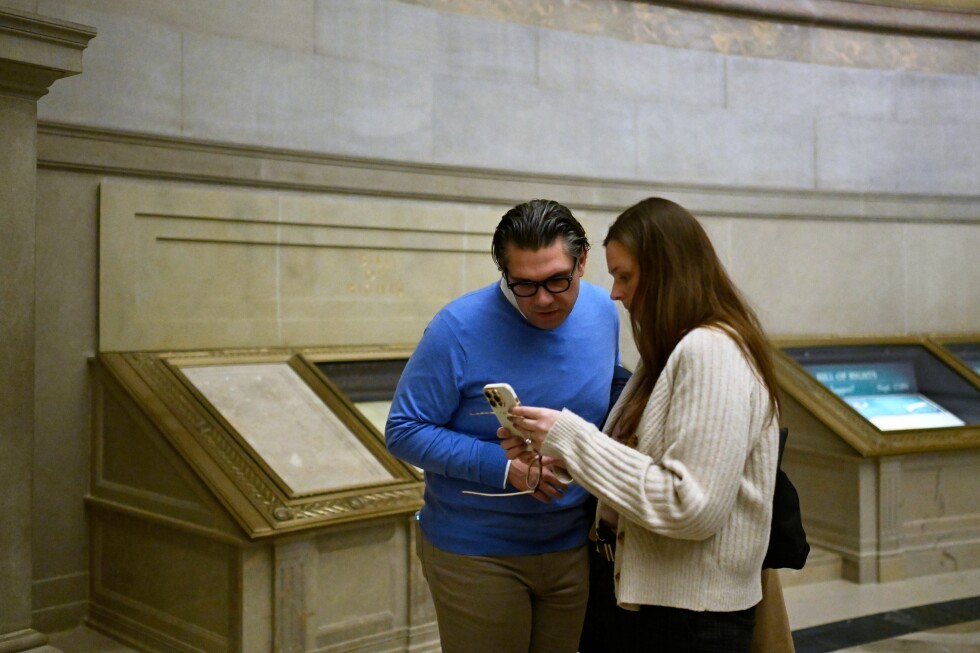
On a recent frigid day in Washington, visitors from across the country braved the cold to view the Declaration of Independence, Constitution, and Bill of Rights. Their pilgrimage coincided with a national conversation about aggressive immigration enforcement actions under the current administration, including incidents that resulted in the deaths of American citizens and raised concerns about constitutional rights.
The light brown parchment of the Declaration, protected behind bullet-proof glass, evoked a reverent silence among those gathered. Despite the nation’s current divisions, many visitors expressed optimism about America’s ability to heal its fractures, just as it has done repeatedly throughout its 250-year history.
“We’ve not yet lived up to everything that we had hoped to, but we are continuing to progress and get closer to that,” said Ryan O’Neil, 42, from West Bloomfield, Michigan. He described the current political climate as “very tribal” but found reassurance in the enduring guidance these documents have provided for two and a half centuries.
The National Archives has mounted a special exhibit titled “The American Story” to mark the semiquincentennial. The display thoughtfully balances the nation’s remarkable achievements with unflinching representations of its darker chapters, creating a nuanced portrait of American history.
O’Neil noted that the country has weathered similar divisive periods before. “Despite many tests over the years, going back to its founding, throughout the last 250 years it has withstood challenges, has withstood complaints, has withstood protests, and continues to evolve to what we have today.”
Kevin Sullivan, 69, visiting from Milwaukee, shared this historical perspective. While acknowledging today’s partisan disputes, he expressed faith that the nation would eventually move past them. Sullivan described his conflicted views on immigration policy, supporting border security while opposing mass deportations, and suggested that lawmakers should engage in meaningful private discussions away from media scrutiny to find workable solutions.
International perspectives on America’s current moment reveal additional complexity. Reverend Michael Stokes, 30, a Church of England priest, observed that America’s constitutional principles have long inspired the world but now appear to be under unprecedented strain.
“I think this is the time in history where it’s been challenged the most,” Stokes said. “The rest of the world is looking and seeing how this Constitution, which is held with such pride, the Bill of Rights, which is held with pride, how can that also be held in tension with a popularly elected government that seems to disregard so much of it.”
For Morgan Whitman, 25, an executive assistant from Miami viewing the documents for the first time, the experience evoked mixed emotions. She acknowledged the lofty ideals expressed in the Declaration but noted the inherent contradictions, particularly regarding Thomas Jefferson’s excised anti-slavery passage.
“My only wish was that it was for everybody at the time,” Whitman reflected. While grateful for the rights she enjoys as an American, she expressed concern about recent incidents like the shooting of Veterans Affairs ICU nurse Alex Pretti by federal agents in Minneapolis. “These are American citizens that are being harmed now,” she said. “That’s unacceptable.”
Jerry Curl, 62, from Diamond, Illinois, a supporter of the current administration, has nevertheless stepped back from news coverage due to its negativity. He emphasized the importance of respectful dialogue across political divides for the preservation of American democracy.
“We owe it to our future generations to uphold this,” Curl said, gesturing toward the founding documents. He wondered whether today’s Americans could find common ground as the Founders did, despite their differences. “Where we can now find common grounds to keep this one great nation on track is hard for me to fathom.”
As the nation approaches its 250th birthday, these diverse perspectives from everyday Americans highlight both the enduring power of the country’s founding ideals and the ongoing struggle to fully realize them across generations and changing circumstances.
Fact Checker
Verify the accuracy of this article using The Disinformation Commission analysis and real-time sources.

6 Comments
It’s humbling to reflect on the enduring principles of the Declaration of Independence as America approaches this historic milestone. While the country faces complex challenges, this foundational document continues to inspire hope and a shared commitment to democratic values.
Visiting the National Archives to view the founding documents is a powerful reminder of the resilience and adaptability of the American experiment. Despite deep divisions, the nation’s ability to self-correct and renew its democratic institutions is a testament to the foresight of the Founders.
You make a good point. Maintaining that spirit of civic renewal will be crucial as the country navigates the road ahead.
The Declaration’s timeless proclamation that ‘all men are created equal’ continues to challenge and inspire citizens to strive for a more perfect union. As the country grapples with divisive issues, maintaining a sense of shared purpose rooted in these founding principles will be crucial.
The Declaration of Independence’s emphasis on unalienable rights and the consent of the governed remains a touchstone for citizens grappling with contemporary issues. As we approach 250 years, finding common ground and upholding the Constitution’s principles will be vital for the nation’s continued progress.
Viewing these historic documents in person must be a powerful experience, evoking both the nation’s founding ideals and the complex realities of its evolution. Thoughtful reflection on America’s past and future trajectory is essential as we commemorate this milestone anniversary.