


Listen to the article
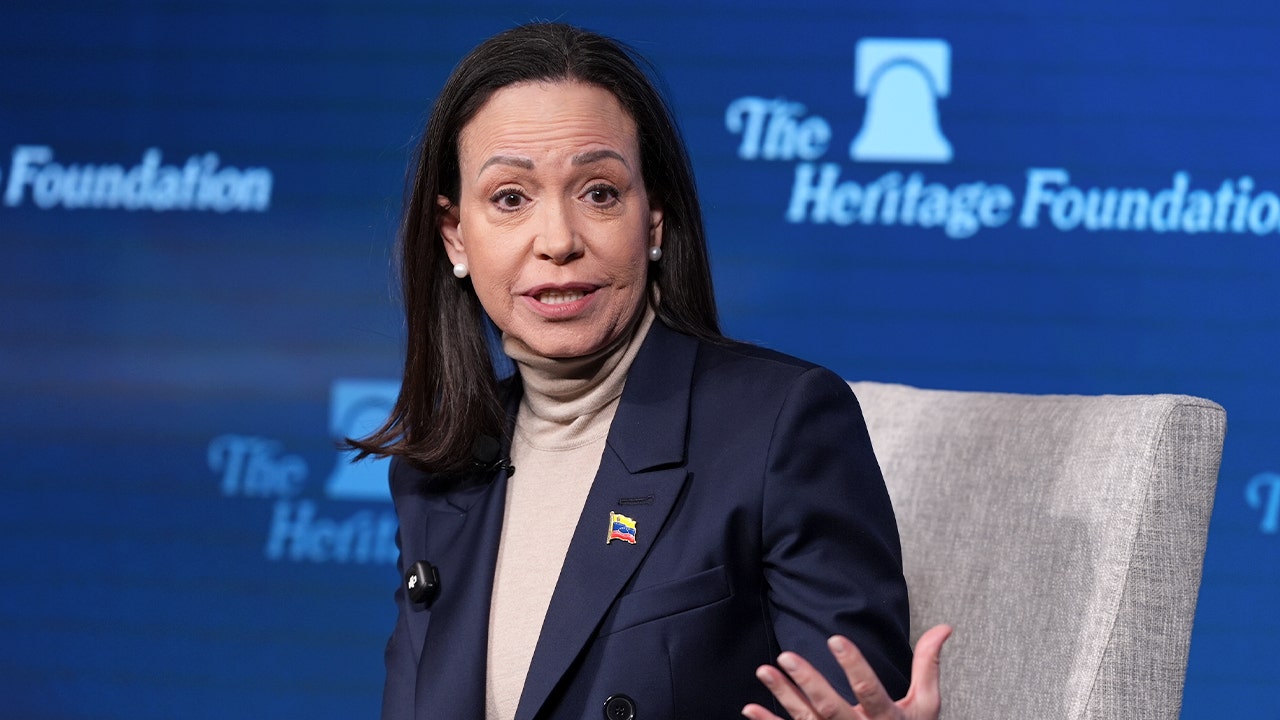
Venezuelan opposition leader María Corina Machado warned the Trump administration on Friday that interim Venezuelan President Delcy Rodríguez does not represent the will of the Venezuelan people, describing her as a communist with strong ties to Russia, China, and Iran.
“I want to insist on this: Delcy Rodriguez, yes, she’s a communist. She’s the main ally and representation of the Russian regime, the Chinese and the Iranians, but that’s not the Venezuelan people and that’s not the armed forces, as well,” Machado told attendees at an event organized by the influential conservative think tank, the Heritage Foundation.
Despite acknowledging the complex situation as Nicolás Maduro’s allies continue to exert influence following his capture by U.S. forces on January 3, Machado expressed confidence in the prospect of an orderly transition of power. Her remarks came amid reports that CIA Director John Ratcliffe had met with Rodríguez in Caracas to discuss intelligence cooperation, economic stability, and ensuring Venezuela would no longer serve as a “safe haven for America’s adversaries.”
Rodríguez, who served as Maduro’s vice president before assuming the interim presidency, recently announced what she called a “new political moment” for Venezuela, which includes the continued release of political prisoners detained under Maduro’s regime. Days before this announcement, the interim government freed at least four U.S. citizens detained in Venezuela, marking the first known release of American prisoners since Maduro’s removal.
The political landscape in Venezuela has been dramatically transformed since the U.S. military operation that captured Maduro earlier this month. President Donald Trump subsequently stated that the U.S. would “run” Venezuela temporarily, though he has not provided specific details about how power would eventually be transferred.
Despite meeting with Machado on Thursday, Trump has yet to explicitly back the opposition leader and has expressed doubts about her level of popular support in Venezuela. Nevertheless, Machado has consistently praised Trump, emphasizing the crucial role his administration will play in Venezuela’s future.
“The only thing I want to assure the Venezuelan people is that Venezuela is going to be free and that’s going to be achieved with the support of the people of the United States and the president, Donald Trump of the United States,” Machado declared at the Heritage Foundation event.
She further pledged that Venezuela would become “the best ally the United States has ever had in the Americas,” and expressed gratitude for Trump’s “historic mission” to capture Maduro, stating that it “took a lot of courage” to execute the operation.
Machado’s comments reflect the delicate balance of power in post-Maduro Venezuela, where competing factions vie for influence both domestically and internationally. The interim government under Rodríguez represents continuity with elements of the previous regime, while Machado positions herself as the true representative of democratic change.
Venezuela’s political transition is occurring against a backdrop of severe economic challenges, with the country having experienced years of hyperinflation, food shortages, and mass emigration under Maduro’s rule. These conditions have created a humanitarian crisis that has seen approximately seven million Venezuelans flee the country since 2014, according to United Nations estimates.
The situation remains fluid as various international actors, including the United States, Russia, China, and regional Latin American powers, maneuver to protect their interests in Venezuela, a country that possesses the world’s largest proven oil reserves. How the Trump administration navigates this complex landscape will significantly impact not only Venezuela’s future but also geopolitical dynamics throughout the Western Hemisphere.
Fact Checker
Verify the accuracy of this article using The Disinformation Commission analysis and real-time sources.

7 Comments
This is a complex situation in Venezuela. While I’m glad to see the opposition leader warning against dealing with Maduro’s allies, I hope the transition can be orderly and lead to real democracy. What do you think would be the best path forward?
It’s good to see the opposition leader speaking out against the communist ties of Maduro’s allies. However, this is a very complex situation that will require careful diplomacy. Do you think the US has a clear path forward to support a peaceful and democratic transition in Venezuela?
The situation in Venezuela remains very volatile. I’m glad to see the opposition leader expressing confidence in an orderly transition, but the continued influence of Maduro’s allies is concerning. What specific steps do you think the US should take to ensure a peaceful and democratic outcome?
This is a complex geopolitical situation that will require a delicate diplomatic touch. While I understand the desire to cut ties with Maduro’s communist allies, any abrupt action could risk further destabilizing the country. What do you think would be the best approach for the US to take?
Interesting to hear the opposition leader describe Delcy Rodríguez as a communist with ties to Russia, China and Iran. That certainly complicates matters for the US in navigating this transition. Do you see any way for the US to work constructively with Maduro’s remaining allies?
This is a concerning development, with Maduro’s allies still exerting influence despite his capture. The opposition leader’s warning about Delcy Rodríguez’s communist ties and foreign alliances is alarming. Do you see any viable options for the US to counter this threat to democracy in Venezuela?
The warning from the Venezuelan opposition leader is understandable, given the continued influence of Maduro’s allies. However, I’m curious to hear your thoughts on how the US can navigate this transition in a way that avoids further conflict and promotes stability in the region.