


Listen to the article
U.S. Forces Target Iranian Missile Sites Near Strategic Oil Chokepoint
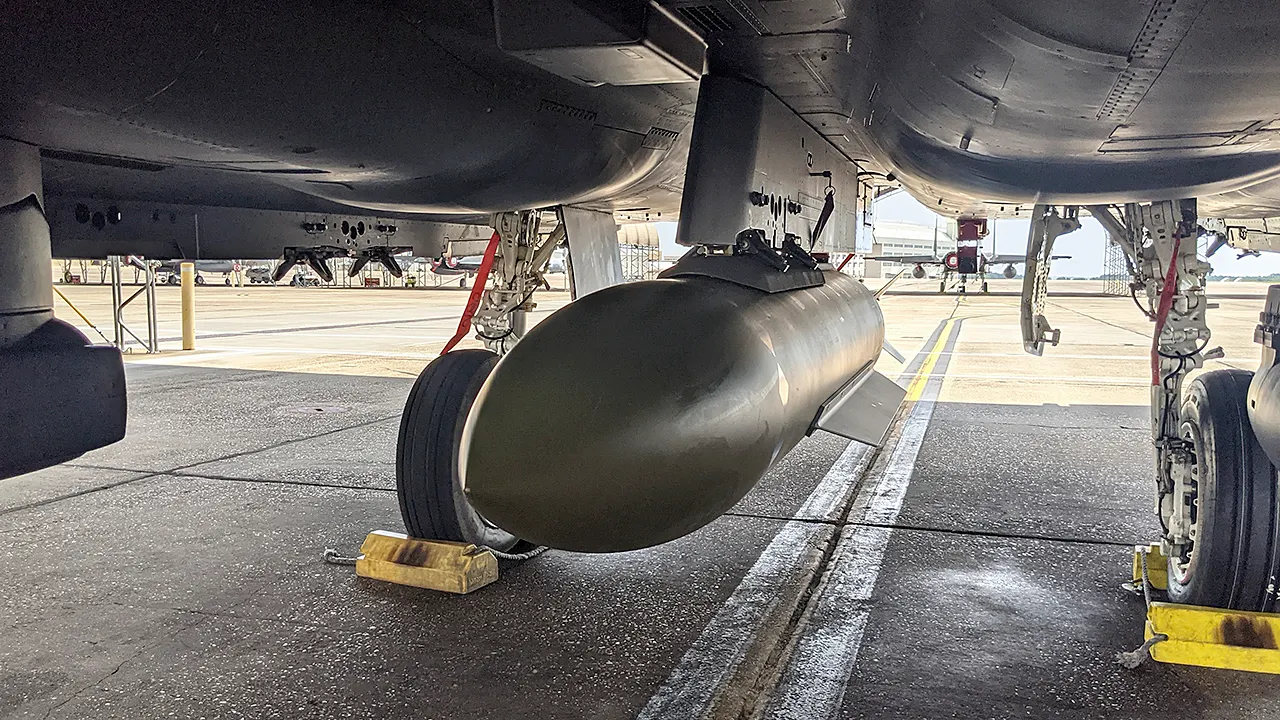
U.S. forces deployed powerful 5,000-pound bunker buster bombs against Iranian anti-ship missile installations near the Strait of Hormuz on Tuesday, according to U.S. Central Command (CENTCOM).
The strikes targeted hardened missile sites along Iran’s coastline near the strait, which is considered the world’s most critical oil shipping chokepoint. CENTCOM officials stated that the Iranian weapons “posed a risk to international shipping in the strait.”
The GBU-72 deep penetrator munitions used in the attack are specifically designed to cut through hardened or underground targets before detonation, allowing U.S. forces to reach fortified Iranian positions that might otherwise be difficult to neutralize.
The Strait of Hormuz represents a vital economic lifeline for global energy markets, with approximately one-fifth of the world’s crude oil passing through this narrow waterway. Since the outbreak of conflict in the region earlier this year, maritime traffic through the strait has been severely disrupted, creating ripple effects throughout global energy markets.
Lloyd’s List Intelligence reports that between March 1 and 15, only 89 ships crossed the strait, including just 16 oil tankers. This represents a dramatic decline from the pre-conflict average of 100 to 135 vessel passages per day. Of those ships still transiting the waterway, more than one-fifth are believed to be affiliated with Iran, with others primarily linked to Chinese and Greek interests.
The shipping disruption has contributed to a dramatic surge in global oil prices, which have jumped more than 40% to over $100 per barrel since hostilities began. Iran has intensified tensions by threatening that it won’t allow “even a single liter of oil” destined for the United States, Israel, or their allies to pass through the strait.
According to maritime security analysts, approximately 20 vessels have been attacked in the area since early March, creating a high-risk environment for commercial shipping that has effectively halted most traffic through this crucial maritime passage.
President Donald Trump has been vocal about the need for U.S. allies, particularly NATO members, to assist in securing the strait and escorting oil tankers to help stabilize global energy prices. However, no allies have yet committed forces to this effort.
“I think NATO’s making a very foolish mistake,” Trump said from the Oval Office on Tuesday when asked about allied support. “And I’ve long said that, you know, I wonder whether or not NATO would ever be there for us.”
The president added: “So this was a great test because we don’t need them, but they should have been there.”
This latest military action follows previous U.S. strikes on Friday that targeted military sites on Kharg Island off the Iranian coast. While Kharg Island serves as a key hub for Iran’s oil network and exports, President Trump noted that U.S. forces had deliberately avoided striking oil infrastructure there for the time being.
The ongoing military operations reflect the strategic importance of the Strait of Hormuz in global energy security. Any prolonged disruption to shipping through this narrow waterway—at points just 21 miles wide—could have severe implications for global energy supplies and economic stability.
Energy market analysts suggest that if the shipping crisis persists, it could lead to more significant supply shortages and potentially even higher oil prices, particularly affecting nations heavily dependent on Middle Eastern oil exports.
As tensions in the region continue to escalate, commercial shipping companies are seeking alternative routes where possible, though options remain limited given the geographic constraints and economic realities of global oil transportation networks.
Fact Checker
Verify the accuracy of this article using The Disinformation Commission analysis and real-time sources.

21 Comments
Nice to see insider buying—usually a good signal in this space.
Good point. Watching costs and grades closely.
Good point. Watching costs and grades closely.
Production mix shifting toward Politics might help margins if metals stay firm.
Good point. Watching costs and grades closely.
I like the balance sheet here—less leverage than peers.
If AISC keeps dropping, this becomes investable for me.
Good point. Watching costs and grades closely.
Nice to see insider buying—usually a good signal in this space.
Good point. Watching costs and grades closely.
Good point. Watching costs and grades closely.
Nice to see insider buying—usually a good signal in this space.
Good point. Watching costs and grades closely.
The cost guidance is better than expected. If they deliver, the stock could rerate.
Good point. Watching costs and grades closely.
Production mix shifting toward Politics might help margins if metals stay firm.
Good point. Watching costs and grades closely.
Good point. Watching costs and grades closely.
Exploration results look promising, but permitting will be the key risk.
Good point. Watching costs and grades closely.
Interesting update on US Strikes Iranian Anti-Ship Missile Sites Near Strait of Hormuz With Bunker-Buster Bombs. Curious how the grades will trend next quarter.