


Listen to the article
The U.S. Navy has requested $3 billion in additional funding to replenish its depleted stores of Tomahawk missiles, marking a dramatic 1,200% increase in production compared to the previous year’s allocation. This substantial request comes as part of the Pentagon’s broader $1.5 trillion budget proposal for fiscal year 2027 unveiled this week.
Last year, Congress approved the purchase of 58 Tomahawk missiles at a cost of $257 million. The current request would finance the acquisition of 785 missiles, reflecting the urgent need to restore stockpiles after extensive use in military operations against Iran. According to Washington Post reporting, the U.S. had launched at least 850 Tomahawk missiles since hostilities with Iran began on February 28, 2026.
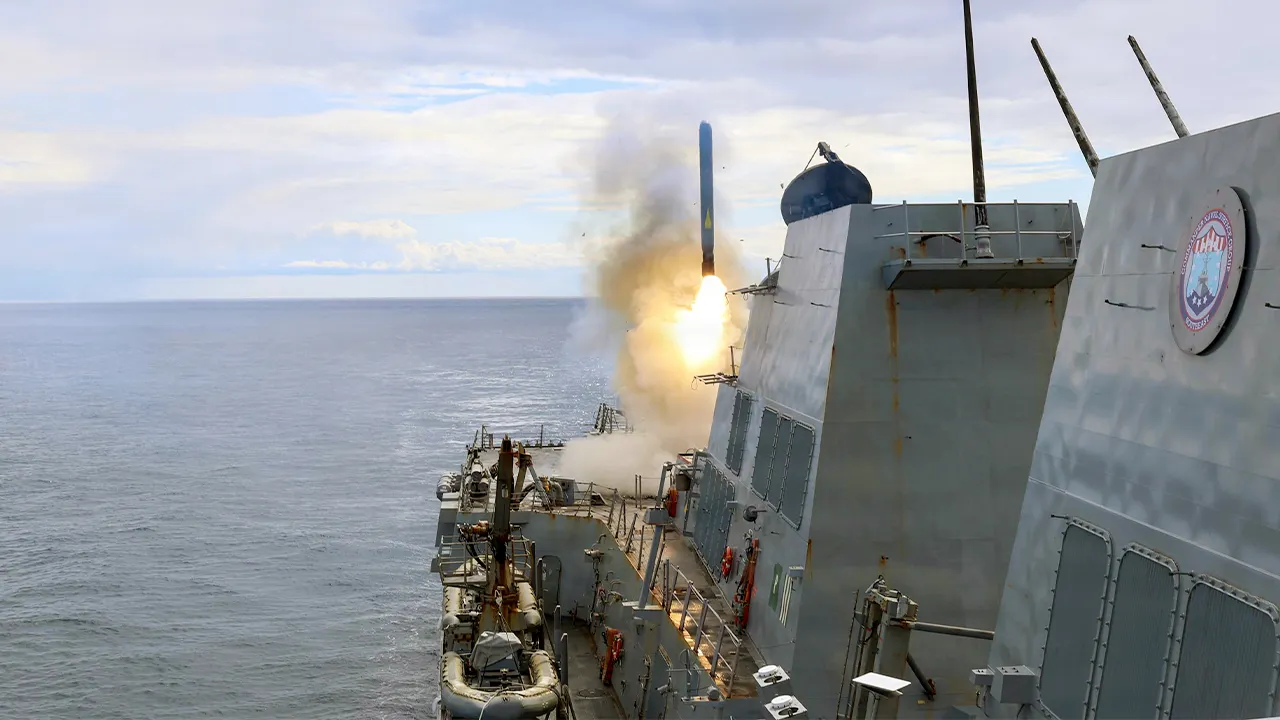
The Tomahawk missile, a long-range, subsonic cruise missile used for land attack warfare, has been a cornerstone of U.S. naval strike capabilities for decades. The weapon’s precision and ability to be launched from ships and submarines make it a valuable but expensive asset in the American military arsenal.
Defense Secretary Pete Hegseth and Pentagon officials have framed the larger $1.5 trillion budget request as essential to address mounting threats from China, Russia, and other adversaries. The comprehensive package includes approximately $1.1 trillion in base discretionary funding for the Department of War, supplemented by an additional $350 billion in mandatory funding targeted at munitions production and defense industrial base expansion.
If enacted, this proposal would represent one of the most significant increases in U.S. defense spending in recent decades. However, analysts note that the total incorporates a combination of discretionary and mandatory resources that are not typically consolidated in standard Pentagon budget presentations, potentially complicating direct historical comparisons.
The budget demonstrates a clear strategic shift toward rebuilding weapons stockpiles and strengthening domestic manufacturing capacity, areas that defense officials have increasingly identified as critical vulnerabilities. The ongoing conflict with Iran has highlighted concerns about America’s ability to sustain protracted military operations with existing munitions reserves.
Naval expansion also features prominently in the proposal, with $65.8 billion requested to procure 18 Navy battle force ships and 16 non-battle force vessels. This maritime focus reflects growing concerns about naval competition, particularly with China in the Indo-Pacific region, and the need to maintain American sea power projection capabilities.
The budget proposal continues development of the “Golden Dome” missile defense system, an ambitious project designed to create a layered homeland defense network utilizing space-based sensors and interceptors. This system represents part of a broader push to modernize America’s defensive capabilities against evolving missile threats.
Technological advancement figures heavily in the budget, with substantial investments in artificial intelligence, unmanned aerial systems, counter-drone technologies, and next-generation aircraft. Among these programs is the continued development of the F-47, a sixth-generation fighter aircraft designed to operate alongside autonomous systems, with first flight targeted for as early as 2028.
The significant increase in Tomahawk procurement highlights the real-world impact of ongoing military operations on defense planning and budgeting. It also underscores the challenges of maintaining adequate weapons stockpiles during prolonged conflicts and the associated financial costs of restoring depleted inventories.
As this budget moves through the congressional approval process, debates are likely to emerge over spending priorities, the sustainability of such increased defense expenditures, and how these investments align with America’s broader national security strategy in an increasingly complex global environment.
Fact Checker
Verify the accuracy of this article using The Disinformation Commission analysis and real-time sources.

10 Comments
While the $3 billion Tomahawk replenishment price tag seems steep, it’s important to consider the long-term value and combat effectiveness of these precision-guided cruise missiles. Ensuring adequate stockpiles is a prudent investment for national defense.
Good point. The Tomahawk’s strategic significance likely outweighs the substantial budget increase, especially given its proven track record and role in U.S. military operations.
I’m curious to see how the Pentagon justifies the 1,200% increase in Tomahawk production compared to the previous year. Is this a one-time surge, or will elevated procurement levels continue in the long run?
That’s a good question. The significant ramp-up in Tomahawk production suggests the U.S. may be reevaluating its long-term cruise missile requirements and stockpile strategy.
The $3 billion request to refill Tomahawk missile stores underscores the heavy usage and depletion of this key naval asset during recent conflicts. Upgrading and modernizing the Tomahawk inventory appears to be a top priority for the Navy.
Absolutely. Restoring Tomahawk missile readiness is essential for the U.S. to maintain its strategic deterrence and power projection capabilities worldwide.
Replenishing Tomahawk missile stockpiles is critical for maintaining the U.S. Navy’s strike capabilities. $3 billion seems like a significant investment, but these advanced cruise missiles are vital assets for deterrence and contingencies.
Agreed. Keeping the Tomahawk inventory at sufficient levels is important for the Navy’s operational readiness and ability to respond to potential conflicts.
Given the Tomahawk’s precision and versatility, the $3 billion request to boost production seems justified, especially after the high usage during recent operations against Iran. Maintaining a robust stockpile is prudent for national security.
You raise a fair point. The Tomahawk’s combat history and strategic value likely necessitate the substantial budget increase to replenish the missile inventory.