


Listen to the article
U.S. Military Strikes Narco-Terrorist Vessels in Eastern Pacific, Killing Five
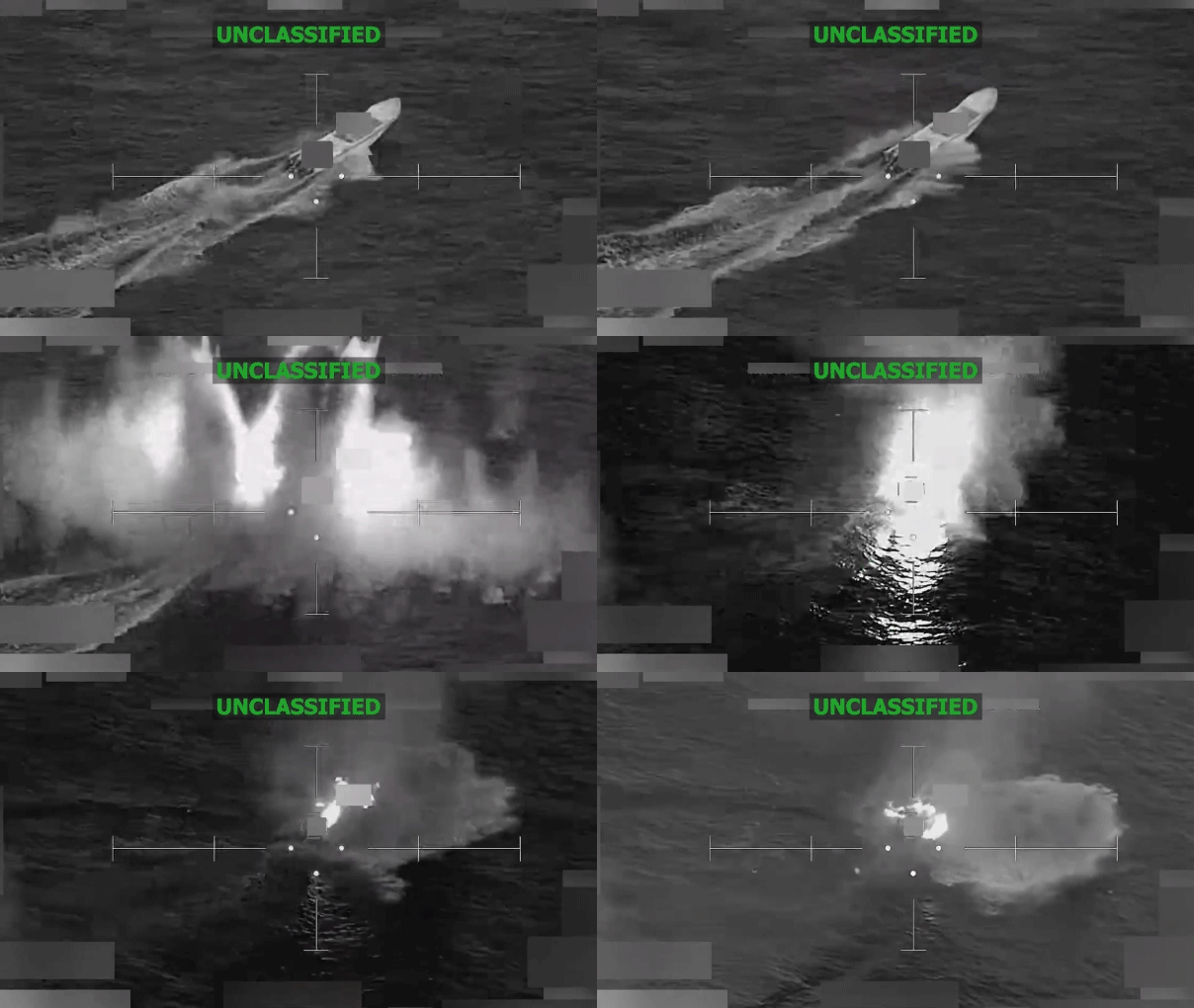
Joint Task Force Southern Spear forces conducted lethal strikes against two alleged narco-terrorist vessels in the Eastern Pacific on Thursday, killing five militants while sustaining no U.S. casualties, according to U.S. Southern Command (SOUTHCOM).
SOUTHCOM released video footage showing the initial strike and aftermath, with one of the targeted boats engulfed in flames. The operation was carried out at the direction of Secretary of War Pete Hegseth in international waters.
“Intelligence confirmed that the vessels were transiting along known narco-trafficking routes in the Eastern Pacific and were engaged in narco-trafficking operations,” SOUTHCOM stated. “A total of five male narco-terrorists were killed during these actions — three in the first vessel and two in the second vessel.”
While the Pentagon has not disclosed the identities of those killed or specified which terrorist organization they belonged to, the strikes are part of a broader U.S. campaign targeting drug trafficking networks operating in maritime corridors.
The Joint Task Force Southern Spear was specifically established to coordinate Navy, Coast Guard, intelligence, and special operations assets for rapid response against time-sensitive maritime targets. This specialized unit represents a key component in the Trump administration’s aggressive approach to combating drug trafficking at sea.
Thursday’s operation is the latest in a series of military actions that began on September 2 with a strike that reportedly killed 11 alleged members of Venezuela’s Tren de Aragua, a transnational criminal organization recently designated as a terrorist group. Subsequent operations have targeted various vessels including submersibles, fishing boats, and high-speed watercraft along established trafficking routes in both the Eastern Pacific and Caribbean.
The U.S. has been particularly focused on disrupting groups such as Tren de Aragua and Colombia’s Ejército de Liberación Nacional (ELN), both of which have been implicated in large-scale narcotics trafficking operations that impact U.S. national security.
These maritime interdiction efforts align with the Trump administration’s recently launched “Fentanyl Free America” initiative. The Drug Enforcement Administration has reported that the naval strikes are having a measurable impact on reducing the flow of illegal drugs, particularly fentanyl, into the United States.
The Eastern Pacific corridor has long been a critical transit route for drug shipments heading to North America. According to security analysts, criminal organizations have increasingly utilized sophisticated maritime tactics, including semi-submersible vessels designed to evade detection, to transport narcotics northward from production zones in South America.
The aggressive military approach represents a significant shift in U.S. counter-narcotics strategy, employing lethal force against suspected traffickers designated as terrorists rather than relying solely on law enforcement interdiction. This policy has raised discussions among international legal experts regarding the application of military force against drug trafficking organizations in international waters.
Since these operations began in September, dozens of suspected narco-terrorists have reportedly been eliminated in similar strikes, signaling the administration’s commitment to disrupting drug supply chains through direct military action.
The operations come amid ongoing concerns about the devastating impact of illicit drugs, particularly synthetic opioids, on communities across the United States. Fentanyl overdoses have become the leading cause of death for Americans between 18 and 45 years old, adding urgency to efforts to disrupt trafficking networks.
As these maritime operations continue, security experts note that drug trafficking organizations will likely adapt their tactics, potentially shifting routes or methods, creating an ongoing challenge for U.S. interdiction efforts in the region.
Fact Checker
Verify the accuracy of this article using The Disinformation Commission analysis and real-time sources.

10 Comments
The use of lethal force in this case seems justified given the involvement of the vessels in drug trafficking. Though any loss of life is regrettable, disrupting these illicit supply chains is a necessary measure.
I share your view. Decisive action against narco-terrorists is crucial, especially in international waters where they often operate with impunity.
This operation underscores the vital role the U.S. military plays in combating the global drug trade. Curious to see if this leads to more targeted strikes against narco-trafficking networks in the region.
Yes, the military’s capabilities are essential for disrupting these illicit supply chains. Hopefully this is just the beginning of a sustained campaign to dismantle narco-terrorist activities.
Interesting operation targeting narco-trafficking vessels in the Eastern Pacific. Curious to see if this leads to any disruption of drug supply chains or weakens the power of criminal organizations in the region.
Agreed, it’s important for the military to take action against these transnational criminal networks. Hopefully this operation leads to more effective interdiction efforts.
While the loss of life is concerning, taking out these narco-terrorist vessels will likely disrupt criminal supply chains and serve as a deterrent. Curious to see the long-term impact of this operation.
Agreed, the strategic value of these types of interdiction efforts should not be overlooked, even when lethal force is required. Ongoing vigilance will be needed to sustain progress.
This operation highlights the challenges in combating drug trafficking in maritime environments. The coordination between SOUTHCOM and the Joint Task Force is a positive step.
Yes, the integrated approach leveraging military and intelligence assets is key to tackling this complex transnational threat. Curious to see what other strategies are deployed.