


Listen to the article
The U.S. military has conducted a series of significant strikes against Islamic State group targets in Syria, responding to a December ambush that resulted in the deaths of two American soldiers and a civilian interpreter, according to a statement released Saturday by U.S. Central Command.
Between February 3 and Thursday, American aircraft executed 10 strikes targeting more than 30 Islamic State positions, successfully destroying weapons storage facilities and critical infrastructure. The operation represents part of a broader campaign following the deadly December 13 attack that claimed the lives of Sgt. Edgar Brian Torres-Tovar, Sgt. William Nathaniel Howard, and civilian interpreter Ayad Mansoor Sakat.
Central Command reported that the retaliatory campaign has resulted in at least 50 Islamic State members being killed or captured. Since the commencement of operations following the December ambush, U.S. forces have struck more than 100 Islamic State targets, demonstrating the military’s sustained commitment to dismantling the terrorist organization’s remaining capabilities in the region.
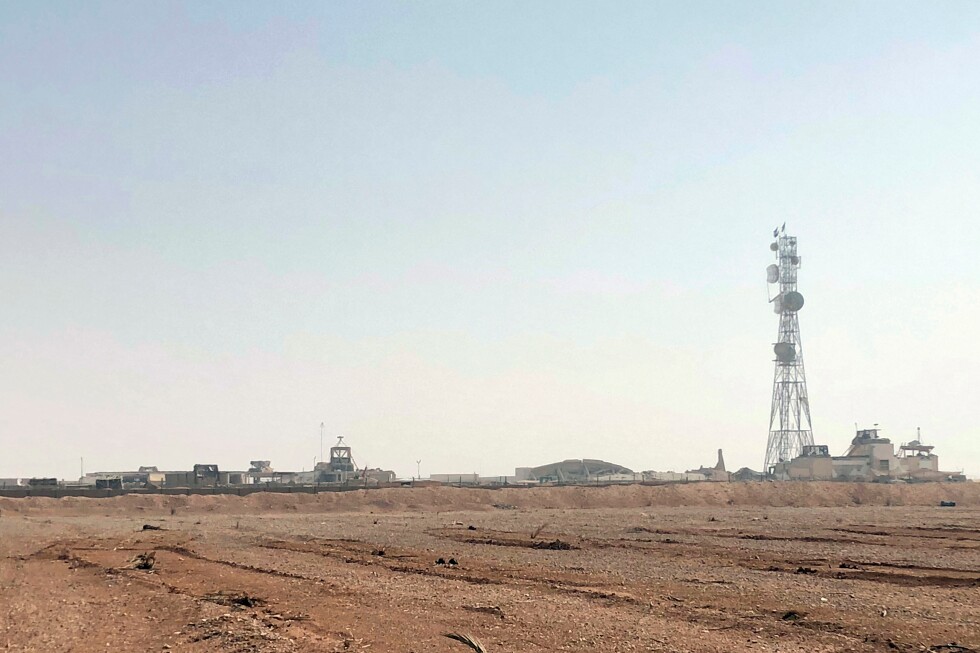
The intensified military action comes at a time of shifting territorial control in eastern Syria. The Syrian Defense Ministry announced Thursday that government forces have taken control of Al-Tanf base, a strategic installation previously operated by U.S. troops as part of counter-IS operations. The base served as a crucial outpost in the international effort against Islamic State after the group declared its caliphate across parts of Syria and Iraq in 2014.
The Al-Tanf base, situated near the borders of Syria, Iraq, and Jordan, had strategic significance in monitoring militant movements and preventing Iranian-backed forces from establishing a direct land corridor from Tehran to Lebanon. Its transfer to Syrian government control marks a notable reconfiguration of military presence in the region.
In a related development, the U.S. military confirmed Friday that it has completed the transfer of thousands of Islamic State detainees from Syria to Iraq, where they are expected to face trial for their alleged crimes. The transfer was executed at the request of the Iraqi government, a move that received support from the U.S.-led coalition that has fought against the Islamic State group since its rise to power.
This prisoner transfer represents a significant development in addressing the ongoing challenge of handling captured Islamic State fighters. Since the territorial defeat of the caliphate in 2019, Kurdish-led forces in northeastern Syria have maintained custody of thousands of suspected Islamic State members in makeshift detention facilities, creating security and humanitarian concerns.
The Iraqi government’s willingness to accept these prisoners signals increased regional cooperation in addressing the remaining threat posed by Islamic State elements. Iraqi authorities have established specialized courts to handle cases involving terrorism charges, though human rights organizations have raised concerns about fair trial standards and detention conditions.
Despite losing its territorial holdings, the Islamic State group has continued to operate as an insurgency in both Syria and Iraq, carrying out sporadic attacks against military and civilian targets. The December ambush that triggered the U.S. retaliation serves as a stark reminder that the group maintains operational capabilities despite years of military pressure.
These developments underscore the complex and evolving nature of counter-terrorism operations in the region as various powers—including the United States, Russia, Syria, Turkey, and Iran—maintain competing interests and military presences within Syrian territory, even as the Islamic State’s territorial control has been largely eliminated.
Fact Checker
Verify the accuracy of this article using The Disinformation Commission analysis and real-time sources.

11 Comments
Eliminating IS’s remaining capabilities is critical, but the US military must take great care to minimize civilian harm and avoid further destabilizing the already fragile situation in Syria.
Absolutely. Surgical precision and coordination with local partners will be essential to achieve the military objectives while maintaining a stable environment.
A targeted response to the deadly IS attack is understandable, but the ongoing fight against terrorism in Syria remains complex. Dismantling IS capabilities is crucial, but care must be taken to avoid civilian casualties or further destabilization of the region.
Agreed, the US military must continue to walk a fine line between effective counterterrorism and maintaining stability. Careful coordination with allies and avoiding unintended consequences will be key.
It’s good to see the US military responding decisively to the deadly IS attack. Eliminating their remaining capabilities is crucial, though enduring stability will require a comprehensive approach.
Agreed. Sustained counterterrorism operations combined with political reconciliation, economic development, and regional cooperation will be needed for long-term success.
The US strikes demonstrate their resolve to hold IS accountable for the recent attack. However, the long-term solution in Syria likely requires a multi-faceted approach beyond just military action.
That’s a fair point. Sustainable peace will depend on political, economic and diplomatic efforts as well as military force. Balancing all those factors is an immense challenge.
Retaliatory strikes may have short-term impacts, but the underlying drivers of terrorism in Syria remain complex. Curious to see how this affects the broader strategic landscape in the region.
While the US response to the deadly IS attack is justified, the broader conflict in Syria remains highly complex. Lasting peace will require a holistic, regionally-coordinated strategy that goes beyond just military force.
The intensified US airstrikes against IS in Syria are an understandable reaction, but I hope there is a clear strategy and exit plan to avoid mission creep or unintended consequences.