


Listen to the article
U.S. lawmakers found themselves in an awkward position at the Munich Security Conference this weekend, attempting to reassure international allies of America’s reliability while domestic political crises cast long shadows over their diplomatic efforts.
The American presence at the prestigious annual gathering was notably diminished after House Speaker Mike Johnson canceled an official delegation of approximately two dozen House members. While some representatives found alternative ways to attend, many were forced to send regrets.
Two bipartisan Senate delegations did make the journey to Germany, but they departed Washington amid escalating domestic tensions. The backdrop included controversial immigration enforcement actions under President Donald Trump’s administration, which have resulted in two fatal shootings during protests against raids. Adding to the turmoil was the administration’s unsuccessful attempt to indict six Democratic lawmakers who produced a video urging military personnel not to follow “illegal orders.”
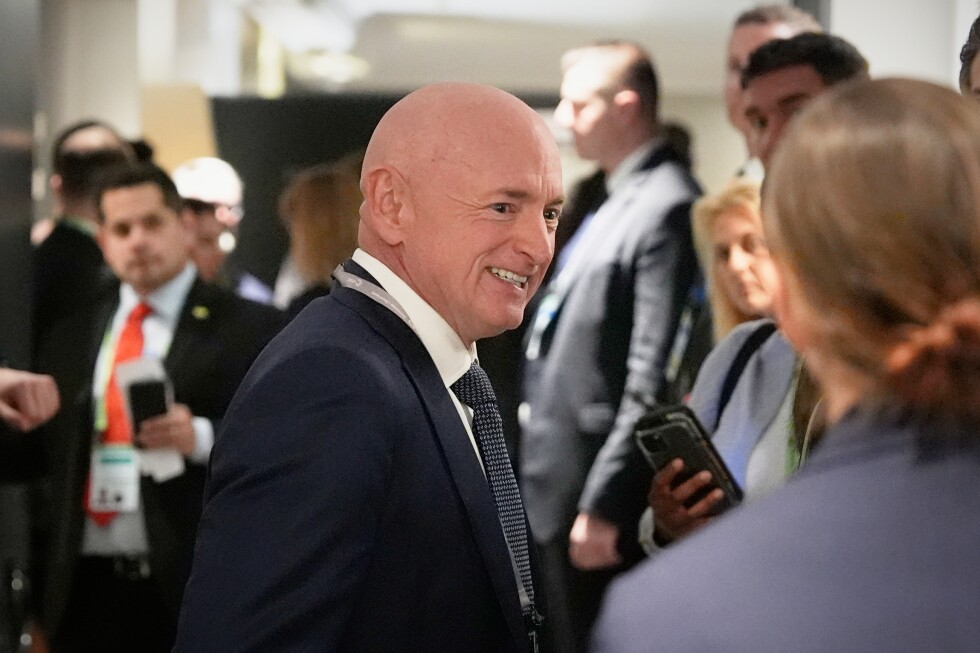
Arizona Senator Mark Kelly, one of those investigated by the Department of Justice, expressed his discomfort during a live interview at the conference. “It is a little bit, you know, depressing to be here with what we have to deal with at home,” he told Politico.
For more than 60 years, the Munich Security Conference has served as a forum where world leaders pursue cooperative security measures, with the United States traditionally playing a central role. Trump’s presidency has dramatically altered America’s stance toward global partnerships, particularly with European allies.
Delaware’s Democratic Senator Chris Coons acknowledged the difficult conversations ahead. “I expect to have a number of challenging conversations with friends and allies about their concern and alarm about what they’ve seen federal law enforcement under this administration do in Minneapolis and the attempt to indict six of my colleagues and other steps that frankly have more of the hallmarks of authoritarian societies than democracies,” he said.
The Munich forum has in recent years reinforced the coalition supporting Ukraine against Russia’s invasion, a cause that once enjoyed strong Republican backing. This year, however, several GOP senators who previously attended and hold positions on military and foreign affairs committees chose to remain stateside. The delegations that did attend featured significantly more Democrats than Republicans.
As lawmakers left Washington on Thursday, Republican Senator Eric Schmitt of Missouri criticized Democrats for traveling to Munich while the Department of Homeland Security faced a potential shutdown due to congressional funding disagreements. “How do you justify getting on a plane and going to Europe when you’re shutting down DHS?” Schmitt asked reporters. “They’re making a decision that their travel to Munich to cozy up with the Euros is way more important than funding DHS.”
Democratic Senator Brian Schatz responded on social media, pointing out that both he and Schmitt had attended the conference the previous year, calling it “an important bipartisan trip.” Nevertheless, Schatz acknowledged that this year was different given the Justice Department’s attempts to indict senators. “Spare me the high-minded panel discussions and bilats and press availabilities about the United States as the indispensable nation, when we are dispensing with our most sacred constitutional obligations,” he declared in a floor speech.
Some Republicans who did attend came not to offer reassurances but to herald the changing world order under Trump. Secretary of State Marco Rubio and Undersecretary of Defense for Policy Elbridge Colby were among the high-ranking Trump administration officials participating.
Senator Lindsey Graham, a South Carolina Republican with close ties to Trump, led one of the Senate delegations. He argued forcefully that European security benefits from Trump’s willingness to disrupt traditional alliance structures. Graham advocated for maintaining pressure on Iran with the goal of regime change and building pressure on Russian President Vladimir Putin to reach a peace deal.
“We’re here at a crucial moment, folks. If we don’t follow through with what we promised the people of Iran, it will destroy America’s credibility for years to come, it will make this world less safe,” Graham warned.
While Graham has been a regular attendee at Munich and similar conferences, a new American voice emerged this year. Democratic Representative Alexandria Ocasio-Cortez of New York made her first appearance at the conference, participating in discussions about populism and America’s evolving global role. She framed her attendance as a demonstration of support for international liberal values.
“We are ready for the next chapter, not to have the world turned to isolation, but to deepen our partnership on greater and increased commitment to integrity to our values,” she stated during a roundtable discussion.
Ocasio-Cortez expressed understanding for voters who have abandoned traditional center-left parties in favor of populist right-wing alternatives, both in Europe and the United States. She connected this to her own political journey, saying her frustrations with a Democratic Party “that championed special interests, the elite” motivated her to run for office.
Despite acknowledging political shifts, she remained optimistic about America’s international commitments. “That does not mean that the majority of Americans are ready to walk away from a rules-based order and that we’re ready to walk away from our commitment to democracy,” Ocasio-Cortez concluded.
Fact Checker
Verify the accuracy of this article using The Disinformation Commission analysis and real-time sources.

10 Comments
The declining US presence at the Munich Security Conference is concerning. It signals a potential weakening of American influence and leadership on critical global security matters. This is a worrying trend that bears close monitoring.
I agree. The US must prioritize resolving its internal divisions and bolstering its diplomatic capabilities to effectively engage on the world stage. Ceding ground to rivals could have serious long-term consequences.
Interesting to see how domestic political turmoil can impact a country’s diplomatic efforts on the global stage. It highlights the importance of maintaining stability and unity at home to project strength abroad.
Absolutely. Domestic crises can undermine a country’s credibility and influence on the international scene. The US will need to address these issues to regain its standing as a reliable global leader.
The inability of US lawmakers to present a united front at the Munich conference is troubling. It suggests a concerning level of dysfunction that could undermine America’s credibility and bargaining power on the international stage.
Exactly. Disunity at home translates to diminished influence abroad. The US must find a way to resolve its internal conflicts if it hopes to effectively lead on global issues like security and diplomacy.
This situation is a stark reminder that domestic politics can have far-reaching consequences, even in the realm of foreign policy and national security. The US must work to address its internal divisions if it wants to maintain its global standing and influence.
Well put. The US can’t afford to be seen as a weak or unreliable partner on the world stage. Resolving these issues should be a top priority for policymakers in Washington.
This situation underscores the complex interplay between domestic politics and foreign policy. The US will need to find a way to address its internal challenges while maintaining its global commitments and influence. It’s a delicate balance that will require skilled leadership.
Well said. Navigating this dual challenge will be critical for the US to retain its status as a preeminent world power. Restoring unity and stability at home is a necessary first step.