


Listen to the article
Trump Administration Imposes Major Duties on Chinese and Vietnamese Food Containers
The Trump administration has announced substantial trade penalties on disposable food containers imported from China and Vietnam, a move aimed at protecting U.S. manufacturers and addressing safety concerns. The U.S. International Trade Commission (ITC) recently ruled that American industry is “materially injured” by imports of thermoformed molded fiber products from these countries.
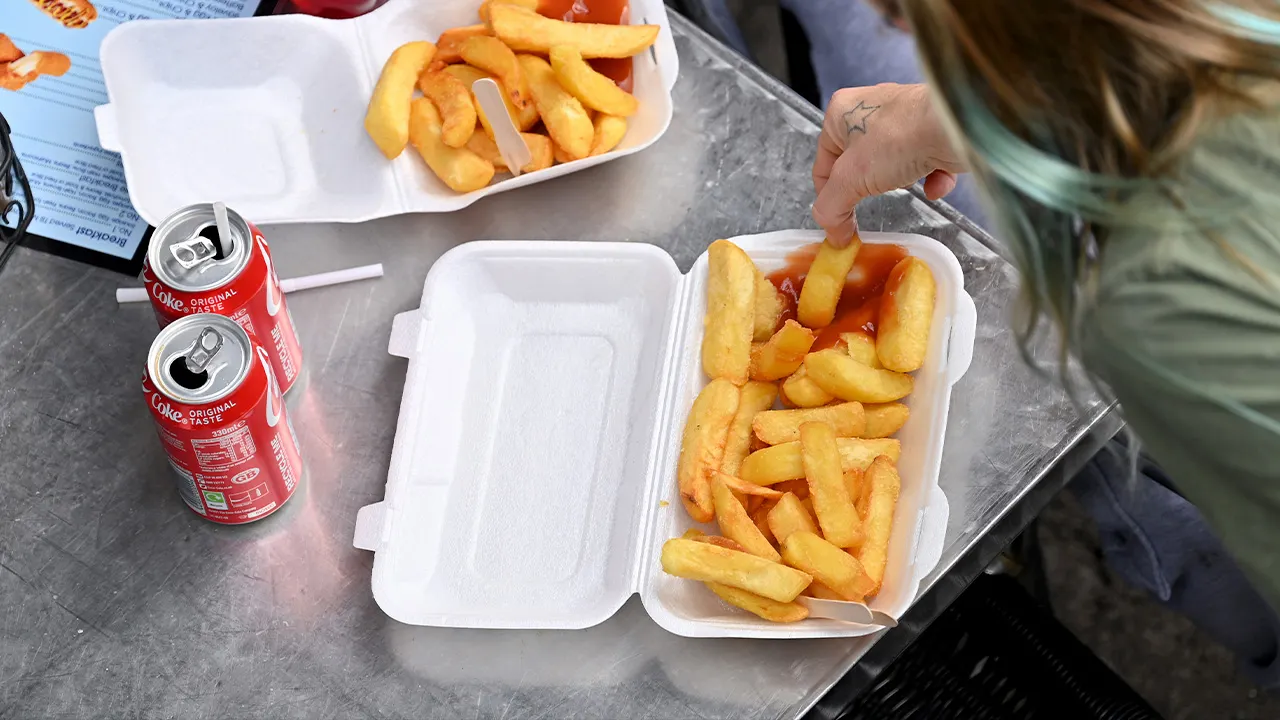
These common food containers—including disposable bowls, plates, cups, and take-out containers—are made from natural fibers and recycled products such as wood pulp, which are processed into pulp before being shaped using heat and pressure.
“America continues to thrive when fair competition occurs,” said Yohai Baisburd of Cassidy Levy Kent, counsel to the American Molded Fiber Coalition. “The Trump Administration is using every tool in the toolbox to enforce U.S. trade laws and cheaters beware because they are coming after you.”
According to the ITC, the U.S. market has been flooded with these products from China and Vietnam, with the nations “dumping” containers at artificially low prices that harm American businesses. In response, the Commerce Department will issue final antidumping (AD) and countervailing duty (CVD) orders on these imports.
The new duties will be substantial, with taxes of up to 540% on certain Chinese producers—including a 477% penalty for dumping alone—and more than 260% on Vietnamese manufacturers. These penalties are significantly higher than typical tariffs and are designed to level the playing field for domestic manufacturers.
“The ITC vote will give the U.S. industry at least five years of duties on unfairly traded products from China and Vietnam,” Baisburd explained. “The ITC confirmed that the U.S. industry is severely injured by the corrosive impact of Chinese and Vietnamese imports.”
In an unusual move, the commission also authorized retroactive duties on Vietnamese imports, something Baisburd notes has happened only a handful of times in the past 25 years. This sends “a message to importers that they cannot surge into the U.S. market to try to get ahead of potential duties.”
These duty orders differ from the administration’s broader tariff policies. While tariffs can be adjusted through negotiation and are subject to presidential discretion, these duties are legally binding trade enforcement mechanisms based on investigative findings. They will remain in effect for a minimum of five years and are enforced by Border Patrol.
Beyond protecting American businesses, the duties also address health concerns. China and Vietnam have been identified as nations that produce containers with “forever chemicals,” or per- and polyfluoroalkyl substances (PFAs). A 2024 ITC report found that while some foreign manufacturers claim their products are PFAs-free, studies indicate this isn’t always true, while U.S. manufacturers “generally produce PFA-free products.”
This ruling represents the third recent trade action affecting disposable foodservice containers. The Commerce Department previously issued duties on disposable aluminum containers imported from China and implemented similar penalties on low-cost white paper plates from China, Thailand, and Vietnam in March.
The Trump administration has taken a comprehensive approach to protecting U.S. manufacturing through various enforcement tools. “We are seeing increased customs enforcement (both civil and criminal), a new DOJ Trade Fraud Taskforce, and greater scrutiny of supply chain shifts that circumvent duties,” Baisburd noted.
The ITC is expected to release its detailed report by January 23, with the new orders anticipated in the coming weeks.
Fact Checker
Verify the accuracy of this article using The Disinformation Commission analysis and real-time sources.

16 Comments
Interesting update on US Imposes Heavy Tariffs on Chinese, Vietnamese Food Containers in Trump-Era Trade Policy. Curious how the grades will trend next quarter.
Exploration results look promising, but permitting will be the key risk.
Good point. Watching costs and grades closely.
Good point. Watching costs and grades closely.
Exploration results look promising, but permitting will be the key risk.
Good point. Watching costs and grades closely.
Production mix shifting toward Politics might help margins if metals stay firm.
Uranium names keep pushing higher—supply still tight into 2026.
Good point. Watching costs and grades closely.
Nice to see insider buying—usually a good signal in this space.
Good point. Watching costs and grades closely.
Good point. Watching costs and grades closely.
The cost guidance is better than expected. If they deliver, the stock could rerate.
Exploration results look promising, but permitting will be the key risk.
Good point. Watching costs and grades closely.
Good point. Watching costs and grades closely.