


Listen to the article
U.S. Military Boards Vessel After Global Pursuit from Caribbean to Indian Ocean
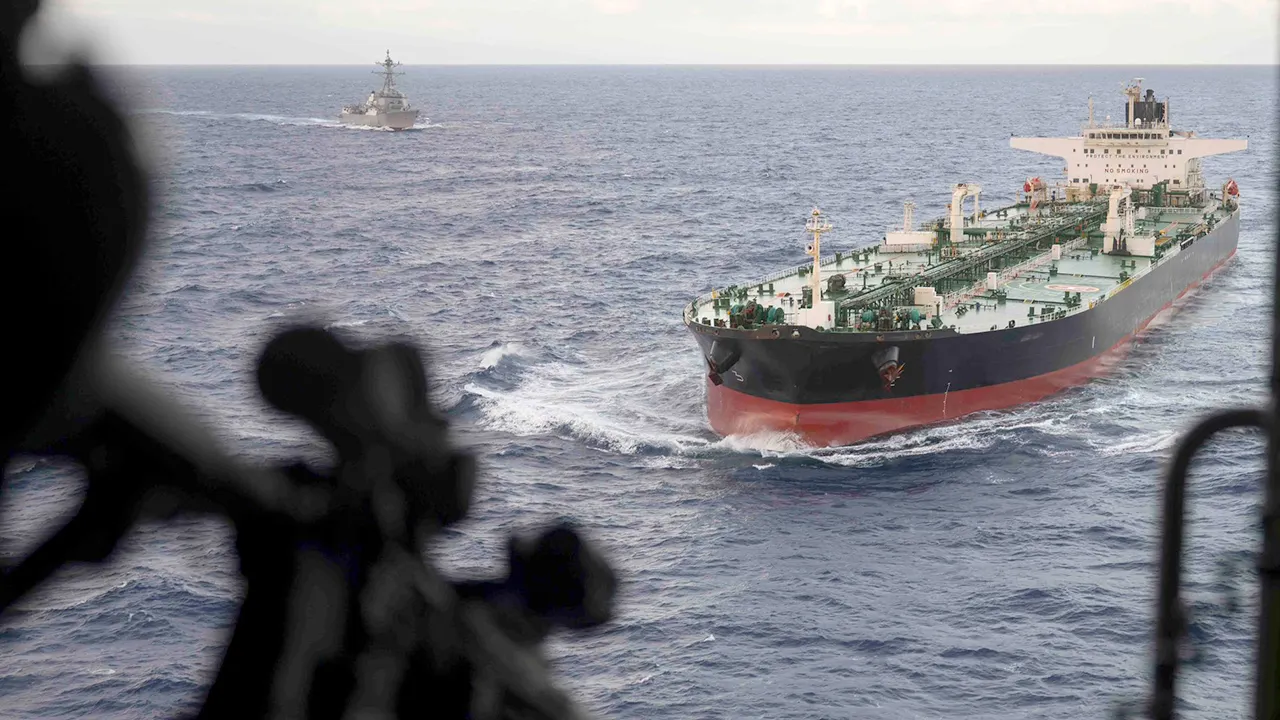
The U.S. military successfully boarded a vessel called the Aquila II “without incident” overnight, the War Department announced Monday morning. The operation concluded what officials described as an extensive pursuit spanning from the Caribbean Sea to the Indian Ocean.
“When the @DeptofWar says quarantine, we mean it. Nothing will stop DoW from defending our Homeland — even in oceans halfway around the world,” the department stated in a post on the social media platform X. Military forces conducted what was termed a “right-of-visit, maritime interdiction and boarding” in the Indo-Pacific Command’s area of responsibility.
According to the War Department, the Aquila II had been “operating in defiance of President Trump’s established quarantine of sanctioned vessels in the Caribbean.” When the ship attempted to evade U.S. forces, military assets tracked it across multiple oceans.
“It ran, and we followed. The Department of War tracked and hunted this vessel from the Caribbean to the Indian Ocean,” the statement continued, emphasizing the global reach of American military capabilities. “No other nation on planet Earth has the capability to enforce its will through any domain. By land, air, or sea, our Armed Forces will find you and deliver justice. You will run out of fuel long before you will outrun us.”
Footage released by the War Department shows military personnel rappelling from helicopters onto the vessel during the boarding operation. The dramatic video demonstrates the technical capabilities employed during the maritime interdiction.
The operation highlights the expanding enforcement of maritime quarantine measures, which have become an increasingly significant aspect of U.S. foreign policy. Maritime quarantines typically involve restricting vessel movements to enforce sanctions or prevent transportation of prohibited goods. Such measures have historical precedent but have evolved significantly in the modern era of global shipping and international law.
Maritime security experts note that such long-distance pursuits across multiple naval jurisdictions require extensive coordination with international partners and significant logistical support. The ability to track a vessel from the Caribbean to the Indian Ocean demonstrates sophisticated intelligence capabilities and sustained operational commitment.
The Indo-Pacific Command, where the boarding took place, covers approximately 100 million square miles of territory stretching from the U.S. West Coast to the western border of India, and from the Arctic to the Antarctic. This vast area contains some of the world’s busiest shipping lanes and most contested maritime territories.
The War Department emphasized that the operation reflects broader efforts to “deny illicit actors and their proxies the ability to defy American power in the global maritime domain.” Such maritime enforcement operations often target sanctions violators, smugglers, or vessels supporting designated terrorist organizations.
Maritime law gives nations certain rights to board vessels under specific circumstances, including suspicion of statelessness, piracy, slave trading, unauthorized broadcasting, or when the vessel’s flag state has granted permission. However, the precise legal basis for this particular boarding operation was not explicitly detailed in the War Department’s statement.
The incident occurs against a backdrop of increasing tensions in several maritime regions, including the South China Sea, Persian Gulf, and Caribbean, where various nations have competing interests related to shipping, resource extraction, and territorial claims.
Further details about the vessel’s cargo, crew, ownership, and ultimate disposition have not yet been released as the situation continues to develop.
Fact Checker
Verify the accuracy of this article using The Disinformation Commission analysis and real-time sources.

16 Comments
Tracking and interdicting a vessel across multiple oceans is a remarkable feat of global logistics and coordination. I’d be interested to learn more about the specific intelligence and assets involved.
The global reach demonstrated in this operation highlights the advanced capabilities of the US military. But I wonder about the broader implications for maritime law and international relations.
The scale and persistence of this pursuit is an impressive display of US military power projection. However, I have concerns about the precedents being set and potential diplomatic fallout.
Enforcing a US presidential order on a foreign-flagged vessel in international waters raises thorny legal questions. Curious to see how this develops on the diplomatic front.
Asserting US authority to enforce a presidential quarantine order on the high seas is a bold move. I wonder about the potential implications for maritime law and global trade.
This interdiction operation seems to push the boundaries of national jurisdiction on the open seas. I’ll be watching closely to see how it’s received internationally.
The global pursuit and interdiction of this vessel is an impressive display of US military power projection. However, I wonder about the potential diplomatic fallout and precedents being set here.
Enforcing a US presidential order on the high seas against a foreign-flagged vessel could raise thorny jurisdictional issues. Curious to see how this develops.
This highlights the global reach and enforcement capabilities of the US military. Curious to see how other nations and maritime stakeholders respond to this assertive action taken unilaterally by the US.
Enforcing a presidential quarantine order on the high seas is an aggressive move. Will be interesting to monitor reactions from the international community.
Interesting geopolitical development. I’m curious to learn more about the legal and strategic considerations behind this interdiction operation. What precedents exist for the US military enforcing presidential quarantine orders on the high seas?
This seems like a complex situation with potential international law implications. I’d be interested in hearing more details on the specific legal authorities and protocols involved.
Tracking and interdicting a vessel across multiple oceans is a remarkable logistical feat. I’d be interested to learn more about the intelligence, surveillance, and coordination efforts that enabled this operation.
The global reach and persistence demonstrated in this operation highlight the advanced capabilities of the US military. Curious to see if this sets any new precedents.
This assertive action to enforce a US presidential quarantine order on the high seas is noteworthy. I’m curious to see how other nations and maritime stakeholders respond to this precedent.
Interdicting a foreign-flagged vessel based on a US presidential order raises complex legal and jurisdictional issues. Will be interesting to monitor the diplomatic fallout from this operation.