


Listen to the article
Federal agents detained a U.S. citizen at gunpoint without a warrant in a dramatic home raid that has sparked outrage in Minnesota’s capital city.
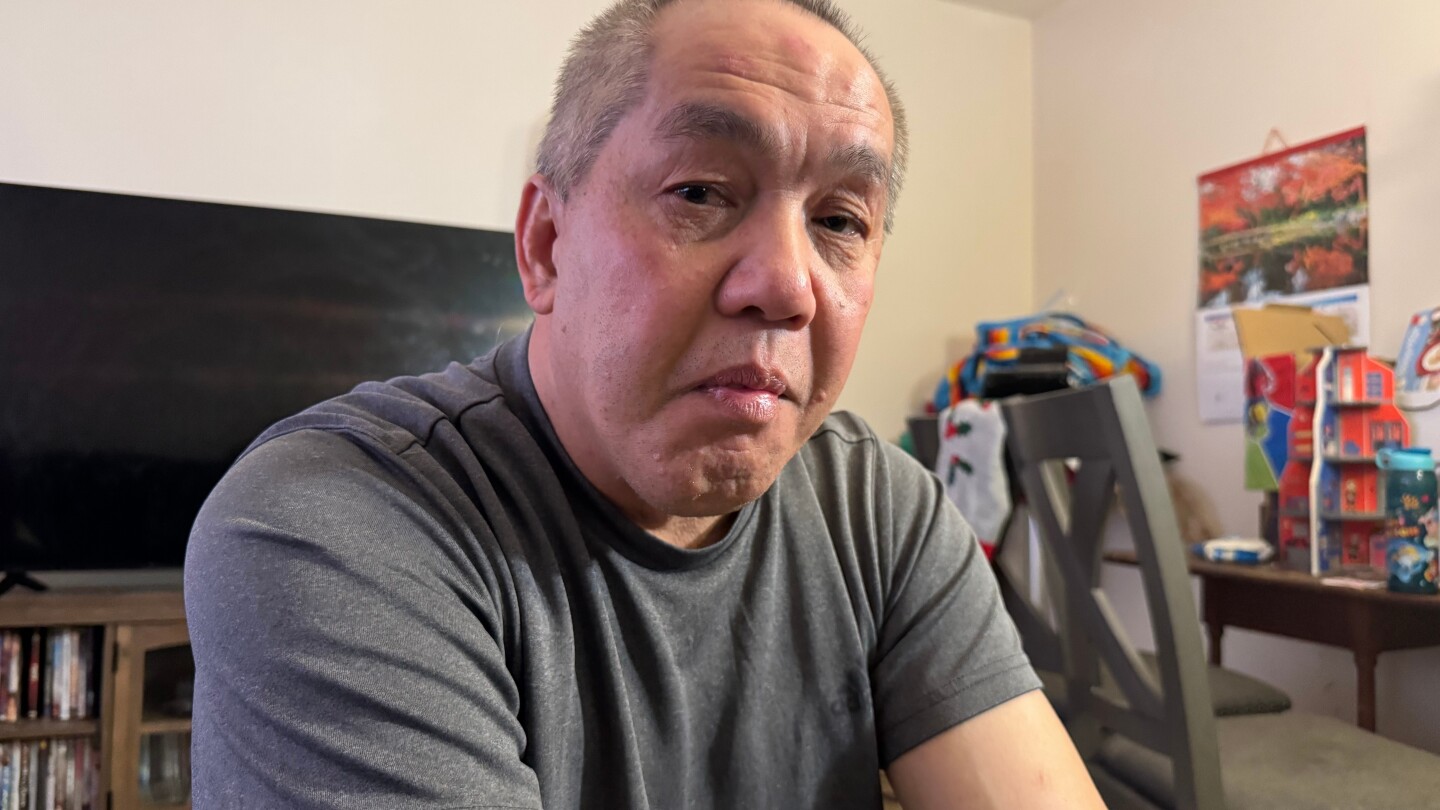
ChongLy “Scott” Thao was napping Sunday afternoon when U.S. Immigration and Customs Enforcement (ICE) agents began pounding on the door of his St. Paul home. After his daughter-in-law alerted him to the commotion, Thao instructed her not to open the door.
“I was shaking,” Thao told The Associated Press. “They didn’t show any warrant; they just broke down the door.”
Masked agents forced their way into the residence and pointed guns at family members, including Thao’s 4-year-old grandson who watched and cried as his grandfather was led away in handcuffs. Wearing only underwear and sandals in subfreezing Minnesota temperatures, Thao was given just a blanket to wrap around his shoulders.
Video footage captured neighbors screaming at more than a dozen armed agents as they escorted Thao from his home. Witnesses blew whistles and horns in protest during the detention.
According to Thao, agents drove him “to the middle of nowhere” and made him exit the vehicle in frigid conditions to be photographed. When agents eventually realized he was a U.S. citizen with no criminal record, they returned him to his home after an hour or two. They required him to show identification—which they had earlier prevented him from retrieving—before departing without apology for either the detention or property damage.
The U.S. Department of Homeland Security defended the operation, describing it as a “targeted” action seeking two convicted sex offenders supposedly living at the address. “The US citizen lives with these two convicted sex offenders at the site of the operation,” DHS stated. “The individual refused to be fingerprinted or facially ID’d. He matched the description of the targets.”
Thao’s family forcefully rejected this explanation, calling the DHS account “false and misleading.” Thao maintains that only he, his son, daughter-in-law, and grandson live in the rental home. Public records support his claim—neither they nor the property owner appear in Minnesota’s sex offender registry, and the nearest registered offender lives more than two blocks away.
When pressed by the Associated Press, DHS did not provide the identities of the alleged sex offenders or explain why agents believed they were present in Thao’s home.
Chris Thao, the detained man’s son, said ICE agents stopped him while he was driving to work before raiding his father’s home. He explained he had borrowed a car from his cousin’s boyfriend, who shares a first name with an unrelated Asian man convicted of a sex offense.
The incident occurs amid what local officials describe as a massive surge of federal agents into the Twin Cities region. Immigration authorities have faced mounting criticism from residents and local leaders over warrantless arrests, aggressive confrontations with protesters, and the fatal shooting of Renee Good, a mother of three.
“ICE is not doing what they say they’re doing,” St. Paul Mayor Kaohly Her, a Hmong American, said in a statement about Thao’s arrest. “They’re not going after hardened criminals. They’re going after anyone and everyone in their path. It is unacceptable and un-American.”
The situation is particularly painful for the Thao family given their history of service to the United States. ChongLy Thao’s mother, Choua Thao, was a nurse who treated CIA-backed Hmong soldiers during the U.S. government’s covert “Secret War” in Laos from 1961 to 1975. According to the Hmong Nurses Association, she “treated countless civilians and American soldiers, working closely with U.S. personnel.” The family fled to America when communists took over Laos in the 1970s because their lives were in danger due to this alliance with American forces.
Choua Thao passed away in late December, adding another layer of grief to the family’s ordeal.
ChongLy Thao, who has been a U.S. citizen for decades, says he plans to file a civil rights lawsuit against DHS. The traumatic experience has left him feeling vulnerable in his own home.
“I don’t feel safe at all,” Thao said. “What did I do wrong? I didn’t do anything.”
Fact Checker
Verify the accuracy of this article using The Disinformation Commission analysis and real-time sources.

12 Comments
While immigration enforcement is a sensitive issue, the reported actions against this US citizen seem extremely problematic. Protecting individual rights should be a top priority.
I agree, the apparent lack of due process is very concerning. Authorities must be held accountable for respecting civil liberties.
This case highlights the need for robust safeguards to protect the rights of all residents, regardless of immigration status. Authorities must balance security concerns with respect for civil liberties.
You make a fair point. A careful balance is required to uphold the rule of law while also preserving fundamental freedoms.
This appears to be a deeply troubling incident that warrants close examination. The use of force against a US citizen without a warrant raises serious constitutional questions.
Agreed. Proper legal justification and oversight are essential, even in sensitive areas like immigration enforcement.
This is a concerning incident. Detaining a US citizen without a warrant and removing them from their home in such a manner raises serious questions about due process and civil liberties.
I agree, the lack of a warrant is troubling. Authorities should be required to follow proper procedures, even in immigration enforcement.
While immigration enforcement is complex, the reported actions seem heavy-handed and potentially unconstitutional. Treating a citizen this way, especially in front of their family, is alarming.
Indeed, the use of force and lack of transparency is very worrying. Proper justification and oversight is needed for such law enforcement actions.
It’s disheartening to see reports of such heavy-handed tactics used against a US citizen. This incident deserves a thorough investigation to ensure proper procedures were followed.
Absolutely. The details provided raise significant red flags that merit close scrutiny by relevant oversight bodies.