


Listen to the article
U.S. Military Strikes Drug Trafficking Vessel in Eastern Pacific, Killing Two
The U.S. military conducted a lethal strike against a suspected drug trafficking vessel in the eastern Pacific Ocean on Friday, marking the first such operation since the capture of Venezuelan President Nicolás Maduro earlier this month.
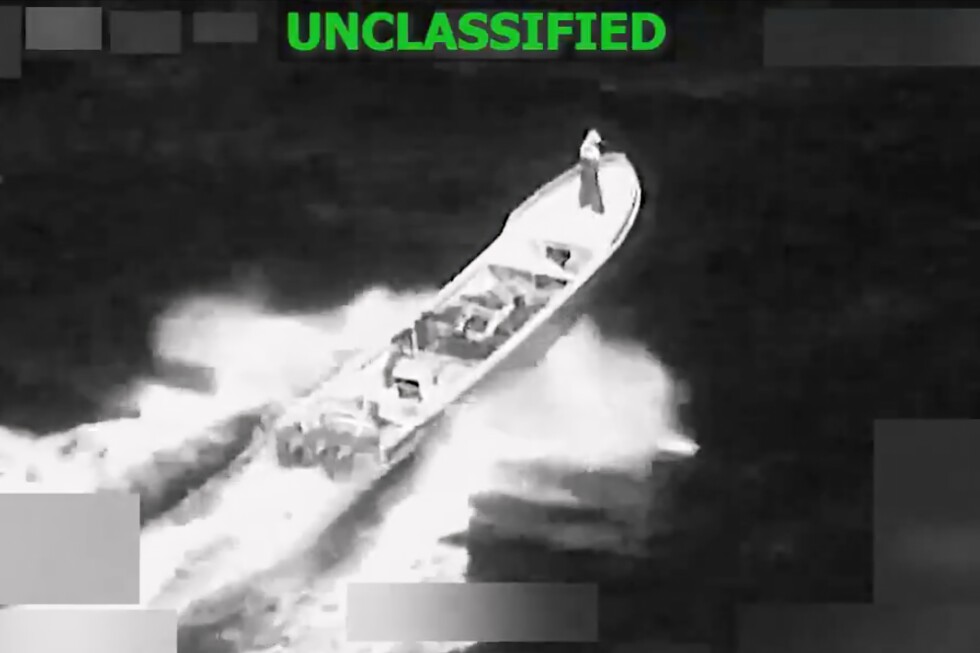
According to a statement released by U.S. Southern Command on social media, the strike killed two individuals aboard the vessel, with one survivor. The Coast Guard was notified to initiate search and rescue operations for the remaining person. Video footage released by the military shows the targeted boat moving through water before erupting in flames following the strike.
This operation represents the latest in an intensifying campaign targeting maritime drug trafficking routes. Since early September, the U.S. military has conducted 36 known strikes against suspected drug smuggling boats in South American waters, resulting in at least 117 fatalities, based on announcements from military officials and President Trump.
The majority of these interdiction efforts have focused on the Caribbean Sea, though this latest strike expands the operational theater into the eastern Pacific, suggesting a broadening of the campaign’s geographical scope. Prior to Friday’s incident, the most recent reported strikes occurred in late December, when military forces targeted five alleged drug-smuggling vessels over a two-day period, killing eight people, with others reportedly jumping overboard.
The maritime interdiction strategy has run parallel to more direct action against individuals the U.S. has accused of facilitating drug trafficking. Most notably, on January 3, U.S. forces conducted a dramatic operation in Caracas that resulted in the capture of President Maduro and his wife, who were subsequently transported to New York to face federal drug trafficking charges.
Before his capture, Maduro had characterized the escalating U.S. military operations as a thinly veiled attempt to remove him from power, framing the drug interdiction narrative as a pretext for regime change. The Venezuelan government has long denied allegations of state involvement in narcotics trafficking, calling such accusations politically motivated.
President Trump has repeatedly touted the effectiveness of these maritime interdiction efforts. Speaking at the World Economic Forum in Davos on Thursday, Trump claimed, “We’ve stopped — virtually stopped almost 100% of all drugs coming in by water,” though independent verification of such statistics remains challenging.
Security analysts note that drug trafficking organizations have historically demonstrated remarkable adaptability in response to enforcement pressures, often shifting routes or transportation methods when certain corridors become compromised. The effectiveness of maritime interdiction alone in reducing overall drug flows remains a subject of debate among experts.
The Biden administration inherited this aggressive counter-narcotics strategy from the Trump administration, which had significantly ramped up maritime enforcement operations in the region. The continuation of these tactics signals policy continuity in this area despite broader differences in diplomatic approaches toward Venezuela and other regional issues.
The intensification of these operations comes amid record cocaine production levels in Colombia and ongoing concerns about synthetic drug trafficking throughout the Americas. Regional security experts suggest that while high-profile interdiction operations may disrupt specific trafficking routes temporarily, addressing the drug trade comprehensively requires broader approaches targeting demand, corruption, and economic factors driving the illicit market.
As search efforts continue for the survivor of Friday’s strike, questions remain about the long-term strategic effectiveness of these operations and their implications for U.S. relations throughout the region, particularly as they intersect with complex political dynamics in countries like Venezuela.
Fact Checker
Verify the accuracy of this article using The Disinformation Commission analysis and real-time sources.

12 Comments
Concerning that the US is expanding its military operations into the eastern Pacific. Interdicting drug smugglers is one thing, but using lethal force raises major ethical questions that demand transparency.
I agree, the expansion of these maritime strikes is worrying. The US must provide clear justification and evidence to validate the necessity and proportionality of such uses of force.
Curious to see if these maritime interdiction efforts have any meaningful impact on the global drug trade, or if they’re just symbolic gestures. The human rights implications need to be carefully weighed.
A fair point. The true effectiveness of these strikes in curbing the drug trade remains to be seen. Rigorous analysis of their strategic value is warranted.
The escalation of US military strikes against alleged drug boats raises serious concerns. I hope these operations are carried out with the utmost care and transparency to avoid civilian casualties or other unintended consequences.
Well said. The US must be accountable for the outcomes of these strikes and demonstrate that they are proportional, necessary, and in full compliance with international norms.
While disrupting the drug trade is a worthy goal, the US military’s recent escalation of lethal force at sea raises many concerns. I hope these operations are conducted with full transparency and accountability.
Absolutely. The human toll of these strikes must be thoroughly investigated and the findings made public. Maintaining the moral high ground is crucial in this type of campaign.
While disrupting the illegal drug trade is important, I’m uneasy about the US military’s increasing use of lethal force at sea. The human rights implications need to be scrutinized closely.
Precisely. Any loss of life in these operations should be thoroughly investigated to ensure compliance with international law and the rules of engagement.
This is a troubling development, though the US claims it’s targeting drug trafficking. We’ll have to see if these strikes are truly focused on illicit networks or if they cause disproportionate civilian harm. Careful oversight is crucial here.
I agree, the details around these strikes need close scrutiny. Interdicting drug flows is important, but not at the cost of violating human rights or international law.