


Listen to the article
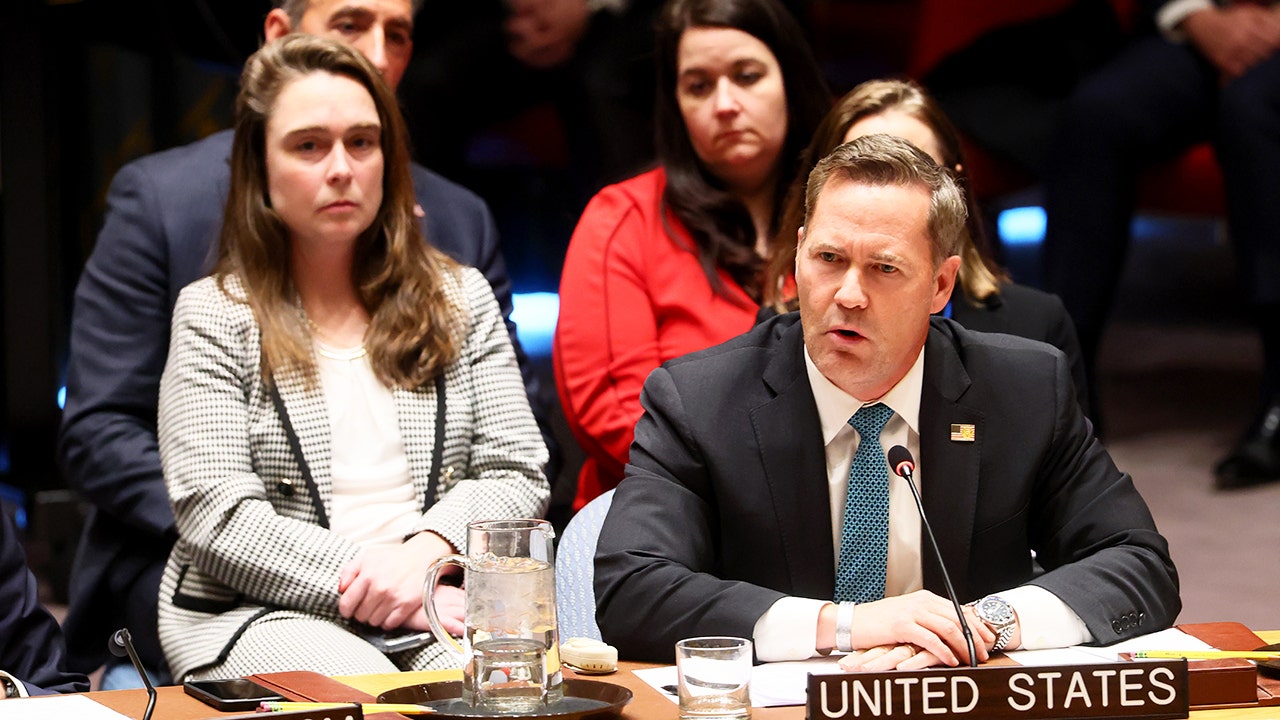
In a tense diplomatic showdown at the United Nations, U.S. Ambassador Mike Waltz delivered a stark warning to Iran’s leadership during an emergency Security Council meeting, declaring that President Donald Trump “is a man of action” who has “made it clear all options are on the table to stop the slaughter.”
Waltz’s forceful remarks on Thursday underscored growing international concern over Iran’s brutal crackdown on anti-government protests that have engulfed the country in recent weeks. According to the U.S.-based Human Rights Activists News Agency, the death toll from these demonstrations has reached at least 2,677 people.
“We all have a responsibility to support the Iranian people and to put an end to the regime’s neglect and oppression of the Iranian nation,” Waltz told the assembled diplomats at UN headquarters. His comments reflected the deteriorating humanitarian situation in Iran, where widespread unrest has emerged as one of the most significant challenges to the Islamic Republic in years.
The Iranian regime, represented by Deputy Ambassador Gholam Hossein Darzi, pushed back against American criticism, accusing Washington of attempting to destabilize the country under false pretenses. “Under the hollow pretext of concern for the Iranian people and claims of support for human rights, the United States regime is attempting to portray itself as a friend of the Iranian people, while simultaneously laying the groundwork for political destabilization and military intervention under a so-called humanitarian narrative,” Darzi said.
Waltz dismissed these claims as desperate attempts by a weakened regime. “I would like to address the allegation put forward by the regime that these inspired protests are somehow a foreign plot to give a precursor to military action,” he countered. “Everyone in the world needs to know that the regime is weaker than ever before, and therefore is putting forward this lie because of the power of the Iranian people in the streets.”
The escalating rhetoric comes amid a backdrop of massive street demonstrations across Iran, with images of protesters confronting security forces circulating widely despite internet blackouts imposed by authorities. Human rights groups report that Tehran has employed increasingly harsh measures to suppress dissent, including mass arrests, forced confessions, and executions.
White House Press Secretary Karoline Leavitt confirmed the administration’s hardline stance during a press briefing Thursday, revealing that Trump and his team “have communicated to the Iranian regime that if the killing continues, there will be grave consequences.”
In what appears to be a response to this pressure, Leavitt noted that “the president received a message as he revealed to all of you and the whole world yesterday, that the killing and the executions will stop.” She further claimed that 800 scheduled executions had been halted as a result of the administration’s intervention, though this information could not be independently verified.
The tensions between Washington and Tehran reflect broader regional instability, with Iran’s influence extending across the Middle East through proxy forces in Iraq, Syria, Lebanon, and Yemen. The United States has long accused Iran of destabilizing the region and pursuing nuclear weapons capabilities in violation of international agreements.
Ambassador Waltz emphasized that Iran’s current crisis stems from decades of mismanagement and repression by the ruling clerical establishment. “The regime’s dereliction of duty to its own citizens is what has put the ayatollahs in the positions they are in today with hundreds of thousands, if not millions, protesting in the streets after decades of neglect and abuse,” he said.
The Security Council meeting highlights the increasingly precarious position of Iran’s leadership, caught between mounting international pressure and unprecedented domestic unrest that threatens the regime’s grip on power. As protests continue throughout the country, world leaders remain watchful of how the situation will unfold and what actions the Trump administration might take if the violence persists.
Fact Checker
Verify the accuracy of this article using The Disinformation Commission analysis and real-time sources.

8 Comments
The humanitarian crisis in Iran is deeply troubling. The international community has a responsibility to support the Iranian people and find a peaceful resolution to this conflict.
This is a tense diplomatic showdown at the UN. The US is clearly taking a hardline stance against Iran’s crackdown on protests, warning that ‘all options are on the table’. It will be interesting to see how this unfolds going forward.
The US seems determined to support the Iranian people and pressure the regime, but Iran is pushing back against the criticism. This could escalate tensions further.
This is a complex geopolitical situation. While the US is right to condemn the Iranian regime’s actions, they need to be cautious about how they proceed to avoid unintended consequences.
Agreed. Escalating tensions further could make the situation worse for the Iranian people. A balanced, diplomatic approach may be the best path forward.
The death toll from the protests in Iran is very concerning. The regime’s brutal response is unacceptable and the international community needs to take action to support the Iranian people.
I agree, the situation in Iran is deteriorating and the regime’s crackdown is horrific. The US and others must find ways to effectively support the protesters without escalating the conflict.
The US is taking a firm stance, but will this actually help the situation in Iran or risk further destabilization? Diplomacy and measured pressure may be more effective than threats of military action.