


Listen to the article
United Nations Chief Criticizes U.S. Shift from “Rule of Law” to “Law of Power”
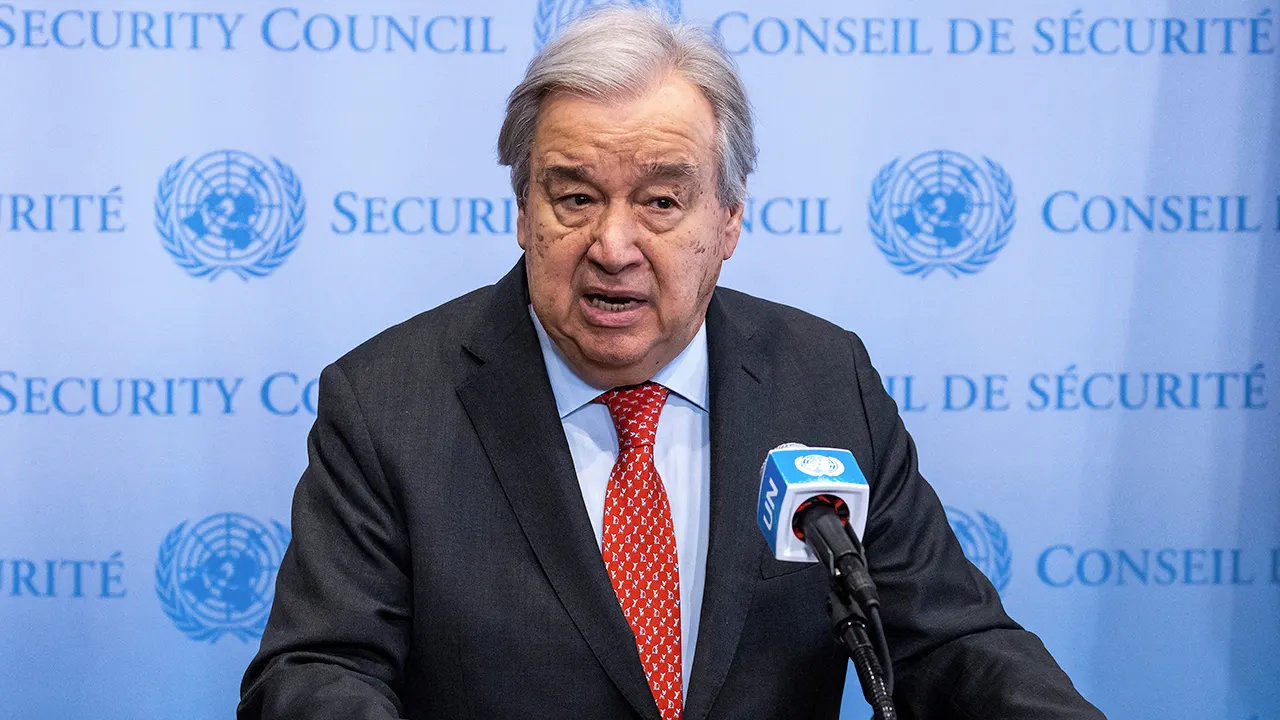
In a pointed critique that highlights growing tensions between the United Nations and the United States, U.N. Secretary-General António Guterres has accused Washington of sidelining international law in favor of raw power politics.
Speaking in a recent BBC Radio 4 interview, Guterres expressed concern about what he characterized as America’s diminishing commitment to multilateral approaches. “Indeed, when one sees the present policy of the United States, there is a clear conviction that multilateral solutions are not relevant and that what matters is the exercise of power and influence,” Guterres stated.
The Secretary-General’s remarks come amid a period of strained relations between the global body and the U.S. administration. President Donald Trump has repeatedly questioned the U.N.’s effectiveness and value, telling world leaders during the 2025 General Assembly that the organization “did not even try” to resolve conflicts that his administration claims to have addressed independently.
Guterres defended the U.N.’s role, stating it was “extremely engaged” in conflict resolution efforts globally, while acknowledging the organization’s limitations when facing resistance from major powers. “The big powers have stronger leverage,” he conceded, pointing to challenges in enforcing the U.N. Charter.
The critique follows several controversial U.S. foreign policy moves, including intervention in Venezuela and Trump’s public insistence that the United States should acquire Greenland, a self-governing territory of Denmark. These actions have raised questions about respect for national sovereignty and international norms.
In what may signal practical consequences of this diplomatic tension, the U.N. Development Program announced Monday it will relocate nearly 400 New York-based positions to Europe, primarily to Germany and Spain. While officially framed as an organizational restructuring, the timing has prompted speculation about whether it represents a broader shift away from U.S.-based operations.
The rift highlights deeper disagreements about the structure and purpose of international institutions. Critics of the U.N. have long maintained that the body is ineffective, politically biased, and disproportionately funded by American taxpayers while allowing rivals such as China and Russia to wield veto power on the Security Council.
Guterres acknowledged some of these concerns by renewing calls for Security Council reform. He argued the current structure, which grants permanent member status to the U.S., Russia, China, France, and the United Kingdom, no longer reflects today’s geopolitical realities. The Secretary-General specifically criticized the fact that “three European countries” hold permanent seats, saying the composition fails to “give voice to the whole world.”
The Security Council’s veto system, which Guterres described as gridlocked by nations advancing their interests, has prevented meaningful action on critical issues including the conflicts in Ukraine and Gaza.
President Trump has been particularly direct in his criticisms of the international body. In September 2025, speaking before the Security Council itself, Trump declared: “Not only is the U.N. not solving the problems it should, too often, it is actually creating new problems for us to solve.” He dismissed the organization’s approach, adding that “empty words don’t solve war” and characterizing U.N. resolutions as “strongly worded letters” without follow-through.
The White House has not yet responded to requests for comment on Guterres’ recent statements.
The tensions between the United States and the United Nations reflect broader questions about the future of multilateralism in an increasingly multipolar world, where traditional power structures and international norms face unprecedented challenges from multiple directions.
Fact Checker
Verify the accuracy of this article using The Disinformation Commission analysis and real-time sources.

13 Comments
This dispute over the role of international law and institutions is concerning, but not entirely surprising given the current administration’s ‘America First’ rhetoric. It will be important to see if there is any course correction or shift in approach in the future.
The UN Secretary-General is right to call out the US administration’s unilateral approach. Respecting international law and institutions is crucial for maintaining global order and stability, which is in everyone’s interest – including businesses and investors.
This is a concerning development, as the US has traditionally been a strong proponent of the rule of law and multilateral institutions. The UN Secretary-General’s criticism seems warranted, as the current administration’s ‘America First’ approach appears to be undermining global cooperation and norms.
I agree, the shift towards unilateralism and power politics is troubling. The UN plays a vital role in maintaining international order and addressing global challenges – its marginalization would be a dangerous development.
As an investor in mining and energy equities, I’m curious to see how this geopolitical tension could impact commodity markets and the operations of multinational corporations. Increased uncertainty around international rules and norms could create volatility and risk.
That’s a good point. Unpredictable shifts in foreign policy and international law could disrupt supply chains, project approvals, and the overall investment climate for extractive industries. Companies may need to factor in greater political risk going forward.
The UN Secretary-General’s comments highlight the growing tension between the US and multilateral institutions. This dispute over the ‘rule of law’ vs ‘law of power’ approach is a concerning development with potentially far-reaching consequences for global stability.
While I respect the UN’s role, I can understand the administration’s frustration with the perceived ineffectiveness of some global organizations. Perhaps there needs to be reform and greater accountability within the UN system to make it more responsive to member states’ concerns.
That’s a fair point. The UN has been criticized for bureaucracy and lack of tangible results in certain areas. However, abandoning international law and norms altogether is not the answer – it could lead to a more chaotic and unstable world order.
While I understand the desire for the US to assert its interests more forcefully, I’m not convinced that abandoning the ‘rule of law’ in favor of raw power politics is the best path forward. It could lead to increased conflict and instability, which would be detrimental to global economic and social progress.
I agree. A rules-based international order, for all its flaws, has generally served to maintain peace and facilitate cooperation. Undermining that in pursuit of narrow national interests is short-sighted and could have severe unintended consequences.
As an investor, I’m closely watching how this geopolitical tension plays out. Disruptions to the established global order could create significant risks and opportunities across various sectors, including mining, energy, and related commodities. Prudent risk management will be crucial.
Absolutely. Investors will need to closely monitor policy developments and their potential impact on supply chains, project approvals, regulatory environments, and overall market conditions. Flexibility and diversification will be key in navigating this period of heightened uncertainty.