


Listen to the article
A federal judge has ruled in favor of a Turkish PhD student at Tufts University, allowing her to resume research and teaching activities while she contests the revocation of her visa by the Trump administration.
Rümeysa Öztürk, who had been detained for six weeks, can now continue her academic work studying children’s relationship to social media. Chief U.S. District Judge Denise J. Casper determined on Monday that Öztürk is likely to succeed in her claims that the termination of her status in the government’s foreign student database was “arbitrary and capricious, contrary to law and in violation of the First Amendment.”
The case highlights growing concerns about the targeting of foreign-born students and activists involved in pro-Palestinian advocacy. Öztürk was among the first individuals arrested in a wave of immigration enforcement actions against such activists. In March, immigration officers took her from outside her Somerville residence in an unmarked vehicle, an incident captured on video.
Before her arrest, Öztürk had co-authored an opinion piece in the campus newspaper criticizing Tufts University’s response to student activists who were demanding acknowledgment of what they termed a “Palestinian genocide” and divestment from companies with ties to Israel.
Government attorneys had argued that the Boston federal court lacked jurisdiction in the case and maintained that Öztürk’s Student and Exchange Visitor Information System (SEVIS) record was legally terminated after her visa revocation. “There’s no statute or regulation that’s been violated by the termination of the SEVIS record in this case,” Assistant U.S. Attorney Mark Sauter argued during a hearing last week.
The State Department’s justification for revoking Öztürk’s visa centered on an assessment that her actions “may undermine U.S. foreign policy by creating a hostile environment for Jewish students and indicating support for a designated terrorist organization,” specifically citing her co-authorship of the opinion piece.
While Öztürk was released from a Louisiana immigrant detention center in May and returned to campus, the termination of her SEVIS record had prevented her from teaching or participating in research essential to her doctoral studies. This restriction was particularly consequential as Öztürk plans to graduate next year.
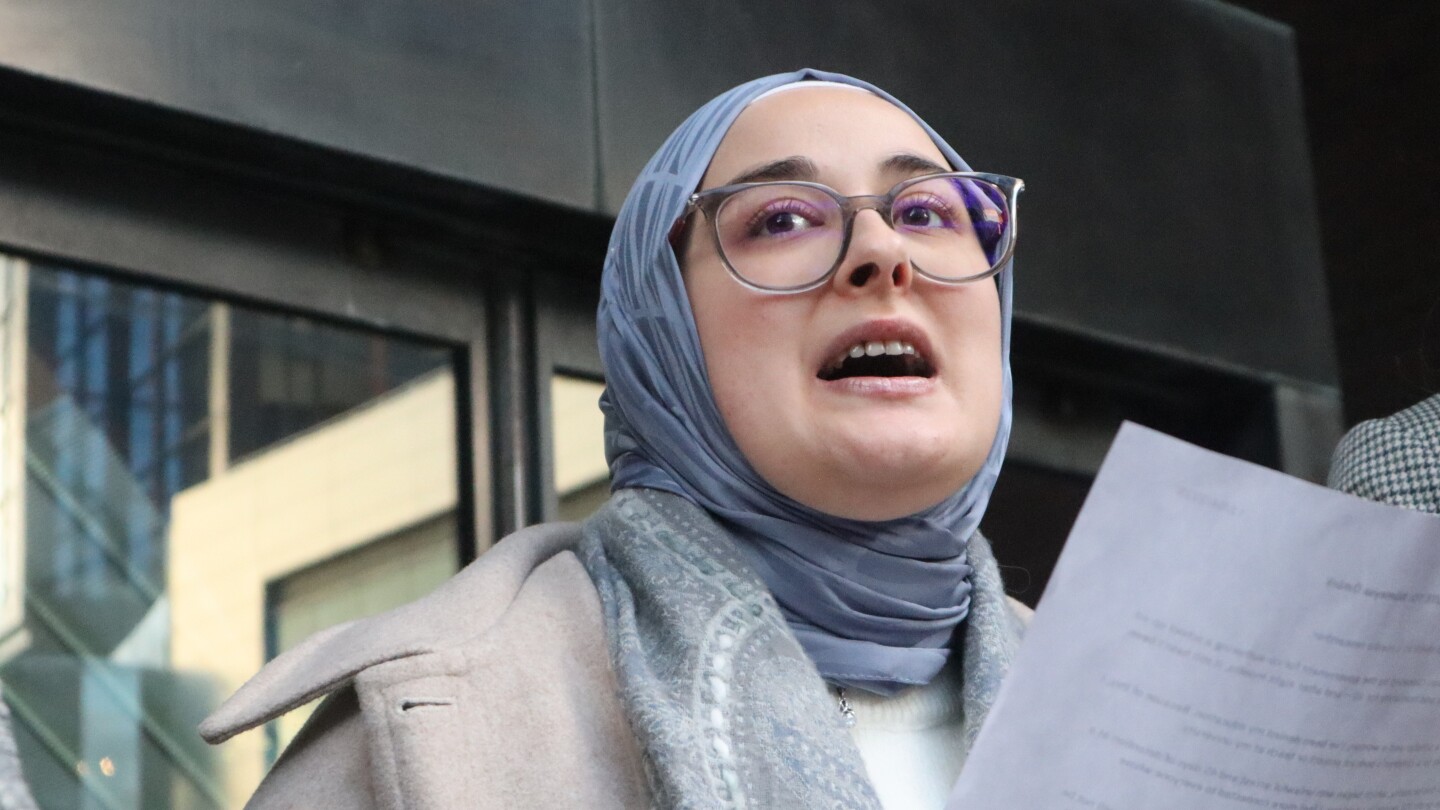
“I hope one day we can create a world where everyone uses education to learn, connect, civically engage and benefit others — rather than criminalize and punish those whose opinions differ from our own,” Öztürk said in a statement following the ruling. She expressed gratitude for the court’s decision but acknowledged “a great deal of grief” for the education she was “arbitrarily denied as a scholar and a woman in my final year of doctoral studies.”
The timing of her arrest carried additional significance, as Öztürk, who is Muslim, was meeting friends for iftar, the meal that breaks the daily fast during Ramadan. According to her lawyer, Mahsa Khanbabai, Öztürk was not informed that her student visa had been revoked several days earlier.
Her legal team argued that the impact of the SEVIS termination extended far beyond administrative paperwork. “We have a strange kind of legal gaslighting here, where the government claims it’s just a tinkering in a database, but this is really something that has a daily impact on Ms. Öztürk’s life,” said Adriana Lafaille of the American Civil Liberties Union of Massachusetts, who represents Öztürk.
Despite these challenges, Öztürk has maintained a full course load and fulfilled all requirements to maintain her lawful student status, which the government hasn’t terminated.
SEVIS, the database at the center of the case, was created following the Illegal Immigration Reform and Immigrant Responsibility Act of 1996 to collect information on international students. When a SEVIS record is terminated, students lose all employment authorization and may be investigated by Immigration and Customs Enforcement to “confirm the departure of the student.”
The judge’s ruling represents a significant victory for Öztürk as she continues to challenge both her arrest and detention. The government has not yet indicated whether it plans to appeal the decision.
Fact Checker
Verify the accuracy of this article using The Disinformation Commission analysis and real-time sources.

12 Comments
This is an important ruling that protects free speech and academic freedom. It’s concerning to see foreign students targeted for their political views, especially around sensitive geopolitical issues like the Israeli-Palestinian conflict.
Absolutely. Targeting students for their political advocacy sets a dangerous precedent and undermines the core principles of a free, open society.
While I’m not familiar with the specifics of this case, I’m generally supportive of measures that protect the rights of international students to freely engage in academic discourse without fear of retaliation.
That’s a fair perspective. Upholding principles of free expression and non-discrimination is crucial for universities to fulfill their educational mission.
It’s good to see the judge recognize the arbitrary and capricious nature of revoking this student’s visa. Academic institutions should be places where diverse perspectives can be freely explored and debated.
Agreed. Curtailing the free exchange of ideas runs counter to the very purpose of a university. This ruling upholds those critical democratic values.
This ruling is a positive step, but the underlying issues around the targeting of pro-Palestinian activists on college campuses remain concerning. We’ll need to closely monitor for any further attempts at stifling academic freedom.
Agreed, this is just one case and the broader pattern of suppressing certain political views on university campuses is troubling. Vigilance will be required to protect these fundamental rights.
It’s good to see the judge rule in favor of the student and recognize the potentially chilling effect on free speech. Upholding academic freedom and the open exchange of ideas is vital for universities to fulfill their purpose.
Absolutely. Protecting the rights of international students and researchers to engage in critical discourse, even on controversial topics, is essential for a healthy academic environment.
This case highlights the increasing politicization of immigration enforcement and the need for robust legal protections for foreign students. I hope it sets a precedent to prevent similar actions against other activists in the future.
Agreed, this is a concerning trend that merits close scrutiny. Maintaining academic freedom and a diversity of views should be a top priority.