


Listen to the article
Immigration Crackdown Creates Tension and Fear in Twin Cities
Federal immigration enforcement operations have dramatically intensified across Minneapolis and St. Paul, turning parts of the Twin Cities into zones of confrontation between authorities, protesters, and worried residents.
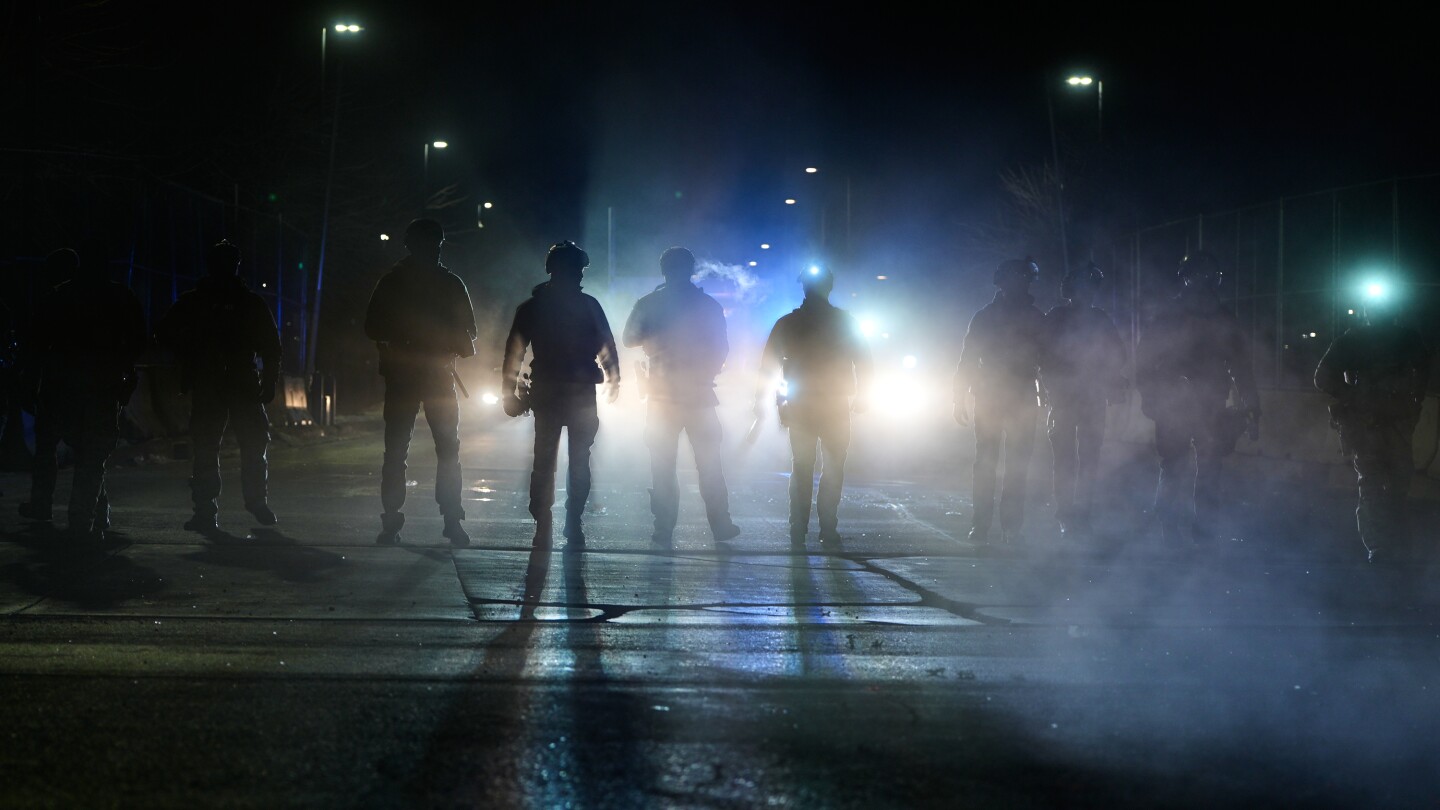
Operation Metro Surge, the Trump administration’s largest immigration enforcement action to date, has deployed over 2,000 federal officers throughout the region. Each day begins before sunrise as hundreds of tactical gear-clad officers emerge from a nondescript office building near Minneapolis-St. Paul International Airport. Their unmarked convoys of SUVs, pickup trucks, and minivans have become a feared sight in many neighborhoods.
“We don’t use the word ‘invasion’ lightly,” Minneapolis Mayor Jacob Frey told reporters this week. “What we are seeing is thousands—plural, thousands—of federal officers coming into our city.” The scale is particularly notable in Minneapolis, where the local police force consists of just 600 officers.
The impact of the operation varies dramatically by location. In whiter, wealthier areas, the presence of federal agents is hardly noticeable. However, in immigrant-rich neighborhoods, the operations have disrupted daily life significantly. Along Lake Street, a historic immigrant corridor since the era of Norwegian and Swedish settlement, normally bustling sidewalks are now largely occupied by activists standing watch with whistles to warn of approaching convoys.
The daily cycle of tension has become predictable. Morning protests begin as federal vehicles depart their compound, with demonstrators shouting “Go home!” and “ICE out!” As night falls, confrontations often escalate when officers return to base. Protesters sometimes shake fences or strike passing vehicles, prompting federal officers to respond with tear gas, flash grenades, and arrests.
The operation has cast a shadow over everyday activities across the region of 3 million people. Children are skipping school or studying remotely, families avoid religious services, and numerous businesses have temporarily closed. At Karmel Mall, a hub for the city’s large Somali community, signs warn: “No ICE enter without court order.” La Michoacana Purepecha, a popular ice cream shop, keeps its doors locked, admitting customers one at a time. Nearby Taqueria Los Ocampo displays signs in English and Spanish announcing temporary closure due to “current conditions.”
Tensions reached a breaking point on January 7 when an Immigration and Customs Enforcement officer shot and killed Renee Good, a 37-year-old American citizen, during an enforcement operation. Federal officials claim the officer fired in self-defense after Good “weaponized” her vehicle, but city and state officials dispute this account, pointing to bystander videos of the confrontation.
The incident occurred just blocks from where George Floyd was murdered by a Minneapolis police officer nearly six years ago, reviving painful memories in a community still healing from that trauma. “I think they’ll see Minneapolis show our rage again,” predicted Johan Baumeister, who laid flowers at the scene of Good’s death.
Governor Tim Walz, a Democrat and frequent target of Trump criticism, has urged residents to channel their anger into community support while pleading for protests to remain peaceful. Despite these calls, confrontations have become increasingly common. Some protesters provoke federal officers by throwing snowballs or shouting obscenities through bullhorns, while immigration officers have responded by breaking car windows, pepper-spraying protesters, and warning observers not to follow them.
Amid the chaos, the region’s reputation for civic-mindedness persists. Residents stand watch at schools to warn immigrant parents if convoys approach during pickup times. They deliver care packages to those afraid to leave home and arrange transportation for essential medical visits and work commutes. In a St. Paul Lutheran church basement, the group Open Market MN recently assembled food packages for over a hundred families staying home, with outreach director Colin Anderson noting a surge in requests.
The operations have created confusion and fear even among those simply going about their daily business. Christian Molina from suburban Coon Rapids was driving to a mechanic when immigration officers began following him, possibly, he believes, because he appears Hispanic. After a brief chase that damaged his car, officers abandoned the scene when protesters gathered and tensions escalated.
“Who’s going to pay for my car?” Molina asked after the officers departed, leaving him with a damaged vehicle and many unanswered questions—a sentiment that echoes through communities caught in the crossfire of this unprecedented federal operation.
Fact Checker
Verify the accuracy of this article using The Disinformation Commission analysis and real-time sources.

12 Comments
The Trump administration seems determined to ramp up immigration crackdowns, even in major cities. I worry this will breed more fear and instability rather than solving any real problems.
You raise a fair point. Aggressive enforcement without a clear, humane strategy will likely just create more chaos and resentment in these communities.
The Trump administration’s crackdown in the Twin Cities is deeply troubling. Flooding immigrant neighborhoods with thousands of federal agents will likely stoke more fear and division, not resolve anything.
I agree, this type of aggressive enforcement without a clear strategy seems more likely to backfire than achieve its goals. The human impact on these communities is very concerning.
This heavy federal presence in the Twin Cities is extremely concerning. The scale of the operation seems to be causing significant disruption and anxiety in immigrant communities.
You’re right, this aggressive crackdown is a worrying overreach by the Trump administration. Local officials are right to push back and try to mitigate the damage.
This crackdown seems to be creating more chaos and tension in the Twin Cities area. The heavy federal presence must be extremely disruptive and unsettling for immigrant communities there.
I agree, the scale of the enforcement action is concerning. Local officials are right to call it an ‘invasion’ – this appears to be an excessive overreach by the federal government.
This large-scale federal immigration operation in the Twin Cities is quite concerning. I hope local officials can find ways to mitigate the disruption and restore a sense of security.
Given the scale, I’m not surprised the local police feel overwhelmed. This kind of heavy-handed approach seems counterproductive in the long run.
It’s troubling to see this level of federal immigration enforcement in urban areas. The local police force is being overshadowed, which could undermine community trust and cooperation.
Absolutely, this heavy-handed approach will likely backfire and make the situation worse, not better. Immigration reform needs a more balanced, nuanced approach.