


Listen to the article
The Supreme Court is set to deliver a crucial ruling on President Donald Trump’s use of emergency powers to impose sweeping tariffs, a case that hinges on the relatively new “major questions doctrine” and could significantly impact presidential authority over trade policy.
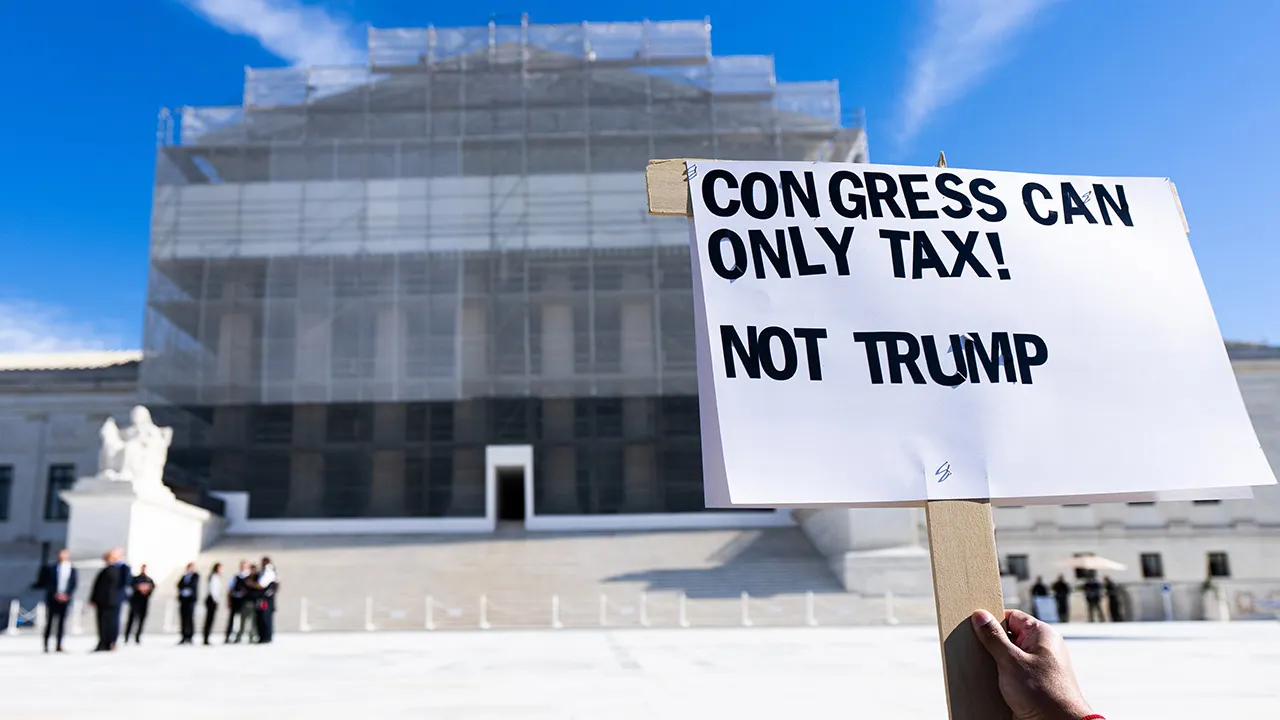
The case centers on Trump’s invocation of the International Emergency Economic Powers Act (IEEPA) to unilaterally implement wide-ranging tariffs on most U.S. trading partners. During November’s oral arguments, justices focused intently on whether this application violates the major questions doctrine, which limits executive agencies’ authority on matters of “vast economic and political significance.”
Plaintiffs argue that Trump’s tariff implementation exceeds the bounds of the IEEPA, which authorizes the president to “regulate…importation” during declared national emergencies but does not explicitly mention tariffs. They contend that Congress never intended to grant such “unconstrained taxing power of such staggering economic effect” through vague terminology.
“Congress does not (and could not) use such vague terminology to grant the executive virtually unconstrained taxing power of such staggering economic effect — literally trillions of dollars — shouldered by American businesses and consumers,” the plaintiffs stated in their briefing.
The Trump administration counters that the power to regulate imports is the “practical equivalent” of tariff authority. U.S. Solicitor General D. John Sauer acknowledged to the justices that while IEEPA doesn’t explicitly mention tariffs, he argued the power to impose them is “the natural commonsense inference” of the law.
Trump himself has emphasized the case’s importance, writing on Truth Social in November: “Tomorrow’s United States Supreme Court case is, literally, LIFE OR DEATH for our Country. With a Victory, we have tremendous, but fair, Financial and National Security. Without it, we are virtually defenseless against other Countries who have, for years, taken advantage of us.”
The legal battle began when the U.S. Court of International Trade unanimously blocked Trump’s tariffs last year, ruling that the president does not have “unbounded authority” to impose tariffs under the emergency law. The court cited both the nondelegation doctrine and the major questions doctrine to support its decision.
During November’s Supreme Court arguments, justices pressed administration lawyers on what limits, if any, would exist on executive power should they rule in Trump’s favor. The questions suggested significant skepticism about the administration’s position that IEEPA grants such broad authority without additional congressional approval.
The major questions doctrine, though increasingly influential, has limited formal precedent in court decisions. It was first explicitly cited by the Supreme Court in its 2022 ruling in West Virginia v. EPA, when the court invalidated EPA emissions standards. Before that landmark case, the doctrine existed more as an informal principle of statutory interpretation.
Justice Elena Kagan criticized the doctrine in her West Virginia v. EPA dissent, arguing: “The current Court is textualist only when being so suits it. When that method would frustrate broader goals, special canons like the ‘major questions doctrine’ magically appear as get-out-of-text-free cards.”
One factor potentially favoring Trump is that tariffs relate to foreign policy, an area where courts traditionally grant presidents greater deference. However, during oral arguments, justices noted this would be the first time a president used IEEPA to set import taxes on trading partners, suggesting they might be reluctant to extend such authority without clear congressional intent.
Legal experts anticipate the Supreme Court might cite the major questions doctrine if it ultimately blocks Trump’s tariff regime. The expedited case is expected to be decided within days or weeks, with significant implications for presidential power, international trade relations, and the American economy.
The ruling could redefine the boundaries of executive authority in trade policy and set important precedent for how courts apply the major questions doctrine in future cases involving presidential power.
Fact Checker
Verify the accuracy of this article using The Disinformation Commission analysis and real-time sources.

9 Comments
The plaintiffs make a compelling argument that the IEEPA does not grant the president such wide-ranging tariff powers. Vague statutory language should not be interpreted to confer such significant economic impacts without clear Congressional intent.
This case could set an important precedent on the limits of executive authority in trade policy, with ramifications for mining, commodities, and energy sectors.
While the administration may view tariffs as a useful tool, the major questions doctrine appears to be a meaningful check on the president’s ability to unilaterally impose such sweeping economic measures. The justices seem to recognize the need for Congressional approval.
It will be crucial for the Court to provide clarity on the boundaries of executive power in this area, given the far-reaching implications for industries like mining and energy.
The plaintiffs make a strong case that the IEEPA was not intended to grant the president such broad tariff authority. The major questions doctrine appears to be an important limit on executive power in this area.
This case will have far-reaching implications for presidential authority over trade policy. The major questions doctrine seems to pose a significant challenge to the broad use of emergency powers to impose sweeping tariffs.
It will be interesting to see how the Supreme Court balances executive flexibility on trade with the need for Congressional oversight on major economic decisions.
This case highlights the tension between executive flexibility and legislative oversight when it comes to trade policy. The outcome could significantly impact the mining, commodities, and energy sectors, which have been affected by the administration’s tariff actions.
I’m curious to see how the Court rules and whether it provides a clear framework for determining when the president has exceeded the bounds of their emergency powers in this domain.