


Listen to the article
Trump Adopts Measured Tone in State of the Union, Pivots on Tariff Strategy Following Supreme Court Ruling
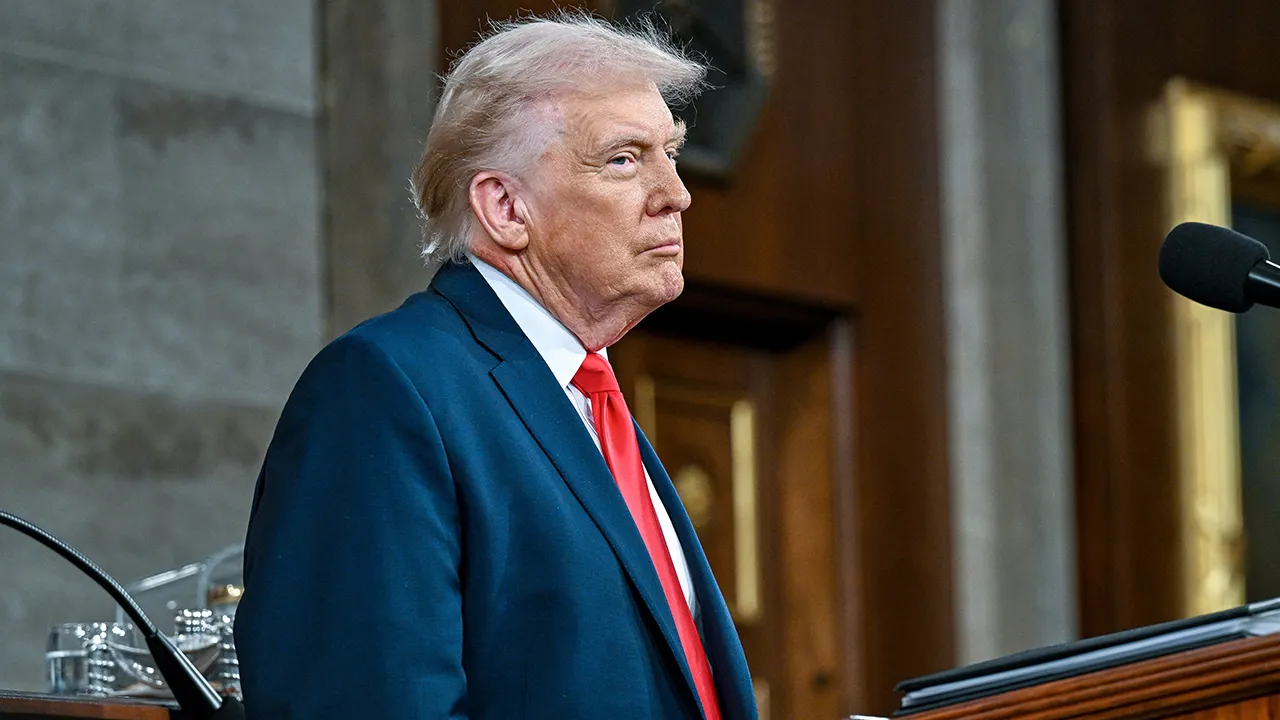
President Donald Trump struck a notably restrained tone during Tuesday night’s State of the Union address, particularly when addressing the Supreme Court’s recent 6-3 ruling that invalidated his use of a 1977 emergency law to impose tariffs on major U.S. trading partners.
In his remarks to Congress, Trump briefly described the high court’s decision as “unfortunate” before pivoting to highlight the alternative approach his administration had already implemented – imposing 10% import fees under Section 122 of the U.S. Trade Act of 1974.
“Countries that were ripping us off for decades are now paying us hundreds of billions of dollars,” Trump said of the tariffs, which he has previously described as “life or death” for the nation’s economy.
The president’s measured response marked a significant shift from his initial reaction to the ruling, when he called the Supreme Court “incompetent” and said the majority should be “absolutely ashamed” for not having “the courage to do what’s right for our country.”
Four Supreme Court justices were present for the address, including Chief Justice John Roberts, Justice Elena Kagan, and Justice Amy Coney Barrett, all of whom had ruled against Trump’s use of the International Emergency Economic Powers Act (IEEPA) for tariff implementation.
Trump expressed confidence that countries and corporations would maintain existing trade arrangements with the United States. “The good news is that almost all countries and corporations want to keep the deal that they already made,” Trump said, adding that foreign entities understood “the legal power that I as president have to make a new deal could be far worse for them.”
However, economic and legal experts have questioned the legitimacy of using Section 122 for broad global tariffs, potentially setting the stage for new legal challenges. The statute allows presidents to impose sweeping tariffs for up to 150 days in response to “balance-of-payments deficits” or “fundamental international payments problems.” Congress can extend these measures after the initial period.
Critics argue that current economic conditions don’t meet these statutory requirements. “As long as there is plenty of demand for US debt and equities, which is the case, the US does not have a ‘payments’ problem. It can finance its trade deficits easily,” noted Gita Gopinath, Harvard economics professor and former senior International Monetary Fund official.
Senate Minority Leader Chuck Schumer, D-N.Y., has already vowed that Democrats will oppose any extension of the tariffs beyond the 150-day window, linking them to rising costs for American consumers. “Americans are suffering, because Trump is raising tariffs,” Schumer said, urging Republicans to join Democrats in blocking extensions.
Beyond trade policy, Trump used his address to highlight his administration’s claimed successes in reducing crime. He touted what the White House describes as a significant drop in the murder rate during his first year back in office.
White House Press Secretary Karoline Leavitt cited data from the Council on Criminal Justice showing that “the murder rate across America’s largest cities plummeted in 2025 to its lowest level since at least 1900.” She characterized it as “the largest single-year drop in murders in recorded history,” suggesting nationwide homicide data could show killings falling to roughly 4.0 per 100,000 residents.
The president’s overall tone throughout the speech emphasized American exceptionalism, which earned some bipartisan recognition. Michael Ceraso, a Democratic strategist with a background in speechwriting, acknowledged Trump’s consistent messaging: “When he speaks, he never wavers from American exceptionalism.”
Trump concluded his address with optimism about the country’s trajectory under his leadership: “This is the golden age of America. And you’ve seen nothing yet. We’re going to do better, and better, and better.”
As the administration moves forward with its trade and domestic security agendas, the legal and legislative battles over presidential authority and policy implementation appear likely to continue shaping Trump’s second term.
Fact Checker
Verify the accuracy of this article using The Disinformation Commission analysis and real-time sources.

10 Comments
The president’s more measured tone in his State of the Union address on this issue is notable, especially compared to his initial reaction. It suggests a pragmatic pivot to adapt to the legal setback.
Absolutely. The administration appears to be taking a more measured approach to navigate the legal challenges, rather than doubling down on the initial tariff strategy.
Interesting to see the legal experts weighing in on the fallout from the Supreme Court’s tariff ruling and Trump’s response. It will be important to track how the administration’s new approach under Section 122 plays out.
You raise a good point. The shift in strategy will be crucial, as the administration seeks to work within the bounds of the court’s decision.
The legal experts’ scrutiny of the president’s Supreme Court battle and tariff strategy shift is understandable, given the potential economic and geopolitical ramifications. It will be interesting to see how this plays out in the coming weeks and months.
Agreed. The legal and political dynamics surrounding these trade policies will be crucial to follow, as they could significantly impact the industries and markets we follow.
I’m curious to see how the new tariff approach under Section 122 will impact key industries like mining, metals, and energy. The Supreme Court’s ruling could have broader implications for the administration’s trade policies.
Good point. The shifting trade landscape will likely have ripple effects across various sectors, including the commodities and energy industries. It will be important to monitor the developments closely.
While the president’s measured tone in the State of the Union was notable, it remains to be seen whether the new tariff approach under Section 122 will be as effective as the previous strategy. The legal experts will surely continue to closely analyze the administration’s actions.
That’s a fair assessment. The effectiveness and legality of the new tariff approach will be closely scrutinized, given the Supreme Court’s recent ruling.