


Listen to the article
Trump Threatens Insurrection Act in Response to Minnesota Unrest
President Donald Trump has threatened to invoke the rarely-used Insurrection Act in response to ongoing protests and unrest in Minnesota, sparking fresh tensions between federal authorities and state officials.
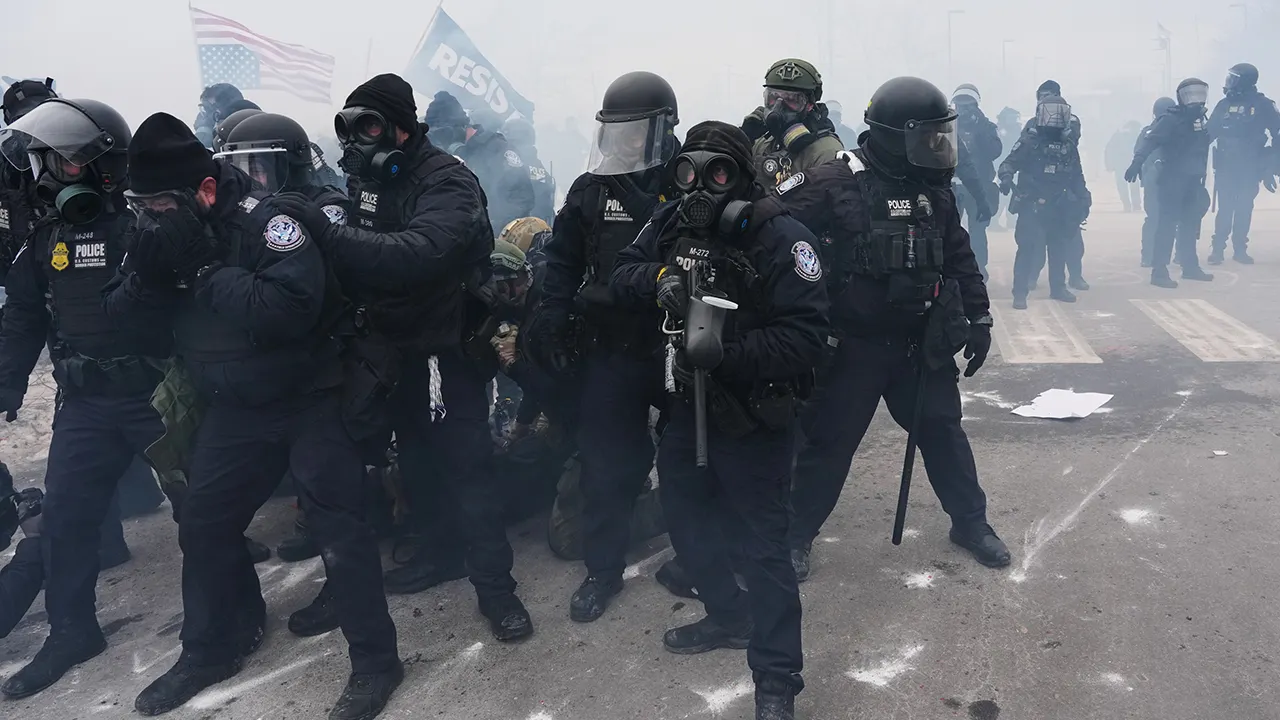
The president framed the possible deployment of military forces as a necessary response to what he describes as failures by Minnesota’s Democratic leadership amid escalating tensions following an Immigration and Customs Enforcement (ICE) operation that has drawn fierce local opposition.
“If the corrupt politicians of Minnesota don’t obey the law and stop the professional agitators and insurrectionists from attacking the Patriots of I.C.E., who are only trying to do their job, I will institute the INSURRECTION ACT,” Trump wrote on social media.
The Insurrection Act, dating back to 1807, authorizes presidents to deploy active-duty military troops within the United States under specific circumstances, particularly when “unlawful obstructions, combinations, or assemblages, or rebellion” make it “impracticable to enforce the laws.” The law essentially creates an exception to the Posse Comitatus Act, which normally prohibits using the military as a domestic police force.
Speaking to reporters on Friday, Trump clarified his position: “It has been used by 48% of the presidents as of this moment. If I needed it, I’d use it. I don’t think there’s any reason right now to use it, but if I needed it, I’d use it.”
The conflict in Minnesota intensified earlier this month after an ICE agent shot and killed Renee Good, a 37-year-old U.S. citizen, during an altercation that the FBI is investigating as a possible assault on the agent. The shooting has become a flashpoint in a larger controversy surrounding Operation Metro Surge, a federal immigration enforcement campaign that has resulted in approximately 2,000 arrests in Minnesota.
According to court documents filed in a lawsuit by Minnesota officials against the Trump administration, the Department of Homeland Security has deployed thousands of ICE agents to the state in recent weeks. A federal judge recently denied Minnesota’s request for an emergency order that would have paused ICE operations in the state.
Minnesota’s leadership has openly opposed any potential use of the Insurrection Act. Minneapolis Mayor Jacob Frey stated, “Minnesota needs ICE to leave, not an escalation that brings additional federal troops beyond the 3,000 [ICE agents] already here. My priority is keeping local law enforcement focused on public safety, not diverted by federal overreach.”
Governor Tim Walz similarly urged Trump to “turn the temperature down” rather than escalate federal involvement.
Chad Wolf, former acting secretary of DHS and current chair of homeland security and immigration at the America First Policy Institute, suggested the president might have “little choice” if violence continues. “If the situation on the ground in Minneapolis continues to grow violent, with ICE officers being targeted and injured as well as other violent acts, and Governor Walz and Mayor Frey continue to restrict local law enforcement from doing their job and encouraging their residents to resist ICE, President Trump will have little choice,” Wolf said.
Legal experts note that the Insurrection Act provides presidents with extensive latitude. If invoked, Trump could direct military forces to enforce federal laws, disperse protests, or suppress what he deems rebellious activity with minimal restrictions.
While rarely used in modern times, the Act has significant historical precedent. President George H.W. Bush last invoked it in 1992 to quell riots in Los Angeles. Other notable uses include President Dwight Eisenhower deploying troops to Little Rock, Arkansas in the 1950s to enforce civil rights laws, and President Franklin Roosevelt sending Army troops to Detroit in the 1940s in response to race riots.
Jonathan Turley, a law professor at George Washington University, told Fox News Digital that while he hoped use of the Insurrection Act could be avoided, Trump would likely have a strong legal position if challenged in court. “The rhetoric of the mayor and the governor has only strengthened the case for the administration in fueling the rage and protests,” Turley said.
The standoff represents the latest test of federal authority versus state control in managing civil unrest, with significant implications for how immigration enforcement operations are conducted nationwide.
Fact Checker
Verify the accuracy of this article using The Disinformation Commission analysis and real-time sources.

6 Comments
The Insurrection Act is a powerful but controversial tool. Its use in this case could set a concerning precedent and erode trust in democratic institutions. I hope the administration explores all other options before resorting to such a drastic measure.
As a mining and commodities investor, I’m watching this situation closely as it could have broader economic and geopolitical implications. Maintaining stability and the rule of law is important, but the president must exercise restraint in using the Insurrection Act.
The Insurrection Act provides the president with broad powers, but its application in this case could raise significant constitutional concerns. I’m curious to see how state and local officials respond and whether a compromise can be reached.
You raise a good point. The balance between federal and state/local authority is a delicate issue here. I hope cooler heads prevail and a non-confrontational solution can be found.
Interesting development regarding the Insurrection Act. While maintaining law and order is important, the president should exercise caution in deploying military forces domestically. Striking the right balance between security and civil liberties will be crucial.
I agree, the use of the Insurrection Act is a major step that should not be taken lightly. It will be important to closely monitor the situation and ensure any federal response is proportionate and respects state and local authority.