


Listen to the article
Army General Pledges to Uphold Constitution if Confirmed as NSA Director
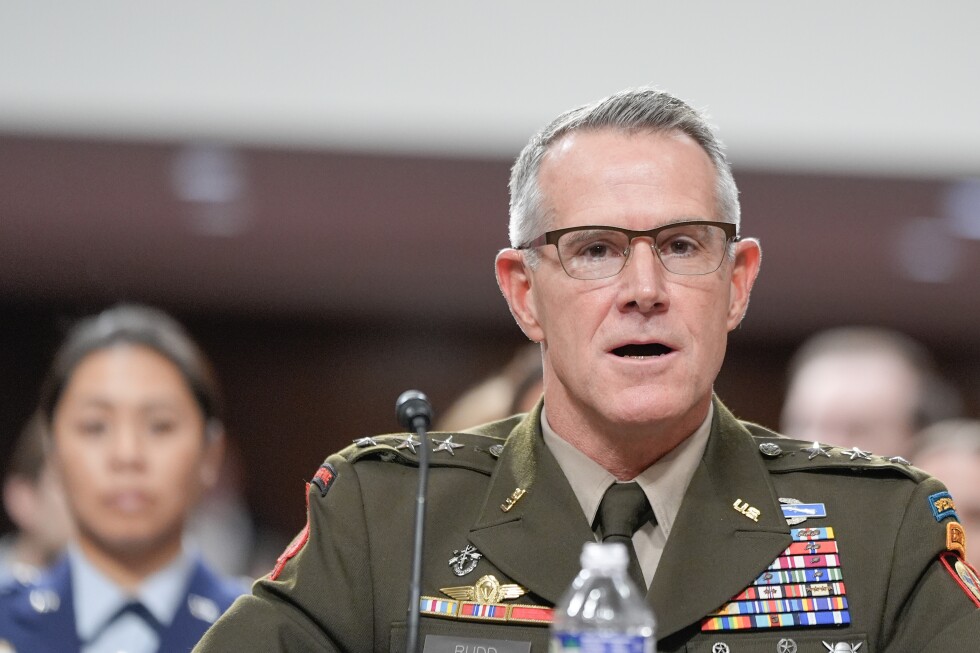
During a Senate Intelligence Committee hearing Thursday, Lt. Gen. Joshua Rudd promised lawmakers he would adhere to constitutional principles and legal boundaries when utilizing the National Security Agency’s extensive surveillance capabilities if confirmed as the agency’s new director.
The decorated Army general, who would also lead the Pentagon’s Cyber Command, faced scrutiny from senators concerned about potential politicization of intelligence agencies. Rudd’s nomination comes at a sensitive time, as the NSA has operated without permanent leadership since President Donald Trump dismissed Gen. Tim Haugh last year.
“If confirmed, I will absolutely commit to executing the foreign intelligence mission of the NSA in accordance with the authorities it has been given and within all applicable laws,” Rudd stated in response to direct questioning from Sen. Ron Wyden (D-Oregon) about whether he would require judicial warrants for domestic surveillance.
The hearing highlighted ongoing tensions regarding the appropriate use of intelligence capabilities in an increasingly complex digital landscape. Several Democratic lawmakers sought explicit assurances that Rudd would resist any potential pressure to deploy the agency’s surveillance tools against Americans based on political speech or beliefs—activities explicitly prohibited by federal law.
Rudd brings substantial experience to the nomination, having served in senior Army special forces roles and deployed to both Iraq and Afghanistan. He currently serves as deputy commander of the Indo-Pacific Command, a position that has provided him with firsthand knowledge of the growing digital threats posed by China and other adversaries in a strategically vital region.
During his testimony, Rudd emphasized the NSA’s dual mandate of protecting American service members abroad while safeguarding the homeland from espionage and cyber threats. “The NSA’s mission is critical to protecting the lives of service members and the success of their missions while also keeping the homeland safe,” he told the committee.
The significance of the NSA has expanded dramatically in recent years as digital technology has transformed both intelligence gathering capabilities and security vulnerabilities. The agency specializes in cybersecurity, digital surveillance, and cryptography programs essential to American national security, working in close coordination with other intelligence agencies and military branches.
Lawmakers also pressed Rudd on transparency issues, seeking commitments that he would promptly inform Congress of any White House efforts to alter surveillance policies without congressional approval. This line of questioning reflects ongoing concerns about executive overreach in intelligence matters that have persisted across multiple administrations.
The NSA’s capabilities have been the subject of intense public debate since Edward Snowden’s 2013 revelations about the scope of the agency’s surveillance programs. Since then, Congress has implemented various reforms while still maintaining the agency’s core intelligence-gathering functions deemed vital to national security.
Despite the rigorous questioning, senators from both parties expressed confidence that Rudd’s nomination would ultimately receive approval from the full Senate. Committee members appeared satisfied with his responses, particularly his explicit commitment to operating within legal frameworks.
No date has been announced for the Senate vote on Rudd’s nomination, though intelligence leadership positions typically move forward with relative speed given their importance to national security operations.
If confirmed, Rudd will inherit an agency facing evolving challenges from sophisticated state actors like China and Russia, along with non-state threats including terrorist organizations and criminal networks that increasingly leverage digital technology. His leadership will be crucial in navigating these complex threats while maintaining the delicate balance between security imperatives and constitutional protections.
Fact Checker
Verify the accuracy of this article using The Disinformation Commission analysis and real-time sources.

10 Comments
The scrutiny from senators on potential politicization of intelligence agencies is understandable given recent concerns. Ensuring the NSA remains non-partisan and focused on its core national security mission will be important.
You’re right, the NSA needs to stay out of partisan politics and maintain its integrity as an objective, non-political agency.
It’s good to see the nominee for NSA director commit to upholding the law and constitution. Maintaining proper oversight and legal boundaries for intelligence agencies is crucial for protecting civil liberties.
Agreed. Proper legal oversight and respect for individual rights must be a top priority for the next NSA director.
Requiring judicial warrants for domestic surveillance is a reasonable safeguard that the nominee appears to support. Striking the right balance between security and civil liberties is always a challenge for intelligence agencies.
The tensions around the appropriate use of intelligence capabilities in the digital age are understandable. Balancing national security needs with civil liberties will be an ongoing challenge for the next NSA director.
Absolutely, finding the right balance between security and privacy is critical as technology evolves.
Given the sensitive nature of the NSA’s work, strong congressional oversight and public transparency will be crucial to maintaining trust in the agency. I hope the nominee follows through on his commitment to the rule of law.
The nominee’s pledge to execute the NSA’s foreign intelligence mission within the law is reassuring. Upholding constitutional principles should be a top priority for the agency’s new leadership.
Agreed, the NSA director must be committed to operating within legal boundaries and respecting individual rights.