


Listen to the article
Ukrainian President Warns Europe to Bolster Self-Defense Capabilities Amid U.S. Uncertainty
Ukrainian President Volodymyr Zelenskyy delivered a stark message to European leaders at the World Economic Forum in Davos, Switzerland, highlighting the continent’s continued dependence on American military protection.
“Europe needs to know how to defend itself,” Zelenskyy warned, arguing that despite years of rhetoric about strategic autonomy, the continent remains ill-prepared to stand on its own without U.S. backing.
His comments reflect growing anxiety across European capitals that decades of reliance on American security guarantees have left NATO’s European members vulnerable in an increasingly unstable geopolitical landscape. While European nations have contributed troops, weapons, and funding to various international missions from Afghanistan to Ukraine, the ultimate guarantor of NATO’s security has remained Washington.
The relationship has faced increasing strain in recent years, particularly during Donald Trump’s presidency. Trump repeatedly challenged the assumption of unconditional American support, warning NATO allies that U.S. protection should not be taken for granted. His administration pressed European members to meet their defense spending commitments of 2% of GDP, a threshold many had failed to reach for years.
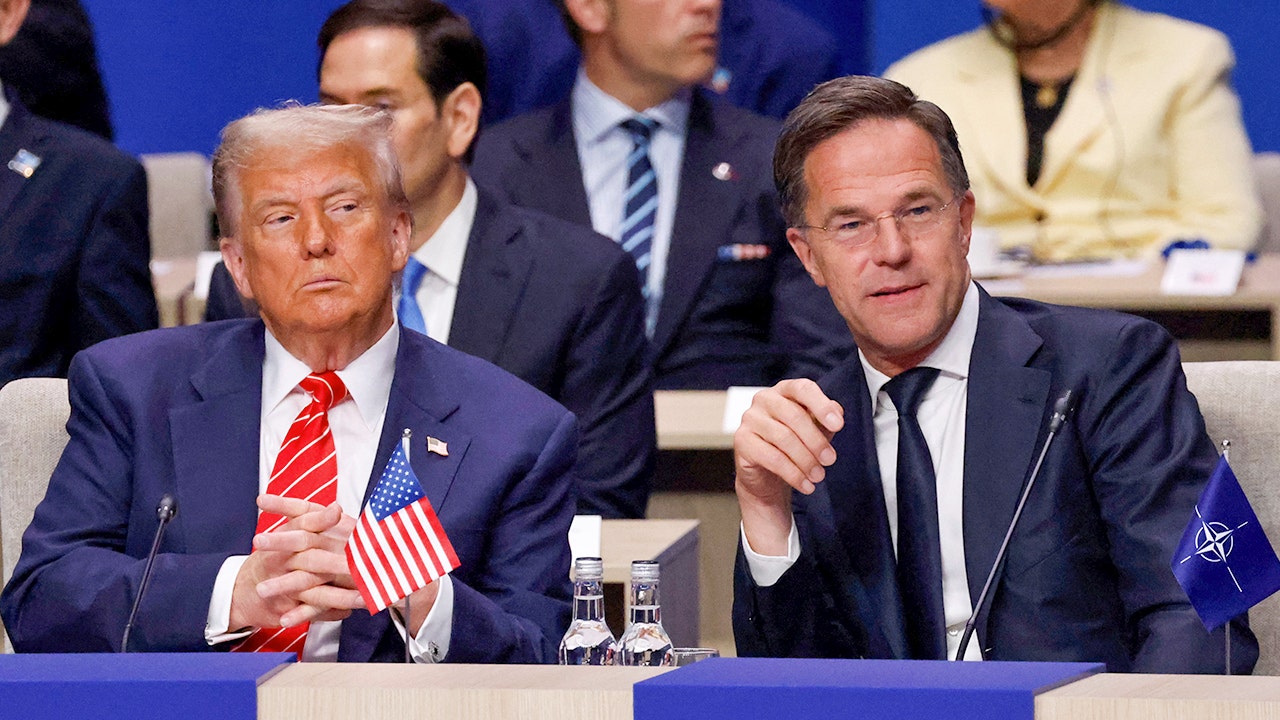
NATO Secretary General Mark Rutte acknowledged this reality at Davos, pointing to the American nuclear umbrella as the alliance’s “ultimate guarantor” alongside conventional U.S. forces in Europe. “We are still having a strong, conventional U.S. presence in Europe and, of course, the nuclear umbrella as our ultimate guarantor,” Rutte stated.
Security analysts suggest this long-standing guarantee has shaped European defense priorities for generations.
“For much of the post-Cold War period, Europeans underinvested in defense, partly because threats were low, and partly because a series of U.S. presidents did everything they could to convince Europeans that we would stay there forever,” explained Barry Posen, professor of political science at MIT.
However, Posen cautioned against undermining NATO cohesion. “The problem is that ‘conditional commitments’ make challenges more likely,” he noted. “As a great power, in the event of an actual challenge, we might not wish to look weak.”
The security dilemma has created difficult budgetary trade-offs for European governments. With American power serving as the backstop, defense spending was easier to restrain than politically popular domestic programs such as healthcare, pensions, and education, which became deeply entrenched in European political systems.
Italy’s government has warned that boosting military spending to meet NATO commitments would strain an already tight budget where social benefits consume a significant portion of public expenditure. Germany created a €100 billion special defense fund after Russia’s invasion of Ukraine, financed through new borrowing and kept outside the regular budget, to rebuild its military without immediate cuts to other programs. However, this fund is temporary, and sustaining higher defense spending will eventually require permanent budget adjustments.
John Byrne of Concerned Veterans for America points out that Europe’s defense challenges extend beyond budgets. Even as governments pledge more spending, European militaries lack the senior command experience needed to run major NATO operations without U.S. leadership.
“They don’t have the experience,” Byrne said, noting that large multinational military commands have predominantly been led by American generals for decades. “That institutional knowledge still sits almost entirely with the United States.”
Byrne emphasized that this gap cannot be closed quickly, even with increased spending. “You can buy equipment,” he said. “You can’t instantly buy command experience.”
During his Davos address, Zelenskyy questioned whether Europe possesses both the capability and the will to act independently if U.S. security guarantees become less certain.
“Europe still feels more like geography, history, tradition, not a real political force, not a great power,” Zelenskyy observed. He warned that European leaders continue planning around expectations that may no longer hold. “To believe that the United States will act, that it will not stand aside and will help,” he said. “But what if it doesn’t? This question is everywhere in the minds of European leaders.”
Fact Checker
Verify the accuracy of this article using The Disinformation Commission analysis and real-time sources.

17 Comments
President Zelenskyy makes a fair point. Europe needs to be more self-sufficient in its defense to avoid being vulnerable if US support wavers. This will require significant investment and coordination.
Agreed. The shift towards greater European defense autonomy is long overdue. It will be a complex and costly process, but necessary for Europe’s future security.
While the US has been the dominant security provider for Europe, the changing global landscape means the continent must develop its own robust defense capabilities. This will be a significant but necessary undertaking.
Agreed. Europe can no longer take US security guarantees for granted. Investing in its own defense forces is crucial to safeguarding its interests and influence on the world stage.
Trump’s pressure on NATO allies to spend more on defense seems to be having an impact, though the reasoning behind it was controversial. This could be an opportunity for Europe to chart a more independent course.
That’s a fair assessment. While Trump’s approach was divisive, it has forced Europe to confront the reality that it can’t indefinitely rely on the US for its defense.
This is a pivotal moment for Europe to chart a more independent defense path. Zelenskyy’s warning highlights the risks of over-reliance on the US, which could be an unreliable partner in the future.
This is a wake-up call for Europe to take its defense more seriously. Developing robust military forces and reducing reliance on the US will strengthen the continent’s position and resilience.
Zelenskyy’s message underscores the urgency for Europe to address its defense shortcomings. Relying too heavily on the US leaves the continent vulnerable to geopolitical shifts and unpredictable US policy changes.
You’re right. Building up Europe’s defense capabilities is essential to ensuring its long-term security and strategic autonomy, especially in an increasingly volatile global environment.
The need for Europe to bolster its defense capabilities is clear. Reducing reliance on the US will be challenging, but necessary to ensure the continent’s security and global influence in the long run.
Reducing Europe’s dependence on US security guarantees is a complex challenge that will require sustained political will and significant investment. But it’s a necessary step to bolster the continent’s strategic autonomy.
Absolutely. Strengthening Europe’s defense capabilities is critical to its long-term security and global influence. It’s an ambitious but vital undertaking.
Zelenskyy’s warning highlights the risks of Europe’s over-dependence on the US for security. Investing in its own defense capabilities is crucial for the continent to assert its strategic autonomy and influence.
Absolutely. Greater European defense integration and self-sufficiency will be a complex and costly endeavor, but essential for safeguarding its interests in an increasingly unstable world.
This is an important wake-up call for Europe to bolster its defense capabilities. Relying too heavily on the US for protection is risky, especially with geopolitical shifts and uncertainty around future US commitments.
You’re right, strategic autonomy is crucial for Europe’s security. Developing its own robust defense forces will strengthen the EU’s position and resilience.