


Listen to the article
White House Confirms Trump’s Threat to Iran Was “Not an Empty Threat”
A two-week ceasefire agreement between Iran and the United States was secured Tuesday night, just minutes before President Donald Trump’s 8 p.m. deadline that had threatened devastating consequences for the Iranian regime.
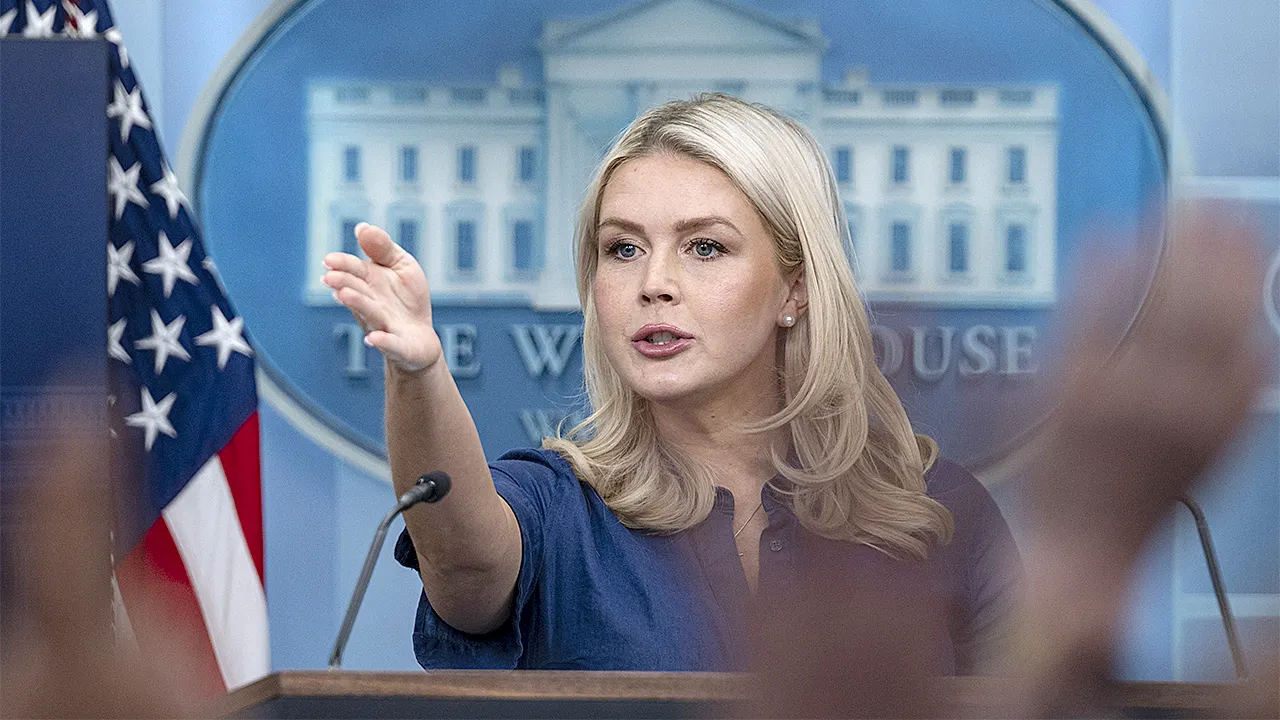
White House press secretary Karoline Leavitt confirmed during Wednesday’s press briefing that the president’s controversial threat to “destroy Iranian civilization” was not a bluff, stating that military options were prepared and ready for deployment.
“It was a very, very strong threat from the president of the United States that led to the Iranian regime to cave to their knees and ask for a ceasefire and agree to re-opening the Strait of Hormuz,” Leavitt told reporters. “As the Secretary of War stated at the Pentagon this morning, it was not an empty threat by any means.”
According to Leavitt, the Department of War had prepared a targeted strike list that would have been executed had Iran failed to meet Trump’s demands to reopen the strategically crucial Strait of Hormuz, a vital maritime passage through which approximately 20% of the world’s oil supply flows.
The diplomatic standoff began on Easter Sunday when Trump posted on Truth Social that Iranians would be “living in Hell” if they did not open the waterway. The rhetoric escalated dramatically on Tuesday when Trump warned that “a whole civilization will die tonight, never to be brought back again” if Iran failed to comply.
The brinkmanship has drawn sharp criticism both domestically and internationally. Pope Leo XIV called Trump’s threats “truly unacceptable,” reflecting widespread concern about the language used in international diplomacy.
On Capitol Hill, Rep. Ro Khanna (D-Calif.) posted a video on social media calling for invoking the 25th Amendment to remove Trump from office. “He is threatening the entire destruction of a civilization,” Khanna said. “This is a moral crime. It is a war crime.”
When challenged by a reporter about whether the United States could maintain its position as a “moral leader” after threatening to eradicate an entire nation, Leavitt pushed back forcefully.
“The insinuation by anyone in this room that Iran somehow has the moral high ground is insulting considering the atrocities that they have committed against our people and our military over the past five decades,” she responded.
The crisis appears temporarily defused with Iran’s agreement to a ten-point peace proposal that includes reopening the Strait of Hormuz. Images from Tehran show Iranians gathering at Enqelab Square following the ceasefire announcement, signaling the significance of the development within Iran.
The agreement comes amid heightened tensions in the Middle East, where U.S.-Israeli operations against Iran have intensified in recent months. The two-week ceasefire provides breathing room for diplomatic efforts, though regional experts note that fundamental issues between the nations remain unresolved.
Energy markets reacted positively to the news, with oil prices dropping significantly after the announcement as fears of supply disruptions through the vital shipping channel subsided. The Strait of Hormuz has long been a geopolitical flashpoint, with Iran previously threatening to block the passage during periods of heightened tensions.
As the situation develops, international observers remain cautious about the durability of the agreement, with many diplomatic and military analysts suggesting that the underlying conflict between the United States and Iran continues to simmer despite the temporary reprieve.
Fact Checker
Verify the accuracy of this article using The Disinformation Commission analysis and real-time sources.

19 Comments
This is a complex geopolitical situation that demands nuanced handling. While I respect the administration’s willingness to take a firm stand, I hope they are also exploring all diplomatic avenues to reach a peaceful resolution. Escalating tensions could have far-reaching repercussions.
The Strait of Hormuz is a critical global choke point for oil shipments. Keeping it open is in everyone’s interests. However, I’m concerned that this tough rhetoric from the US could further inflame tensions in the region. Measured responses are needed to avoid unintended consequences.
The threat of military action by the US against Iran is a concerning escalation. While the administration claims it was not an empty threat, we must be cautious about rhetoric that could lead to further conflict in the region.
I share your concern about the potential for this situation to spiral. Diplomacy and de-escalation should be the priority to avoid a dangerous military confrontation.
Reopening the Strait of Hormuz is critical for global energy supply. However, the president’s harsh rhetoric and threats of destroying Iranian civilization are highly troubling and risk dangerous miscalculation.
I agree, the stakes are very high here. While protecting freedom of navigation is important, we must find a diplomatic solution that does not resort to extreme military threats.
The situation with Iran and the Strait of Hormuz is highly complex, with significant geopolitical and economic implications. Any response from the US must be carefully weighed to avoid further destabilization in the region.
I agree, a nuanced, diplomatic approach is critical here. Resorting to extreme threats is unlikely to produce a positive outcome and could have far-reaching consequences.
This situation highlights the ongoing geopolitical tensions and power dynamics in the Middle East. While the US has legitimate interests in the region, responding with threats of destroying Iranian civilization is a dangerous and counterproductive approach.
I concur, this type of inflammatory rhetoric is unlikely to lead to constructive solutions. Maintaining open communication channels and finding common ground is crucial to avoid further conflict.
It’s good to see the administration taking a strong stance to protect global energy security. However, I would caution against overly aggressive posturing that could backfire. Maintaining open lines of communication and finding common ground will be crucial to defusing this crisis.
This is a high-stakes game of brinksmanship. While I appreciate the administration’s assertiveness, I hope cooler heads prevail and all parties can find a negotiated solution. Unilateral military action should always be the last resort.
Agreed. Diplomacy and de-escalation should be the priority here. Too much is at stake for both sides to let this spiral out of control.
This is a delicate balancing act. While the administration’s tough talk may have yielded short-term results, I worry about the long-term implications. Sustained diplomatic engagement and a focus on de-escalation should be the priority moving forward.
As an energy industry observer, I’m closely watching this situation unfold. Uninterrupted flow of oil through the Strait of Hormuz is vital for global markets. I hope the US and Iran can find a diplomatic solution that addresses the underlying issues without resorting to military force.
Agreed. The energy markets will be highly sensitive to any disruptions in the Strait. Cooler heads must prevail to avoid a potentially catastrophic escalation.
Interesting to see the administration defend the Iran threat as genuine. While bold rhetoric can sometimes yield results, it’s important to maintain diplomatic channels and avoid further escalation. Careful management of foreign relations is crucial in such a volatile region.
The administration’s defense of the president’s threat as genuine is worrying. While protecting shipping lanes is important, we must be very careful about the potential for miscalculation and unintended escalation of tensions.
The administration’s claims that the threat was genuine and not an empty bluff are concerning. De-escalating tensions through measured diplomacy should be the priority, not ramping up military posturing.