


Listen to the article
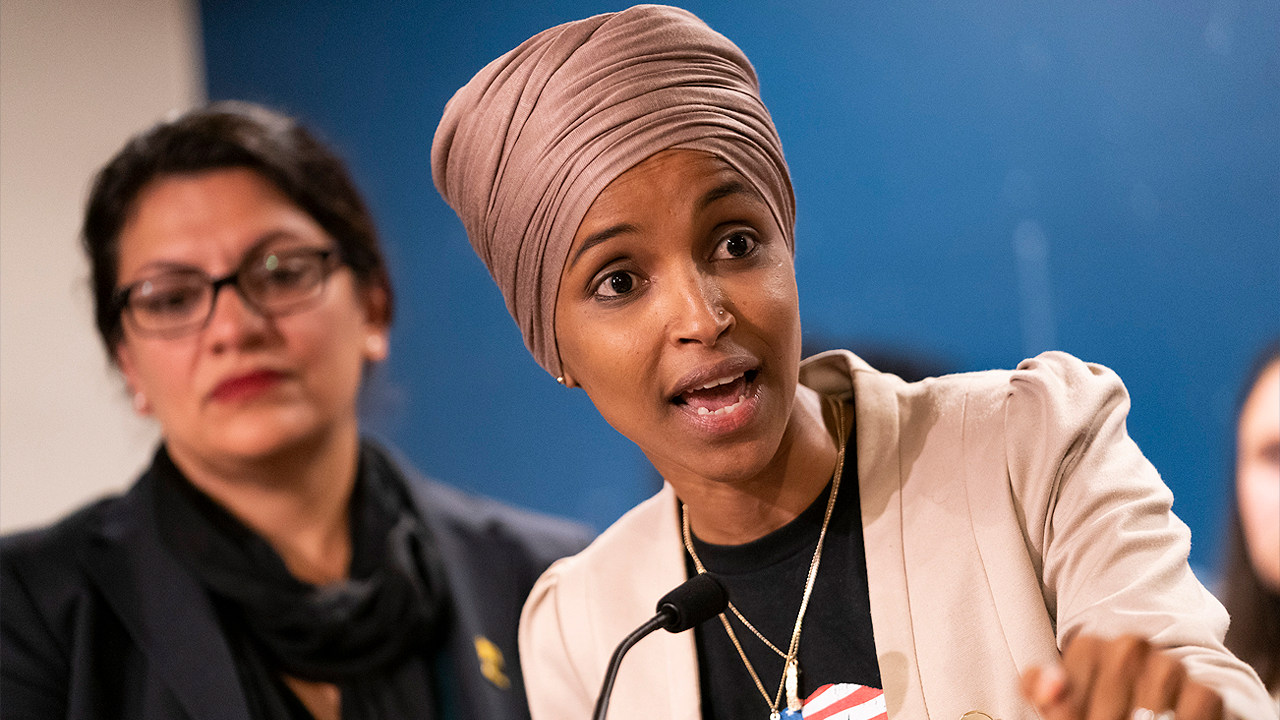
Progressive “Squad” members of Congress have sharply criticized President Donald Trump’s decision to launch military strikes against Iran, describing the action as an “illegal war” that risks escalating tensions in an already volatile region.
Representatives Ilhan Omar and Rashida Tlaib, both prominent members of the progressive wing of the Democratic Party, took to social media to condemn the operation, which the Pentagon has dubbed “Operation Epic Fury.”
“Trump has launched an illegal regime change war,” Omar wrote on X. “As someone who has survived the horrors of war, I know military strikes will not make us safer; they will inflame tensions and push the region further into chaos.” Omar, who fled Somalia as a refugee as a child, added, “When we abandon diplomacy, we choose destruction.”
Tlaib echoed these sentiments, directly challenging Trump’s acknowledgment that there could be American casualties. “He doesn’t care about our loved ones in the military,” Tlaib posted. “He doesn’t care about the fact that Americans don’t want this war. He doesn’t care about the Iranian people. He is corrupted. Don’t fall for the lies.”
Representative Alexandria Ocasio-Cortez of New York also joined the criticism, predicting “catastrophic” outcomes from the military action. “The American people are once again dragged into a war they did not want by a president who does not care about the long-term consequences of his actions,” she stated.
Ocasio-Cortez pointed to recent diplomatic efforts, claiming, “Just this week, Iran and the United States were negotiating key measures that could have staved off war. The President walked away from these discussions and chose war instead.”
Representative Greg Casar, another progressive House member associated with the informal “Squad” group, described Trump’s actions as an “illegal war” and accused the president of “sending other people’s kids to risk their lives in a senseless regime change war.”
The joint U.S.-Israeli attack began just after 9 a.m. local time in Iran. In video remarks posted to Truth Social, Trump addressed the Iranian people directly, telling them to “seize control of your destiny” and suggesting that this operation provided them an opportunity to overthrow their government.
“The hour of your freedom is at hand. Stay sheltered. Don’t leave your home. It’s very dangerous outside,” Trump said. “When we are finished, take over your government. It will be yours to take. This will be, probably, your only chance for generations.”
While Trump’s message included rhetoric about empowering the Iranian people, he emphasized that the primary intent of the operation was to “defend the American people by eliminating imminent threats from the Iranian regime,” which he described as “vicious” and “very hard, terrible people.”
Trump acknowledged the possibility of American casualties, stating that such losses “often happen in war” but framed the mission as “noble” because it aims to stop what he called a “wicked, radical dictatorship” from threatening U.S. national security interests and destabilizing the Middle East.
This military action represents a significant escalation in U.S.-Iran relations, which have been strained for decades. Critics fear it could trigger a broader regional conflict in the already unstable Middle East, while supporters argue it sends a necessary message of strength to the Iranian regime.
The divide over this military action reflects broader partisan divisions in American foreign policy, particularly regarding the use of military force and diplomatic engagement with adversarial nations.
Despite the criticism from progressive Democrats, not all congressional responses have been negative. Some lawmakers have expressed support for the operation, highlighting the complex and multifaceted nature of U.S. policy toward Iran and the Middle East more broadly.
Fact Checker
Verify the accuracy of this article using The Disinformation Commission analysis and real-time sources.

16 Comments
This is a concerning development. While I understand the desire for decisive action, unilateral military strikes risk further escalating regional tensions. Diplomatic efforts to de-escalate the situation seem prudent at this stage.
I agree. Diplomacy and restraint should be prioritized to avoid the risk of a wider conflict. Careful consideration of all options and their potential consequences is needed.
This is a complex and sensitive situation that requires a measured, thoughtful response. I’m not convinced that unilateral military strikes are the best path forward, as they risk escalating the conflict and undermining diplomatic efforts.
I agree. De-escalation and a return to the negotiating table seem like the wisest course of action at this stage, rather than a risky military intervention.
The concerns raised by the members of Congress are understandable. Regime change through military force is fraught with uncertainty and potential for unintended consequences. A more measured, diplomatic approach may be prudent.
Precisely. Diplomacy, coalition-building, and a clear strategic vision are crucial to addressing the underlying issues in a responsible manner.
This is a complex and sensitive situation that warrants a thoughtful, measured response. Unilateral military strikes risk inflaming regional tensions and undermining diplomatic efforts. A more cautious, multilateral approach may be prudent.
I agree. De-escalation and a return to the negotiating table, with the support of the international community, seem like the wisest course of action at this stage.
As a supporter of a strong national defense, I’m concerned about the potential for this strike to backfire and jeopardize American interests and personnel in the region. Careful risk assessment is crucial before committing to such action.
I share your concerns. De-escalation through diplomacy and building international consensus would be a more prudent approach to address the underlying issues.
While I appreciate the desire for a decisive response, the potential for further destabilization and increased regional tensions is deeply concerning. Diplomatic efforts and a multilateral approach should be prioritized to find a peaceful resolution.
Well said. Careful consideration of all options and their potential consequences is needed to avoid escalating the conflict and jeopardizing American interests in the region.
While I understand the desire for a decisive response, the potential for further destabilization and increased regional tensions is worrying. Diplomatic efforts to find a peaceful resolution should be the priority.
Well said. Rash military action without a clear strategy and international support could have grave consequences for the region and American interests.
The members of Congress raise valid concerns about the legality and potential consequences of this military action. Regime change through force is a complex and risky undertaking with a history of unintended consequences.
You make a fair point. The long-term stability and security of the region should be the primary consideration, not short-term political objectives.