


Listen to the article
House Speaker Johnson Dismisses Possibility of U.S. Military Intervention in Greenland
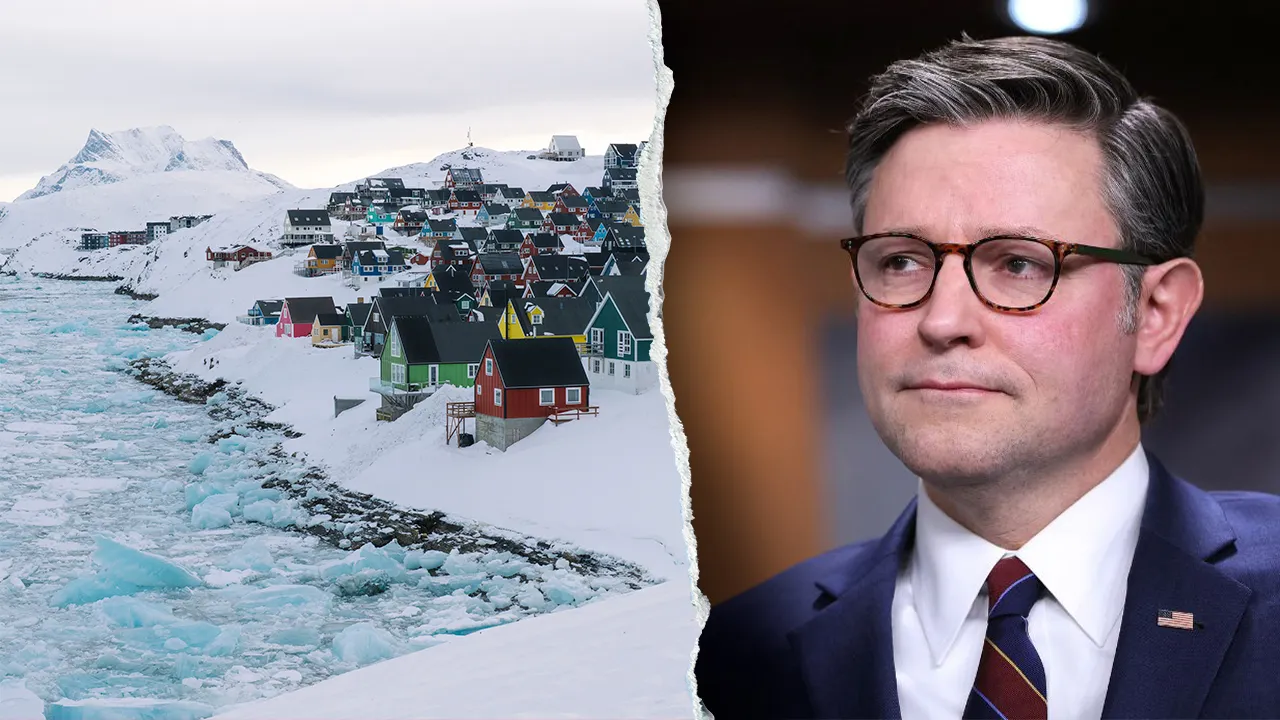
House Speaker Mike Johnson firmly rejected speculation that the United States might deploy troops to Greenland, emphasizing that no military intervention is being planned despite ongoing diplomatic discussions about the Arctic territory.
“We’ve been very clear. The Article 1 branch is clear. There’s no declaration of war pending for Greenland,” Johnson told The Hill. “It’s just not a thing. I don’t anticipate any boots on the ground anywhere, anytime soon.”
The Louisiana Republican acknowledged the Trump administration’s strategic interest in acquiring Greenland but framed it as a matter of negotiation rather than military action. “Look, there are negotiations. There is interest in Greenland for U.S. interests, America’s first interest,” Johnson said. “It has to do with national security and critical minerals and many other reasons.”
President Trump has repeatedly emphasized the strategic importance of Greenland, warning that if the United States does not secure the territory, rival powers like Russia or China could establish a presence there. Last week, Trump stated the U.S. would act on Greenland “whether they like it or not,” insisting the U.S. must acquire—not merely lease—the territory to ensure American and NATO security interests.
The president’s aggressive stance has prompted pushback from Greenland’s leadership. During a joint press conference with Danish Prime Minister Mette Frederiksen in Copenhagen on Tuesday, Greenland’s Prime Minister Jens-Frederik Nielsen declared his preference for remaining part of Denmark.
“We face a geopolitical crisis, and if we have to choose between the U.S. and Denmark here and now then we choose Denmark,” Nielsen stated. “We stand united in the Kingdom of Denmark.”
The diplomatic tensions have spilled into Congress, where bipartisan lawmakers are moving to prevent unauthorized military action against NATO allies. Representative Bill Keating, a Massachusetts Democrat, is spearheading legislation that would block funding for military operations against allied nations without congressional approval.
“This isn’t just about Greenland. This is about our security,” Keating explained, reflecting concerns that Trump’s comments could undermine NATO’s collective defense principles.
The situation has significant geopolitical ramifications as Greenland, the world’s largest island, holds vast reserves of rare earth minerals critical for technological development and military applications. These natural resources have become increasingly important as nations compete for supply chain security in critical technologies.
Greenland also occupies a crucial geographic position in the Arctic, a region experiencing increased military and commercial activity as climate change makes northern shipping routes more accessible. Control of these routes could provide significant economic and strategic advantages in coming decades.
Diplomatic efforts continue this week as Denmark’s Foreign Minister Lars Løkke Rasmussen and Greenland’s Foreign Minister Vivian Motzfeldt are scheduled to meet with Secretary of State Marco Rubio and Vice President JD Vance at the White House on Wednesday, according to Reuters.
The meetings come at a delicate time for transatlantic relations, with European leaders expressing alarm over potential violations of NATO commitments. Denmark, a founding member of NATO, has maintained sovereignty over Greenland since 1814, though the island has increasingly gained autonomy in recent decades.
Despite Trump’s persistent interest in acquiring Greenland—which dates back to his first term when he suggested purchasing the island in 2019—the Danish government has repeatedly stated the territory is not for sale, creating an ongoing diplomatic challenge for U.S.-European relations.
Fact Checker
Verify the accuracy of this article using The Disinformation Commission analysis and real-time sources.

9 Comments
The Trump administration’s interest in Greenland seems to be driven by a mix of geopolitical and economic factors. I wonder how this potential acquisition would impact the region’s indigenous communities and the environment.
It’s good to see that the U.S. government is being transparent about its intentions regarding Greenland. Open communication and negotiations are crucial for maintaining regional stability.
The potential acquisition of Greenland raises a lot of complex issues, both geopolitical and environmental. I hope the U.S. government carefully weighs all the pros and cons before making any decisions.
The Trump administration’s interest in Greenland is intriguing, but I’m curious to see how this plays out in the long run, especially in terms of the region’s economic and environmental sustainability.
While I appreciate the U.S. government’s emphasis on diplomacy over military action, I’m still concerned about the potential for geopolitical tensions if this acquisition goes through.
The focus on critical minerals and national security interests in Greenland is understandable, but I hope the U.S. also considers the environmental and social impacts of any potential development.
It’s good to see that the U.S. government is not planning any military intervention in Greenland. Maintaining a diplomatic approach is crucial for such sensitive negotiations.
Interesting move by the U.S. to explore acquiring Greenland. I’m curious to learn more about the strategic reasons behind it, beyond just national security and critical minerals. Does this signal a shift in U.S. Arctic policy?
While Greenland’s strategic location is undeniable, I’m skeptical about the long-term viability and sustainability of this proposed acquisition. The logistics and costs involved could outweigh the potential benefits.