


Listen to the article
Republican Rift Over Trump’s Arab American Ambassador Pick Threatens Political Gains
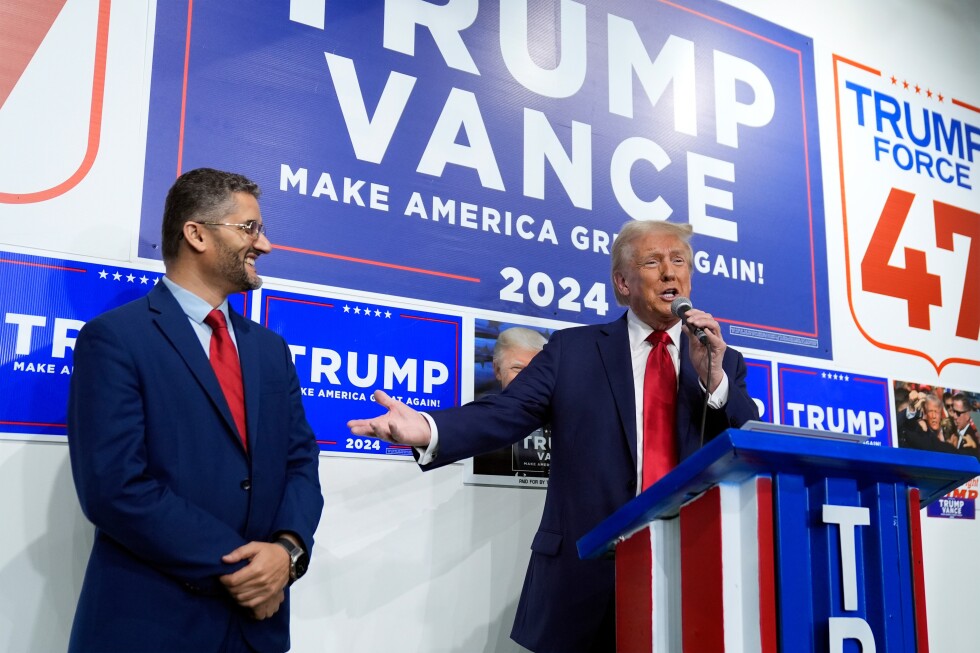
When Donald Trump celebrated his election victory last November, he stood on a Michigan stage and embraced Hamtramck Mayor Amer Ghalib, calling him “one of the greatest men in your state.” This moment marked a dramatic shift from Trump’s first presidential campaign, when he had proposed banning Muslims from entering the United States.
Trump’s outreach to Arab Americans paid dividends in 2024, helping him secure crucial votes in Michigan, including in heavily Arab American communities like Dearborn. As a reward for Ghalib’s support, Trump nominated him to serve as U.S. ambassador to Kuwait, a strategic diplomatic post in the oil-rich Persian Gulf region.
But the nomination quickly encountered significant headwinds on Capitol Hill, where members of Trump’s own party led the opposition.
During his confirmation hearing, Ghalib faced tough questioning about past social media activity and statements labeled by critics as antisemitic. Senator Ted Cruz of Texas bluntly told Ghalib, “Your long-standing views are directly contrary to the views and positions of President Trump and to the position of the United States. I for one, I’m not going to be able to support your confirmation.”
Senators scrutinized Ghalib for “liking” a Facebook comment comparing Jewish people to monkeys, though he explained it as a “bad habit” of acknowledging nearly every response to his posts while disagreeing with the sentiment. He also drew criticism for questioning evidence of sexual violence during Hamas’ October 7, 2023, attack on Israel and for describing former Iraqi dictator Saddam Hussein as a martyr.
With Republican opposition mounting and no vote taken after the hearing, Ghalib’s nomination effectively stalled. He has since withdrawn from consideration, stating plainly: “I’m not interested in it anymore.”
The fallout has created growing tension between the Republican Party and Arab American voters who helped deliver Trump’s victory. Bishara Bahbah, who chaired Arab Americans for Trump during the campaign, recently spent time in Michigan assessing community sentiment.
“There’s widespread disappointment,” Bahbah said. “Many of the promises made to the community have not been fulfilled. The whole issue of immigration and visas is really rattling the community. ICE is rattling the community, even those with citizenships.”
The situation highlights the fragility of Trump’s 2024 electoral coalition. His improved performance with Arab Americans was part of broader gains among minority voters, including Black and Latino communities. However, sustaining this support ahead of the 2026 midterms and 2028 presidential election now appears challenging.
“It’s hard for me to try and convince the community to vote again Republican in 2026 and 2028 with this kind of an atmosphere,” Bahbah acknowledged.
While Ghalib’s nomination faltered, another former mayor who helped Trump with Arab American outreach, Bill Bazzi of Dearborn Heights, successfully became U.S. ambassador to Tunisia in October. This contrast has fueled perceptions that the administration is selectively engaging with Arab American voices after leveraging their support during the campaign.
Political analysts note that Trump’s 2024 success among Arab Americans stemmed less from enthusiasm for the Republican candidate than from anger toward President Biden over his handling of the Gaza conflict. The reality of Trump’s second term has proven more complicated than some expected.
A recent ceasefire agreement intended to halt the war in Gaza has received mixed reactions from Arab American communities. Bahbah described it as “a one-sided ceasefire” that has not fully addressed community concerns. Meanwhile, intensified immigration enforcement has created fear in many immigrant communities.
“People are terrorized. They’re afraid,” Bahbah said. “This is not what the community voted for.”
While Ghalib emphasized he holds no grudge against Trump personally, saying “he was loyal and supportive,” he directed criticism toward Senate Republicans who opposed his nomination. “Those who opposed me for nonsense reasons have made the community upset, and they will have to work hard to restore their relationship with the community,” he said.
Osama Siblani, editor of The Arab American News in Dearborn, offered an even bleaker assessment of Trump’s prospects with Arab American voters: “He has no support in this community with or without Ghalib.”
The White House has defended its record, with spokesperson Anna Kelly stating that Trump “continues to deliver on the promises he made to Arab Americans and all communities by cooling inflation, securing the border, and restoring peace through strength.”
As midterm elections approach, whether Republicans can repair this relationship and maintain the coalition that delivered Trump’s second term remains an open question with significant implications for future electoral contests.
Fact Checker
Verify the accuracy of this article using The Disinformation Commission analysis and real-time sources.

14 Comments
The opposition to Ghalib’s nomination suggests that Trump’s outreach to Arab American voters may not be enough to overcome longstanding tensions within the Republican party. Managing these internal divisions will be key for the former president.
This could be an early test of Trump’s political resilience and his ability to adapt to changing circumstances within his own party.
This story highlights the challenges Trump faces in trying to maintain a united Republican coalition. The resistance to Ghalib’s nomination from within his own party shows the deep divisions that continue to exist.
It will be interesting to see how Trump navigates these internal conflicts as he contemplates a potential 2028 run.
This episode illustrates the complexities Trump faces in trying to balance the interests of his core supporters with the broader demands of the Republican establishment. Maintaining unity will be crucial for his future political plans.
It will be worth watching how Trump responds to this setback and whether he can find a way to reconcile the different factions within his party.
This story underscores the delicate balance Trump has to strike between appealing to his base and maintaining broader political support. Navigating these divides within the Republican party will be crucial for his future plans.
The Arab American vote was key for Trump in 2024, so alienating this constituency could have significant ramifications.
The nomination of Amer Ghalib as U.S. ambassador to Kuwait highlights the cracks in Trump’s political coalition. Resistance from within his own party over Ghalib’s past statements shows the ongoing tensions in the Republican party.
It will be interesting to see how this plays out and what impact it has on Trump’s future political aspirations.
Ghalib’s nomination seems to have run into a buzzsaw of opposition from within Trump’s own party. This suggests deeper ideological rifts that the former president will need to address if he hopes to maintain a united front.
It’s a reminder that even with Trump’s continued influence, the Republican party is far from a monolith and he still faces challenges in keeping his coalition intact.
The pushback against Ghalib’s nomination highlights the ongoing tensions within the Republican party over issues like foreign policy and Middle East relations. Trump will need to carefully navigate these divides to shore up his political standing.
This could be an early sign of the challenges Trump may face in a potential 2028 run, as the party grapples with its identity and direction.