


Listen to the article
Trump’s Foreign Policy Shifts Leave U.S. Allies Charting New Paths
Barely a month into his presidency, Joe Biden had a clear message for Europe: “America is back. The transatlantic alliance is back.” It was a promise Biden frequently made as he sought to frame Donald Trump’s disruptive approach to foreign policy as an anomaly in U.S. international relations.
Nearly five years later, Biden’s assurances have proven short-lived. In his second term, Trump has upended decades-old alliances with Europe that helped lead to Germany’s reunification and the Soviet Union’s collapse. His confrontational style with traditional partners has replaced longstanding diplomatic norms with demands and accusations more typically directed at adversaries.
The most dramatic example came with Trump’s recent threat to take over Greenland, which he dismissed as merely a “large piece of ice.” He demanded Denmark cede control to the U.S., a move that risked fracturing NATO. Despite Denmark suffering the highest per capita death toll among coalition forces in Afghanistan, Trump labeled the nation “ungrateful” for U.S. protection during World War II.
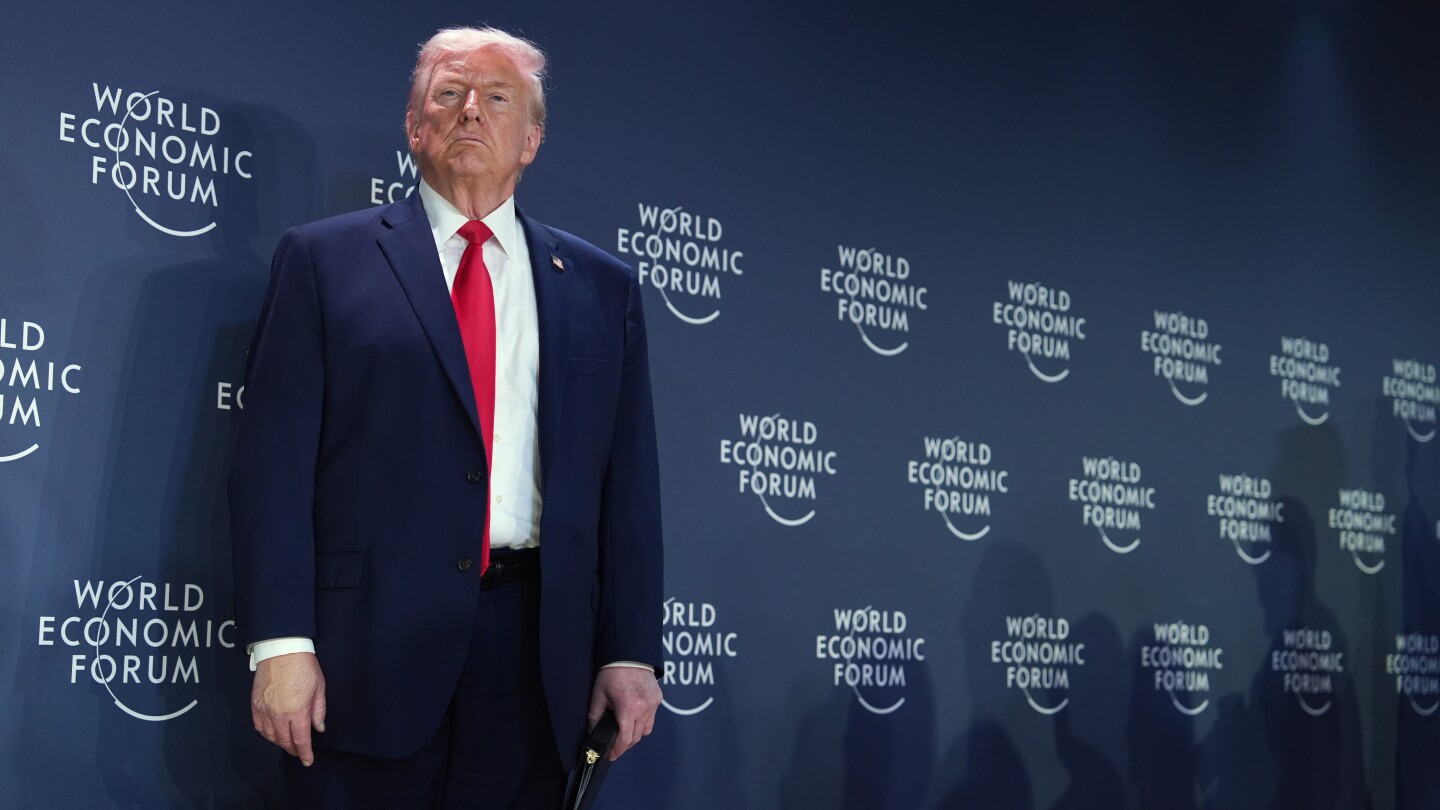
The episode escalated when Trump publicly posted private text messages from European leaders attempting to maintain diplomatic relations. He shared images of himself planting the American flag in Greenland and delivered an extraordinary speech at the World Economic Forum in Davos where he claimed Europe was “not heading in the right direction” and remarked that “sometimes you need a dictator.”
Hours after these provocative statements, Trump announced a “framework of a future deal” on Arctic security, though following his established pattern, he provided few substantive details.
Though Trump has temporarily backed away from his most severe threats regarding Greenland, the incident has left America’s global standing in flux. NATO leaders have begun signaling strategies that don’t rely on U.S. participation, potentially creating lasting challenges for any future administration seeking to rebuild these relationships.
“To an extent, things can be improved,” said Jon Finer, Biden’s former deputy national security adviser who now serves as a distinguished senior fellow at the Center for American Progress. “But they will never be the same in large part because I think any country that is behaving rationally in terms of its relationship with the United States will realize that we can only be counted on in four year increments, if at all.”
Canadian Prime Minister Mark Carney, who resisted Trump’s suggestion to make Canada the 51st state, has already begun charting a more independent course. Speaking candidly at Davos, Carney declared that the notion of a longstanding rules-based international order was an “illusion.”
“Let me be direct: We are in the midst of a rupture, not a transition,” Carney stated, calling on middle-power nations to “act together.” Unable to reach a trade agreement with Trump, Carney traveled to Beijing last week to meet with President Xi Jinping, negotiating a deal that reduced tariffs on Chinese electric vehicles in exchange for lower levies on Canadian agricultural products.
While in China, Carney characterized Ottawa’s relationship with Washington as “much more multifaceted” than with Beijing, but notably added that “the way our relationship has progressed in recent months with China, it is more predictable.”
European nations are also pursuing alternative partnerships. The European Union and the Mercosur bloc of South American countries formally signed a long-sought free trade agreement, with European Commission President Ursula von der Leyen framing it as a counterweight to Trump’s policies, though EU lawmakers have temporarily delayed final approval.
European leaders have responded to Trump with unprecedented criticism. French President Emmanuel Macron warned against “colonial adventures” and cautioned about “a shift towards a world without rules.” Belgian Prime Minister Bart De Wever was even more direct, stating, “Being a happy vassal is one thing. Being a miserable slave is something else. If you back down now, you’re going to lose your dignity.”
Perhaps most surprising has been criticism from Trump’s traditional allies on the political right. In the UK, Nigel Farage acknowledged legitimate security concerns in the Arctic but characterized Trump’s approach as the “biggest fracture” in transatlantic relations in decades. “To have a U.S. president threatening tariffs unless we agree that he can take over Greenland, by some means, without it seems even getting the consent of the people of Greenland, I mean, this is a very hostile act,” Farage said in an interview with U.S. House Speaker Mike Johnson.
Jordan Bardella, president of Marine Le Pen’s far-right National Rally party in France, called for the EU to suspend its tariff deal with the U.S., describing Trump’s threats as “commercial blackmail.”
Congressional Republicans have largely supported Trump or remained silent on the issue. House Foreign Affairs Committee Chairman Brian Mast likened the dispute to “a hard conversation” and questioned whether there would be significant long-term consequences, comparing it to Trump’s comments about reclaiming the Panama Canal during his 2025 State of the Union address.
The most pointed GOP criticism has come primarily from those not seeking reelection, including Rep. Don Bacon of Nebraska, who called the situation “totally unnecessary” and deemed threatening Greenland with force “absurd.”
Democrats have advocated for stronger responses both from Europe and within the U.S. California Governor Gavin Newsom, seen as a potential Democratic presidential candidate in 2028, criticized European diplomatic efforts with Trump during his appearance in Davos. “Diplomacy with Donald Trump?” Newsom asked rhetorically. “He’s a T-Rex. You mate with him or he devours you.”
Rep. Gregory Meeks, the top Democrat on the House Foreign Affairs Committee, acknowledged the challenge ahead for restoring international relationships. He suggested that while a future president might begin rebuilding trust with allies, a full recovery in global relationships may require a more fundamental shift in American politics.
Allies will “continue to hold their breath until you have two consecutive elections when we know we have a president that is going to stick by our institutions,” Meeks said. “Everybody’s just looking at us now as a nation and trying to see where we will be.”
Fact Checker
Verify the accuracy of this article using The Disinformation Commission analysis and real-time sources.

16 Comments
The Trump administration’s transactional approach to foreign policy is a concerning departure from past diplomatic norms. Allies will likely be wary of making long-term commitments with the US going forward.
You raise a good point. The unpredictability of US policy under Trump could make European partners more cautious about aligning too closely with the US on critical issues.
Trump’s demands on Denmark over Greenland seem rather heavy-handed. While the US-European alliance faces strain, cooler heads should prevail to find pragmatic solutions that benefit all parties.
I agree, the Greenland issue was handled poorly and could have lasting negative impacts. Maintaining open and respectful dialogue, even during disagreements, is key for allies.
This is a complex geopolitical situation with a lot of historical context. It will be interesting to see how the Biden administration navigates the lingering tensions with Europe left by Trump’s tenure.
Absolutely. Rebuilding trust and constructive relationships with traditional US allies should be a top priority, especially on issues like energy, resources, and security cooperation.
Interesting to see how Trump’s confrontational approach with allies could impact future US-EU relations. Maintaining strong diplomatic ties is crucial, especially on issues like energy and resource security.
You’re right, his unorthodox tactics risk damaging long-standing alliances that have served both sides well. Repairing that trust will be a challenge for future leaders.
This highlights the importance of consistent, principled foreign policy. Frequent shifts in approach can undermine trust and make it harder for allies to plan long-term. Stability and reliability are key for effective diplomacy.
Absolutely. Maintaining predictable, rules-based cooperation with traditional partners should be a priority, even as geopolitical dynamics evolve. Rebuilding that foundation will be critical.
This is a cautionary tale about the risks of unilateralism and disregard for long-standing diplomatic norms. Rebuilding trust with traditional US allies should be a top priority for the Biden administration.
Agreed. Restoring predictable, rules-based cooperation with Europe is crucial, especially on issues like energy security, critical minerals, and climate change that require coordinated action.
The Trump administration’s confrontational style with allies like Denmark is concerning. While the US-EU relationship faces strain, maintaining open channels of communication and finding common ground is essential.
Well said. Pragmatic solutions that balance national interests while upholding shared values and interests should be the goal, even when there are disagreements.
While I’m no fan of Trump’s hardline tactics, the underlying issues around resource sovereignty and geopolitical influence in places like Greenland are complex. Nuanced solutions will be needed.
That’s a fair assessment. Geopolitical competition over strategic resources is a growing concern, and the US-EU alliance will need to evolve to navigate these challenges constructively.