


Listen to the article
Immigration Crackdown Hits Child Care Sector, Creating Fear Among Legal Workers
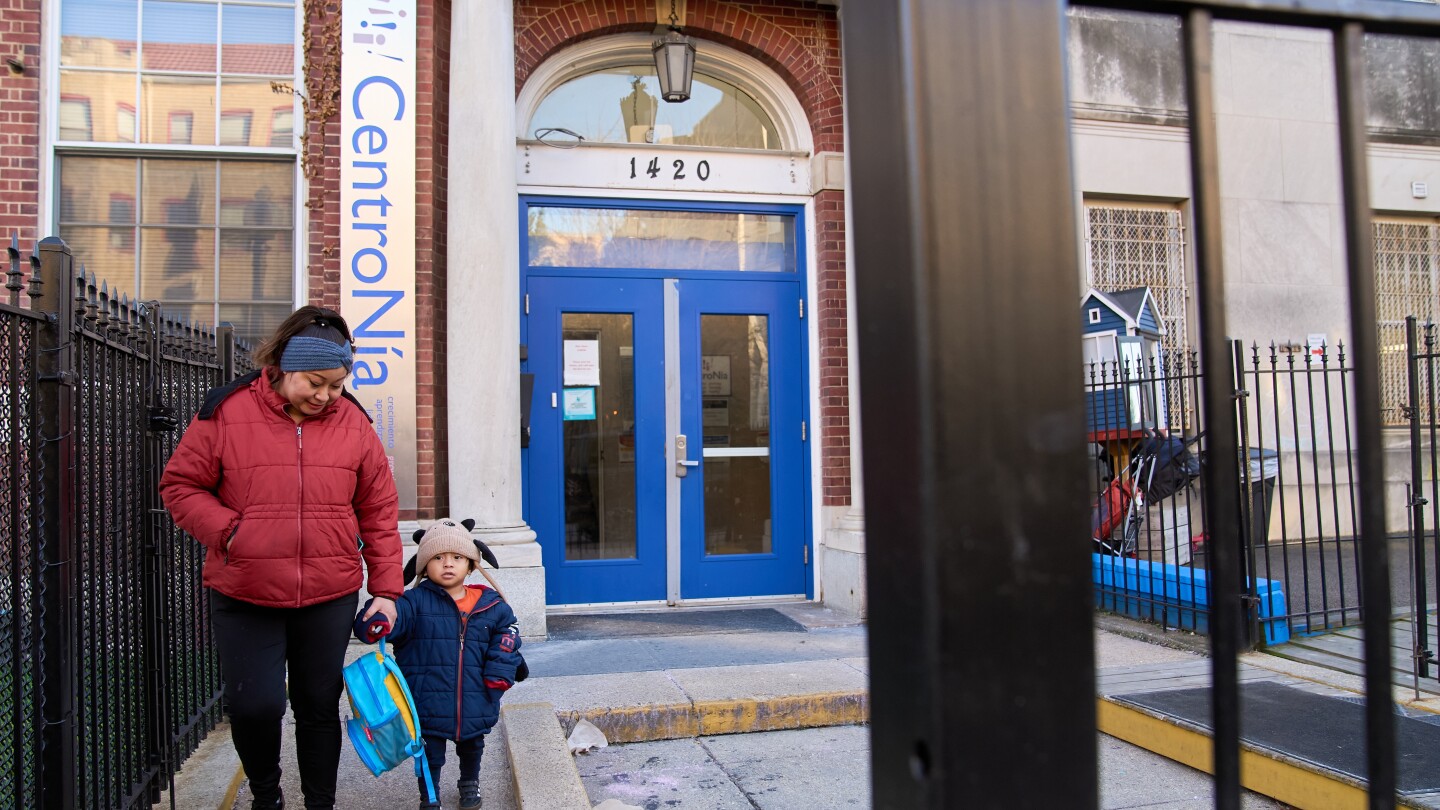
Not long after President Donald Trump took office in January, staff at CentroNía bilingual preschool in Washington began rehearsing what to do if Immigration and Customs Enforcement officials came to the door. As ICE established a regular presence in their historically Latino neighborhood this summer, teachers stopped taking children to nearby parks, libraries, and playgrounds that had once been considered extensions of the classroom.
In October, the school canceled its popular Hispanic Heritage Month parade, where immigrant parents typically dressed their children in costumes and soccer jerseys from their home countries. ICE had begun stopping staff members, all of whom have legal status, and school officials worried about drawing unwelcome attention.
The situation intensified after ICE officials arrested a teacher inside a Spanish immersion preschool in Chicago in October. The event sent shockwaves through immigrant communities working in child care, leaving them feeling frightened and vulnerable—even those with legal status.
Trump’s push for mass deportations has disproportionately affected the child care field, which heavily relies on immigrant workers and already faces severe staffing shortages. Immigrant child care workers and preschool teachers, most of whom are in the U.S. legally with proper work authorization, report constant anxiety about possible encounters with immigration officials.
“That really dominates all of our decision making,” said Myrna Peralta, CEO of CentroNía, where all staff must have legal status and work authorization. Instead of taking children on neighborhood walks, staff members now push children around hallways in strollers. The school also converted a classroom into a miniature library after discontinuing a partnership with a local library.
Critical Role of Immigrants in Child Care
The child care industry’s dependence on immigrant workers is significant. Approximately one-fifth of America’s child care workforce was born outside the United States, and one-fifth are Latino. In metropolitan areas like Washington D.C., California, and New York, around 40% of child care workers are foreign-born, according to UC Berkeley’s Center for the Study of Child Care Employment.
Immigrant workers in the field tend to have higher education levels than their U.S.-born counterparts. Those from Latin America help meet the growing demand for Spanish-language preschools, where parents enroll children for bilingual education opportunities.
The American Immigration Council estimated in 2021 that more than three-quarters of immigrants working in early care and education were living and working in the U.S. legally. Facilities like CentroNía conduct thorough background checks, including verification of work authorization.
Recent data shows concerning trends. Since January, the number of immigrants working in child care has dropped by 39,000, according to a report published by New America, a left-leaning think tank. This decline has made it harder for U.S.-born mothers of young children to work, with researchers estimating 79,000 fewer mothers of children under age 6 in the workforce due to increased ICE arrests.
Policy Changes Forcing Workers Out
Beyond deportation efforts, the Trump administration has stripped legal status from hundreds of thousands of immigrants who had previously received Temporary Protected Status (TPS), which allowed them to live and work legally after fleeing violence, poverty, or natural disasters in their home countries. Last month alone, 300,000 Venezuelan immigrants lost their protected status.
These policy changes have directly impacted staffing at child care centers. CentroNía lost two employees when they lost TPS, and a Nicaraguan teacher left voluntarily. Tierra Encantada, which operates Spanish immersion preschools across multiple states, lost a dozen teachers when they lost TPS protections.
Fear Affects Even Legal Residents
At CentroNía, one staff member was detained by ICE while walking down the street and held for hours without being able to contact colleagues. She was eventually released, according to the school’s site director, Joangelee Hernández-Figueroa.
Another staff member, teacher Edelmira Kitchen, reported being pulled over by ICE on her way to work in September. Officials demanded she exit her vehicle for questioning. Kitchen, who is a U.S. citizen who immigrated from the Dominican Republic as a child, refused and was eventually allowed to leave. “I felt violated of my rights,” Kitchen said.
The heightened ICE presence during federal intervention in the city has severely impacted employees’ mental health. Some have experienced panic attacks requiring hospitalization during the school day. When the city sent mental health consultants to the school as part of a partnership with the Department of Behavioral Health, school leadership directed them to work with teachers rather than students, concerned that teachers’ distress would affect the classroom environment.
“If the teachers aren’t good,” Hernández-Figueroa explained, “the kids won’t be good either.”
Children are also feeling the effects. At a Guidepost Montessori School in Portland, Oregon, preschoolers’ behavior changed noticeably after an ICE arrest near the school in July. When officials attempted to arrest a father in the school parking lot after pulling him over, the school went into lockdown. Children were rushed off the playground while teachers played loud music and led sing-alongs to drown out the commotion.
Amy Lomanto, the school’s director, noted more behavioral outbursts among students afterward, with more children seeking the school’s “regulation station,” a designated calming area with fidget toys. She emphasized that even affluent communities aren’t immune from these traumatic events.
“With the current situation, more and more of us are likely to experience this kind of trauma,” Lomanto said. “That level of fear now is permeating a lot more throughout our society.”
Fact Checker
Verify the accuracy of this article using The Disinformation Commission analysis and real-time sources.

7 Comments
It’s concerning to see how this crackdown on immigration is having unintended consequences for child care services. Maintaining a stable, reliable workforce in this critical sector should be a priority.
This situation highlights the complex challenges facing immigrant communities and the child care sector. Finding the right balance between security and supporting working families will be crucial going forward.
Well said. The human impacts of these policies need to be carefully considered, especially on vulnerable populations like children and their caregivers.
The impact on schools and community activities is concerning. Suspending events like the Hispanic Heritage Month parade deprives children of important cultural experiences. Immigration policies should aim to protect, not divide, communities.
I agree, the effects of this crackdown go far beyond the direct targets. The chilling effect on community events is especially worrying for child development.
This is a troubling situation for child care workers, many of whom are immigrants or have immigrant backgrounds. The fear and vulnerability they feel is understandable, even for those with legal status. Immigration enforcement actions can have far-reaching consequences beyond their direct targets.
While national security is important, these enforcement actions seem to be causing more harm than good. Targeting child care workers, even those with legal status, seems misguided and likely to further marginalize immigrant communities.