


Listen to the article
Over 1,000 Immigration Agents Leave Twin Cities as Enforcement Surge Winds Down
Federal immigration authorities have withdrawn more than 1,000 agents from Minnesota’s Twin Cities area, with hundreds more set to depart this week, marking a significant scaling back of the Trump administration’s controversial immigration enforcement operation.
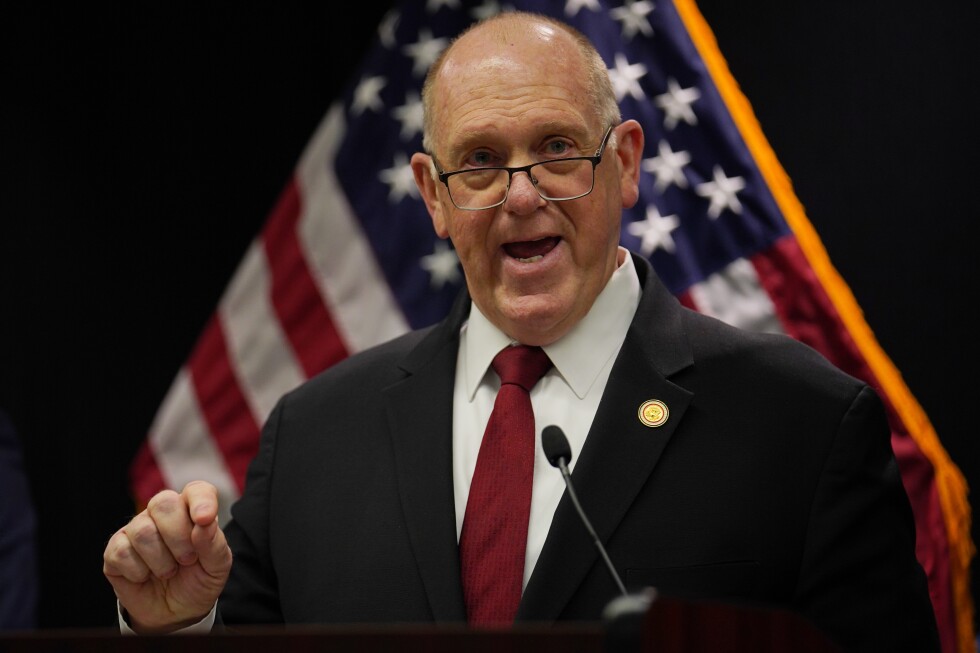
White House border czar Tom Homan, speaking Sunday on CBS’s “Face the Nation,” said a “small” security force would remain temporarily to protect immigration agents who continue to work in the area.
“We already removed well over 1,000 people, and as of Monday, Tuesday, we’ll remove several hundred more,” Homan said. “We’ll get back to the original footprint.”
The remaining security personnel will respond “when our agents are out and they get surrounded by agitators and things got out of control,” though Homan did not specify exactly how many officers would stay. He added that agents would continue investigating fraud allegations and the anti-immigration enforcement protest that disrupted a local church service.
The operation, dubbed “Operation Metro Surge,” represented the Department of Homeland Security’s largest immigration enforcement action to date, deploying thousands of officers to Minneapolis and St. Paul. While federal authorities have deemed the crackdown successful, it faced mounting criticism as tensions escalated in the region, particularly after two U.S. citizens were killed during enforcement activities.
The presence of federal agents sparked regular protests throughout the Twin Cities. Local residents formed networks to assist immigrants, provide warnings about approaching agents, and document officers’ actions. Community opposition intensified dramatically after the shooting deaths of Renee Good and Alex Pretti by federal officers, incidents that raised serious questions about operational tactics and ultimately forced modifications to the enforcement approach.
Last week, Homan announced an initial withdrawal of 700 federal officers, though that still left approximately 2,000 agents in Minnesota. By Thursday, he confirmed a “significant drawdown” was underway, with the process continuing throughout this week.
Despite the reduction in personnel, Homan emphasized that enforcement activities would not cease entirely in the Twin Cities. He stated that mass deportation operations would continue across the country, with officers departing Minnesota either returning to their original duty stations or receiving new assignments elsewhere.
When questioned about whether future operations might match the scale of the Twin Cities deployment, Homan responded that “it depends on the situation,” leaving open the possibility of similar large-scale enforcement actions in other regions.
The drawdown comes amid a broader national debate over immigration enforcement tactics and their impact on communities. Critics have argued that massive enforcement surges create fear and distrust that undermine community safety and cooperation with law enforcement, while supporters maintain they are necessary to uphold immigration laws.
Local officials in Minneapolis and St. Paul have yet to comment extensively on the federal withdrawal, though many had previously expressed concern about the operation’s scale and impact on community relations. Immigration advocacy groups in the region have cautiously welcomed the reduction in federal presence while emphasizing that ongoing enforcement actions continue to affect immigrant communities.
As federal agents begin departing the region, local authorities will face the challenge of rebuilding trust in communities where tensions have run high for weeks during the unprecedented federal operation.
Fact Checker
Verify the accuracy of this article using The Disinformation Commission analysis and real-time sources.

7 Comments
The immigration enforcement surge in Minnesota has clearly been a major undertaking. It’ll be worth monitoring if the ‘small’ remaining force is sufficient to handle any potential issues with protesters or other disruptions.
Interesting to see how the border enforcement operation in Minnesota is winding down. Curious to hear more about the ‘small’ security force that will remain and how they’ll respond to any issues with protesters.
It will be interesting to see how the local community reacts to the drawdown of immigration agents. Maintaining public safety while respecting civil liberties seems like a key challenge going forward.
Glad to see the administration acknowledging the need to return to a more normal ‘footprint’ for immigration enforcement in the Twin Cities. Curious to learn more about their plans for ongoing investigations and operations.
This is a complex and sensitive issue. I hope the remaining security force can strike the right balance between protecting agents and avoiding unnecessary escalation with protesters or local communities.
This seems like a delicate balancing act – maintaining a security presence to protect agents, while also scaling back the broader immigration enforcement operations. I’ll be interested to see how it plays out.
I wonder what the longer-term implications will be for immigration enforcement in the Twin Cities area after this drawdown. Will the reduced presence impact ongoing investigations and fraud allegations?