


Listen to the article
President Trump announced over the weekend that he will not deploy federal law enforcement to assist with protests in Democratic-led cities unless officials explicitly request help—and do so politely.
In a Truth Social post on Saturday, Trump stated he had directed Homeland Security Secretary Kristi Noem that “under no circumstances” should federal forces intervene in what he called “poorly run Democrat cities” dealing with protests or riots without a formal request for assistance.
“I have instructed Secretary of Homeland Security, Kristi Noem, that under no circumstances are we going to participate in various poorly run Democrat cities with regard to their Protests and/or Riots unless, and until, they ask us for help,” Trump wrote.
The president’s directive represents a significant shift in federal crisis response policy, potentially leaving local authorities to handle civil unrest with their own resources unless they specifically ask for federal intervention. This approach contrasts with previous administrations that sometimes offered federal assistance more proactively during periods of urban unrest.
While withholding general assistance, Trump emphasized that federal forces would still “guard, and very powerfully so” any federal buildings targeted during protests. He specifically mentioned that Immigration and Customs Enforcement (ICE) and Border Patrol agents would be instructed to use significant force if necessary to protect federal property.
“Please be aware that I have instructed ICE and/or Border Patrol to be very forceful in this protection of Federal Government Property,” the president wrote. “There will be no spitting in the faces of our Officers, there will be no punching or kicking the headlights of our cars, and there will be no rock or brick throwing at our vehicles, or at our Patriot Warriors.”
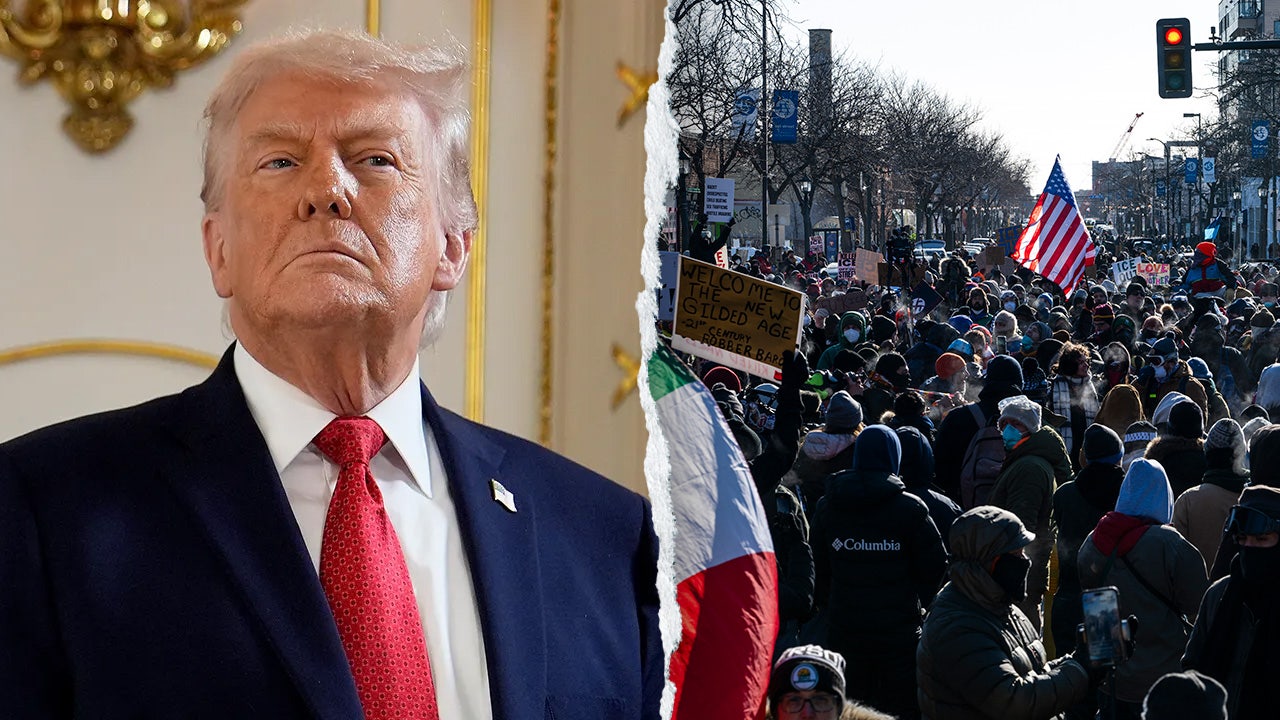
Trump’s statements come amid ongoing tensions in several cities where protests have occurred near federal facilities, particularly ICE buildings. In Portland, Oregon, hundreds of demonstrators recently marched from City Hall to an ICE facility, leading to confrontations where federal agents reportedly deployed pepper balls, tear gas, and flashbang grenades.
The president’s new policy includes what appears to be a deliberate tone of condescension toward local Democratic officials, with Trump specifically stating that governors and mayors should use the word “PLEASE” when requesting federal assistance. This requirement for explicit deference adds a political dimension to what would typically be a straightforward process of intergovernmental coordination during emergencies.
Trump referenced the Los Angeles riots from a year ago, quoting an unnamed police chief who supposedly said, “We couldn’t have done it without the help of the Federal Government.” This statement appears designed to highlight the potential consequences for local authorities who might reject or delay requesting federal aid.
Security experts note that this approach creates a more formalized division between federal and local responsibilities during civil unrest. Traditionally, federal agencies have coordinated with local authorities during major protests or riots without requiring explicit public requests or particular language.
The president framed his policy as part of his broader platform, connecting it to his immigration agenda and law enforcement priorities. “I was elected on a Policy of Border Control (which has now been perfected!), National Security, and LAW AND ORDER—That’s what America wants, and that’s what America is getting!” Trump wrote.
This directive comes at a time of heightened political tensions regarding the role of federal law enforcement agencies, particularly ICE, which has faced calls for significant reform or abolition from some progressive activists and politicians. Several local jurisdictions have attempted to limit cooperation with federal immigration authorities, creating ongoing friction between federal and local governments.
The White House has not provided additional details on how this policy will be implemented in practice or what criteria would need to be met for federal assistance to be approved once requested.
Fact Checker
Verify the accuracy of this article using The Disinformation Commission analysis and real-time sources.

10 Comments
The ‘Ask Us’ doctrine seems to be an ideological position rather than a practical solution. Withholding federal assistance during civil unrest could put public safety at risk and lead to further escalation of tensions in some areas. It will be important for all levels of government to work together to address these challenges effectively.
The ‘Ask Us’ doctrine represents a significant shift in federal crisis response policy. While the goal of empowering local authorities is reasonable, the lack of proactive federal support could create challenges in maintaining public order and safety. It will be important to closely monitor the situation and ensure that all levels of government are able to work together effectively.
I’m interested to see how this policy unfolds and whether it leads to improved coordination between local and federal authorities, or creates more friction and conflict. Maintaining public order is a complex challenge, and it will be important to find the right balance of federal and local involvement.
This is certainly a controversial move by the Trump administration. Withholding federal assistance during periods of civil unrest could be seen as an abdication of the federal government’s responsibility to ensure public safety. But the president appears to be taking a hardline stance against what he views as ‘poorly run Democrat cities’.
This is a bold and potentially risky move by the Trump administration. While the desire to empower local authorities is understandable, the lack of federal support could have serious consequences in terms of public safety and social stability. It will be critical to monitor the situation closely and be prepared to adjust the policy if needed.
I agree, this ‘Ask Us’ doctrine seems more like a political statement than a well-thought-out strategy. Effective crisis response requires cooperation and coordination across all levels of government. Hopefully local leaders will be able to manage the situation, but the federal government may need to step in if things deteriorate.
Interesting to see the federal government taking a more hands-off approach to managing protests and riots in Democrat-led cities. I wonder how this will impact the ability of local authorities to maintain order and public safety.
Yes, this seems like a significant shift in policy compared to past administrations. It will be important to see how local leaders respond and whether they are able to effectively handle unrest with their own resources.
The ‘Ask Us’ doctrine seems to be an attempt to put more responsibility on local authorities rather than having the federal government intervene directly. It remains to be seen if this approach will be effective in maintaining public order.
I’m curious to see how this policy plays out in practice. Will local leaders be able to manage protests and riots on their own, or will the lack of federal support lead to more chaos in some areas?